
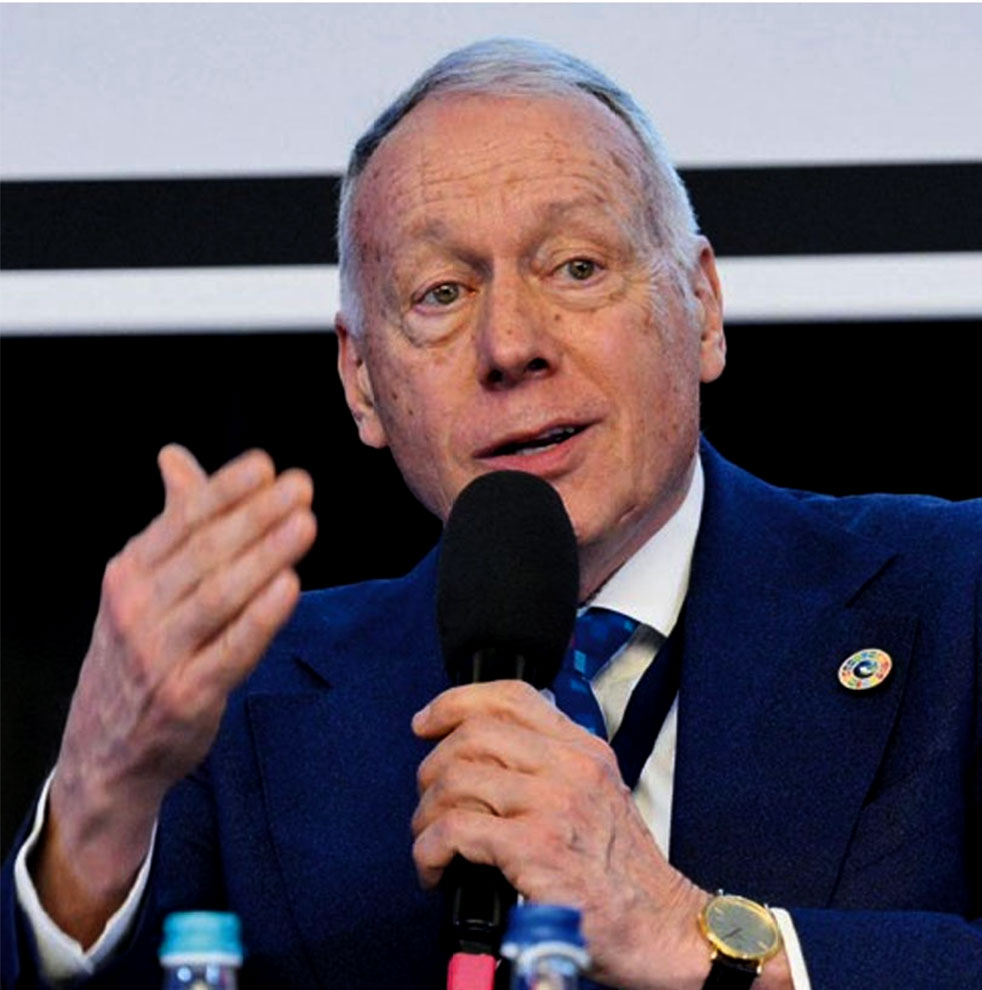
László Borbély,
State Counsellor, Government of Romania Coordinator, Department of Sustainable Development
President, European Sustainable Development Network (ESDN)
The world is entering an era defined not by stability, but by continuous transformation. Geopolitical tensions, technological disruption, climate pressures, demographic shifts and the reconfiguration of global value chains are reshaping the way nations think about growth, prosperity and resilience.
In this new reality, sustainable development can no longer be regarded as a policy niche or a framework reserved for environmental debates. It has become a defining factor of competitiveness, institutional performance and long- term national resilience. The countries that will thrive in the decades ahead will not necessarily be those with the greatest resources, but those capable of aligning economic progress, social cohesion and environmental responsibility within a coherent vision of development.
For Romania, this transition represents both a challenge and a historic opportunity.
Under the coordination of the Department of Sustainable Development and the leadership of State Counsellor László Borbély, the implementation of the National Sustainable Development Strategy 2030 has gradually transformed sustainability from an international commitment into a practical framework for governance. What initially appeared as a strategic obligation has evolved into a catalyst for institutional modernization, cross-sectoral cooperation and evidence-based policymaking.
Progress has been significant. Romania has reached an implementation level exceeding 62% of the national targets associated with sustainable development, recording positive developments in areas such as environmental sustainability, responsible consumption and production, water management, sustainable communities and institutional partnerships. At the same time, significant challenges remain in areas that will shape Europe’s future competitiveness, including education, innovation, technological transformation and the transition toward a more sustainable economy. These realities remind us that sustainable development is not a destination, but a continuous process of adaptation and improvement.
Perhaps the most valuable achievement of recent years is less visible in statistics and rankings. Romania has succeeded in building an institutional culture of sustainable development. Since 2017, László Borbély has consistently promoted an approach that places cooperation, education and institutional capacity-building at the centre of sustainable governance. Rather than treating sustainability as a sectoral policy, he has advocated for its integration across public administration, business and society.
One of the most innovative elements of this approach has been the creation of a national network of sustainability professionals within public administration. More than 2,150 specialists have already been trained, while new professions such as Sustainable Development Specialist and Circular Economy Expert have been officially recognized. This investment in human capital reflects a simple conviction: strategies do not create change on their own. Change is generated by people capable of translating vision into action and policy into measurable results.
At the same time, digital transformation is opening unprecedented opportunities for governance. The development of the One Stop Shop platform represents an important step toward a more integrated and data-driven public administration. By bringing together sustainability indicators, reporting tools, circular economy modules and artificial intelligence solutions within a single digital ecosystem, Romania is preparing the foundations for smarter decision-making, greater transparency and more effective public policies.
Sustainability is also becoming increasingly relevant for the business community. Even as European reporting requirements undergo adjustments, the underlying economic reality remains unchanged. Investors, financial institutions, clients and international partners increasingly evaluate organizations through the lens of sustainability performance.
For companies, sustainability reporting is no longer merely a compliance exercise. It is becoming a strategic instrument for credibility, risk management and competitive positioning. Organizations that embrace transparency and responsible governance will be better prepared to attract investment, strengthen stakeholder trust and navigate future market transformations. In this context, public institutions have an important responsibility: not only to regulate, but also to support and guide businesses through this transition.
Another strategic pillar of Romania’s transformation is the circular economy. As resource efficiency becomes a critical economic imperative, countries capable of reducing waste, extending product life cycles and maximizing material value will gain a significant competitive advantage. The implementation of Romania’s National Circular Economy Strategy and its Action Plan is creating the conditions for such a transition, while stimulating innovation, new business models and sustainable industrial development.

Yet the next phase of sustainable development is not primarily about regulations, indicators or reporting frameworks. It is about culture. It is about embedding sustainability into the way institutions make decisions, companies design strategies and citizens understand their role in society.
This is why education remains one of the most important investments for the future. Sustainable development must become understandable, accessible and relevant to everyday life. When sustainability is perceived not as an abstract concept but as a practical tool for improving communities, strengthening resilience and creating opportunities, it gains the power to generate lasting transformation.
The year 2026 marks an important moment in this journey. As Romania begins reviewing its National Sustainable Development Strategy and defining priorities beyond 2030, the discussion extends far beyond policy documents. The real question is what kind of country we aspire to become in an increasingly complex and interconnected world. This strategic exercise will help shape Romania’s long-term development model and its place within a rapidly evolving Europe.
This vision has also brought international recognition. Under Borbély’s coordination, Romania has become increasingly visible in European and global sustainability dialogues, while the Department of Sustainable Development has been recognized for its innovative approach to integrating sustainability into public governance. His election as President of the European Sustainable Development Network reflects both personal credibility and growing international confidence in the Romanian model.
The answer to future challenges will depend on our ability to build partnerships, foster innovation and maintain a long- term perspective. Sustainable development is ultimately not about managing constraints; it is about unlocking potential. It is about creating a society capable of generating prosperity while preserving the resources, trust and opportunities that future generations will need.
The next phase of sustainable development will not be measured by the number of strategies adopted, but by the ability of societies to transform sustainability into a competitive advantage.
In an age defined by uncertainty, sustainability is no longer an alternative path to development. It is the path itself. And for Romania, it may well become one of the most important competitive advantages of the decades ahead.
