

Eng. Adrian-Victor Vevera,
PhD,
General Director of the National Institute
for Research and Development
in Informatics – ICI Bucharest
While most discussions of artificial intelligence (AI) focus on developing an algorithm or model for a particular application, the essential ingredients for creating viable AI solutions have traditionally gone unseen yet remain equally vital. These include developing the underlying technological infrastructure, gathering relevant data, providing the computational resources necessary to support these efforts, obtaining specialized technical skills, and creating collaborative environments to bring together diverse stakeholders from appropriate communities.
It is within this context that Adrian-Victor Vevera’s contributions in his position as General Director of the National Institute for Research and Development in Informatics – ICI Bucharest take on increased relevance. In leading ICI Bucharest, Vevera has positioned the organization as an interplay of government policy, technology, and European-level collaboration.
ICI Bucharest has also become increasingly engaged in many areas which will be critical to shaping Europe’s digital future, including high performance computing, artificial intelligence, cybersecurity, digital infrastructure and innovation systems. Instead of approaching each area as a discrete program, ICI Bucharest views them as interconnected levels of the same transformative process.
As such, ICI Bucharest’s work is significant for Romania. Access to advanced technology is no longer limited solely to adopting it. Rather, the ability to understand how to use, test, adapt, and implement advanced technologies in ways responsive to specific societal needs across academia, industry, government, and civil society is also a critical component of advancing Romania’s economic growth.
EuroCC and RoNCC as foundations for AI Factory
The EU’s growing emphasis on developing the underlying „infrastructure” of AI-based systems is not entirely new. Instead, it represents building upon previous work carried out via the EuroCC and RoNCC (Romanian National HPC Competence Center) initiatives. The project provided Romanian users with direct access to High Performance Computing (HPC) resources and expertise.
RoNCC was established by ICI Bucharest as a national contact point for research, business, government and other organizations providing them with access to HPC expertise, service and resources. Because contemporary AI relies heavily on the same components that are typically supported by HPC competence centers (technical know-how, computing power, training, consultation, and collaboration), establishing RoNCC represented another essential step toward making the AI ecosystem available to Romanian researchers, businesses, and organizations.
As such, EuroCC and RoNCC served as precursors for the AI Factory model. The initiative provided a foundation that enables Romanian researchers, businesses, and institutions to engage more confidently with digital technologies.
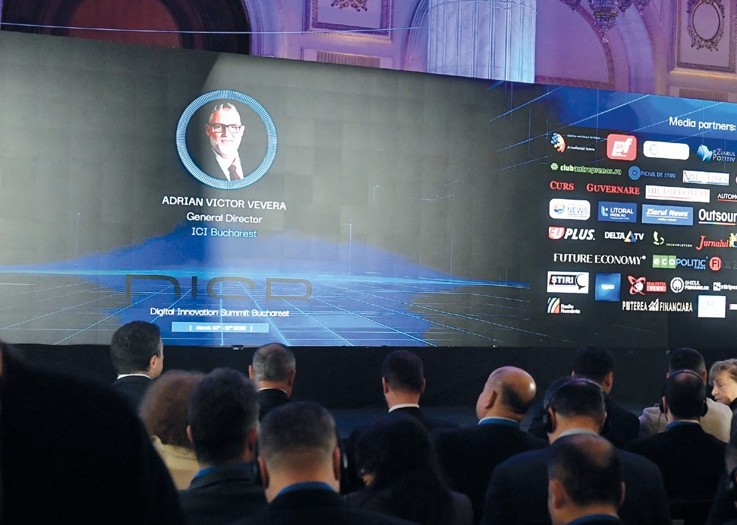
The AI Factory model creates a single entity in which all of these previously separate entities coexist. For Adrian-Victor Vevera and ICI Bucharest, the AI Factory model represents a practical application of a European strategy: how to make the process of developing AI more accessible, organized and user-centric, ultimately allowing those using the technology to develop actual applications.
BSC AI Factory: Connecting Romania to a European AI ecosystem
ICI Bucharest has been a partner since January 2025 of BSC AI Factory (Barcelona Supercomputing Center), one of the leading supercomputer centers in Europe. This partnership gives Romania a stronger link to a European AI development ecosystem designed to develop AI for research, startups, and industry. Moreover, it illustrates another, larger trend promoted by ICI Bucharest under the management of Adrian-Victor Vevera: bringing Romania closer to the infrastructure, expertise, and partnerships that define Europe’s technological capabilities.
The concept behind the BSC AI Factory is simple. Successful AI projects require more than a good algorithm. They require the ability to use advanced computing resources; access to high-quality data, technical expertise, and an environment where you can collaborate on solutions, test and validate them, and continue to develop them.
For researchers, this could represent having the opportunity to run large-scale models using more powerful computing resources. Companies can use the BSC AI Factory as a testing ground for their AI-based products before launching them to market. For startups, there is a potential means
of reducing the gap between an initial idea and producing a functional prototype.
In this context, ICI Bucharest provides links for Romanian stakeholders to utilize the available resources within the BSC AI Factory, while providing feedback in terms of experiences, models of collaboration and knowledge gained through the process that can improve the AI development landscape at the national level.
RO AI Factory: A new stage for Romania
In October 2025, Romania’s first national AI factory, called RO AI Factory, was announced to receive EU funding. This is an initiative to develop Romania’s first nationwide AI infrastructure. It has been announced that the development of the RO AI Factory will be undertaken through a partnership among ICI Bucharest (the hosting entity), the National University of Science and Technology POLITEHNICA Bucharest, and a group of stakeholders in education, science, and industry.
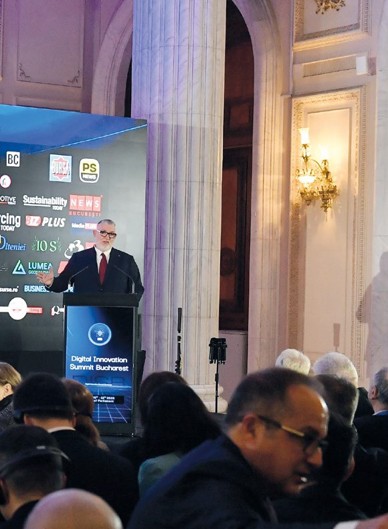
This represents a significant advancement on previous developments. Romania is no longer simply connected to European AI infrastructure; it has begun to develop its own national AI capability that meets its specific needs and goals.
Adrian-Victor Vevera said this is particularly valuable in terms of continuity. The journey from EuroCC & RoNCC to BSC AI Factory and then to RO AI Factory demonstrate how experience can be built incrementally within institutions. By building the initial competency in HPC and establishing access to these capabilities. Following this, by utilizing this experience as a member of a European AI Factory network. Finally, by using the experience gained through membership in the network, to provide a platform to further develop a national AI capability.
It is anticipated that the RO AI Factory will establish a collaborative environment in which research, innovation, and entrepreneurship are integrated. In general, for organizations operating locally, this could involve having access to advanced computing capabilities, support in developing and testing AI-based models and links to European partners for collaboration opportunities.
There are numerous sectors that the potential implications of RO AI Factory extend to manufacturing and industry, cybersecurity, life sciences, digital public services and autonomous systems.
A practical contribution to Romania’s digital future
The value of Adrian-Victor Vevera’s efforts can be measured in his very practical contributions to Romania’s digital future. As ICI Bucharest continues to participate in EuroCC, BSC AI Factory and RO AI Factory, Romania is establishing more robust linkages between leading-edge infrastructure and the communities that require access to such.
Ultimately, this effort is not focused on technology for its own sake, but rather focuses on enabling each respective community to develop its technological capabilities in order to utilize technology responsibly and effectively, whether in the field of research, commerce, public service or daily life.
As artificial intelligence begins to appear in an increasing number of sectors of society, nations will require more than just aspirations. They will also need infrastructure, skills/training, trust and collaborative partnerships. Through the numerous projects being developed at ICI Bucharest, Adrian-Victor Vevera is supporting Romania’s movement toward taking tangible steps to meet its digital ambitions: while maintaining strong ties to the EU, grounded in national need, and ultimately becoming progressively better prepared for the subsequent stages of its digital transformation.
