

Nicolas Richard,
CEO of ENGIE Romania
1. What are ENGIE Romania’s main strategic development priorities for the coming years, and how do they support the company’s growth and decarbonization objectives? The company’s growth is built around three major strategic directions, aligned with the ENGIE Group’s ambition to accelerate the transition to a carbon-neutral economy by 2045:
• Developing renewable energy generation and storage capacities
We are a major player in renewable energy, both globally and in Romania. At Group level, our objective is to commission 4 GW of renewable energy capacity annually.
In Romania, we currently operate approximately 250 MW of installed renewable energy generation capacity and have around 750 MW of projects at an advanced stage of development.
We are placing increasing emphasis on flexibility and storage, which are becoming essential in an energy system with a growing share of renewable energy.
All these initiatives form part of ENGIE Romania’s strategic objective of reaching 1 GW of installed renewable energy capacity and 300 MW of storage capacity by 2030.
• Supporting customers in their decarbonization journey through the development and implementation of energy solutions for residential customers
Our goal is to remain a trusted partner for our customers, helping them adopt more responsible energy consumption habits. This means lower consumption, choosing green gas and electricity solutions, and increasingly embracing digital and flexible energy management solutions.
- Expanding and modernizing the distribution network We will continue investing in the expansion and modernization of the network operated by Distrigaz Sud Rețele, preparing the infrastructure for the integration of green Distrigaz Sud Rețele’s total investments have reached approximately €1.34 billion, contributing to the significant transformation of Romania’s natural gas distribution network. As a result, the total network length increased from 14,200 km in 2005 to 24,483 km at the end of 2025.
At the same time, 8,936 km of pipelines have been rehabilitated and modernized, with steel pipelines replaced by polyethylene pipes featuring superior technical performance and a longer lifespan. Consequently, the share of polyethylene infrastructure increased from 23% to 75%. Furthermore, the number of customers connected to the natural gas distribution network has doubled, currently exceeding 2.32 million.
2. ENGIE Romania has accelerated investments in renewable energy in recent years. What are the most important projects currently in the portfolio, and how do they contribute to the company’s growth objectives?
The development of renewable energy generation capacity and flexibility solutions represents one of the company’s key strategic growth directions. We are witnessing increasing demand for green energy, while the energy transition requires investments not only in new generation assets but also in solutions that ensure system balance and resilience.
As mentioned earlier, we currently operate approximately 250 MW of installed renewable generation capacity—both wind and solar—and have a development portfolio of approximately 750 MW.
A major milestone for us was the commissioning of the Ariceștii Rahtivani photovoltaic park, with an installed capacity of 37.2 MWp, which expanded our green energy portfolio. Another important step was the acquisition of a wind farm under development in Ialomița County, with an installed capacity of 253.1 MW.
At the same time, we are advancing strategic projects that will support the company’s growth in the coming years, including the two projects selected under Romania’s Contracts for Difference (CfD) scheme: the 170 MW photovoltaic power plant at Cornățelu, Dâmbovița County, already under construction, and the 54 MW wind project at Mereni, Constanța County. These projects provide investment predictability and create the conditions necessary to accelerate the development of new generation capacities.
At the same time, we are placing increasing emphasis on flexibility and storage solutions, which are becoming indispensable in an energy system with a growing share of renewable sources. In this regard, 2025 marked important progress through the development of two storage projects. The first is a 5 MW / 10 MWh battery storage system in

Alizeu Wind & BESS farm, Băleni, Galați County Galați
County, already installed and integrated into our operational wind farm. The second is the 80 MW / 160 MWh storage project in Șelimbăr, Sibiu County, currently at the ready-to-build stage and expected to make a significant contribution to enhancing the flexibility of the energy system.
All these projects support our strategic objective of reaching 1 GW of renewable generation capacity and 300 MW of storage capacity by 2030, further strengthening ENGIE Romania’s position as a key player in the energy transition.
3. Energy storage appears to be becoming a central component of the energy system.
How do you see the maturation of this market in Romania?
Energy storage is becoming one of the essential components of the new energy architecture. While only a few years ago it was viewed as a complementary technology, today it is increasingly becoming a necessity for the efficient integration of renewable energy and the stability of the energy system.
As solar and wind generation expands, so does the need for flexibility. Storage enables production optimization, reduces renewable energy curtailment when the grid cannot absorb all generated electricity, and facilitates active participation in balancing and intraday markets.
The projects we are developing in Galați and Sibiu are concrete steps in this direction and contribute both to system flexibility and to optimizing the utilization of renewable energy.
As the market evolves and flexibility remuneration mechanisms become clearer, storage will play an increasingly important role in the economic model of energy projects.
4. Romania has set ambitious targets for expanding renewable energy capacity in the coming years. In your view, what are the main challenges that must be overcome to ensure this transition occurs at a sustainable pace?
The main challenges we face in developing renewable energy projects are no longer related to technology, which has become increasingly efficient and competitive, but rather to the system’s ability to integrate the accelerated pace of investment.
The first challenge concerns grid infrastructure and connection processes. Interest in developing new renewable energy capacity is extremely high, putting significant pressure on transmission and distribution networks, which must be modernized and expanded to accommodate new projects.
The second challenge relates to permitting timelines. Although progress has been made in recent years, developers still face complex procedures and interactions with numerous institutions, which can extend project implementation schedules.
Last but not least, regulatory predictability remains essential. Energy investments are made over long time

Hybrid Wind and Solar Power Plant, Gemenele, Brăila County horizons, and investors require stability and clear rules to make long-term decisions.
If I were to identify three priorities that would genuinely accelerate Romania’s energy transition, they would be the development and digitalization of networks, the simplification and streamlining of permitting processes for new projects, and maintaining a predictable legislative and regulatory framework. At the same time, the development of storage capacity and mechanisms supporting system flexibility will become increasingly important for the efficient integration of renewable energy.
5. How is ENGIE involved in social responsibility initiatives that generate measurable and long-term benefits for communities?
For us, social responsibility is an integral part of how we understand sustainable development. That is why we focus on projects that address real needs and create long- term impact in areas such as healthcare, education, and environmental protection.
The company’s entire social responsibility strategy is built around three pillars: healthcare, education, and environmental protection—areas where well-designed interventions can generate long-term positive effects.
In healthcare, we have partnered with the Daruiește Viață Association for more than a decade. Together, we established Romania’s first molecular biology and cytogenetics laboratory at Fundeni Hospital, a milestone that advanced Romanian hematology by nearly 25 years. We have also supported the modernization of oncology departments and the provision of advanced medical equipment to hospitals.
Through our partnership with HOSPICE Casa Speranței, between 2017 and 2025 we contributed to more than 4,600 days of free hospitalization for patients. Medical teams carried out nearly 7,400 home visits across ten counties, while HOSPICE outpatient clinics in Bucharest and Brașov provided approximately 9,000 free consultations.
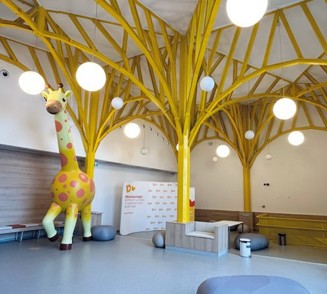 Foto: Marie S. Curie Hospital
In Brașov, ENGIE also contributed to improving the energy efficiency of the HOSPICE building, where around 2,000 patients receive care and support each year. Since 2023, we have supported the construction of the #HospitalofHope, a facility dedicated exclusively to providing palliative care services for children with incurable illnesses.
In education, we developed the “Energy Eco-Creators” project, through which children learn, through practical experiments, how renewable energy works and how they can contribute to reducing energy consumption at home. To date, more than 60,000 students have participated in our educational programs, with over 4,100 directly involved in this project.
In environmental protection, our focus has been on energy efficiency, access to electricity, and the circular economy.
Together with Habitat for Humanity, since the beginning of our partnership in 2013, we have implemented six major projects aimed at improving living conditions for beneficiaries supported by organizations such as SOS Children’s Villages and HOSPICE Casa Speranței, as well as children attending schools in Băleni, Galați County, and School No. 125 in Bucharest.
These projects involved the energy rehabilitation of buildings, directly reducing energy consumption and utility costs. The resulting savings were redirected toward programs benefiting children and young people within these institutions. Furthermore, SOS Children’s Villages Bucharest became the first social community in Romania to generate its own green electricity after photovoltaic panels were installed on all 15 buildings within the village.
The year 2026 marked the launch of a new project with Habitat for Humanity focused on improving energy efficiency and achieving energy autonomy for Saint Paul House, part of the Concordia Humanitarian Organization. Together with the Little Genius Association, we installed photovoltaic panels for 165 families—more than 700 individuals—from 20 counties, providing electricity for the first time in homes where people had previously lived by candlelight.
Dimitrie Brândză Botanical Garden
With the support of our partners at the “Dimitrie Brândză” Botanical Garden in Bucharest, we have supported biodiversity and environmental education projects, transforming green spaces and schools into learning environments for all generations.
Through our partnership with the Eco-Durabil Association, we support an integrated circular economy model that reduces waste, promotes reuse, and assists vulnerable communities. We also supported the establishment of Romania’s first Integrated Circular Economy Center. Since the beginning of the partnership, more than 10,000 cubic meters of goods have been collected and reused, providing resources to vulnerable communities.

Over the past 21 years, we have invested more than €15 million in social projects, directly impacting the lives of over 600,000 Romanians. Beyond the figures, however, what remains are the stories—patients who can live with dignity and access humane conditions, children who can study under proper lighting, and communities that are beginning to believe in a cleaner and safer future.
6. Where does ENGIE Global Business Services fit within ENGIE’s overall strategy?
ENGIE recently announced the launch of ENGIE Global Business Services Romania, a new subsidiary that will provide specialized internal services to Group entities across Europe, particularly in France and The center offers services in areas such as IT, Human Resources, Finance, and Procurement. It already employs approximately 180 specialists and aims to grow to several hundred employees by the end of 2026.
As for its role within the Group’s strategy, ENGIE GBS Romania is an important component of ENGIE’s transformation and digitalization efforts across Europe. By concentrating expertise within a single hub, we provide integrated capabilities, streamline operations, and leverage advanced technologies—including automation and process analysis and optimization tools—to enhance efficiency and performance throughout the Group.
Romania was selected for this investment following a thorough evaluation process. The country stood out thanks to the availability of highly skilled professionals, strong digital expertise, multilingual capabilities, and the maturity of its local business services ecosystem.
For us, this investment reconfirms Romania’s strategic importance within the ENGIE Group. After more than 20 years of presence on the local market and a team of over 4,400 employees, Romania is no longer just an important market for our energy operations—it is becoming a center of expertise that contributes directly to the Group’s transformation and performance at the European level.
