
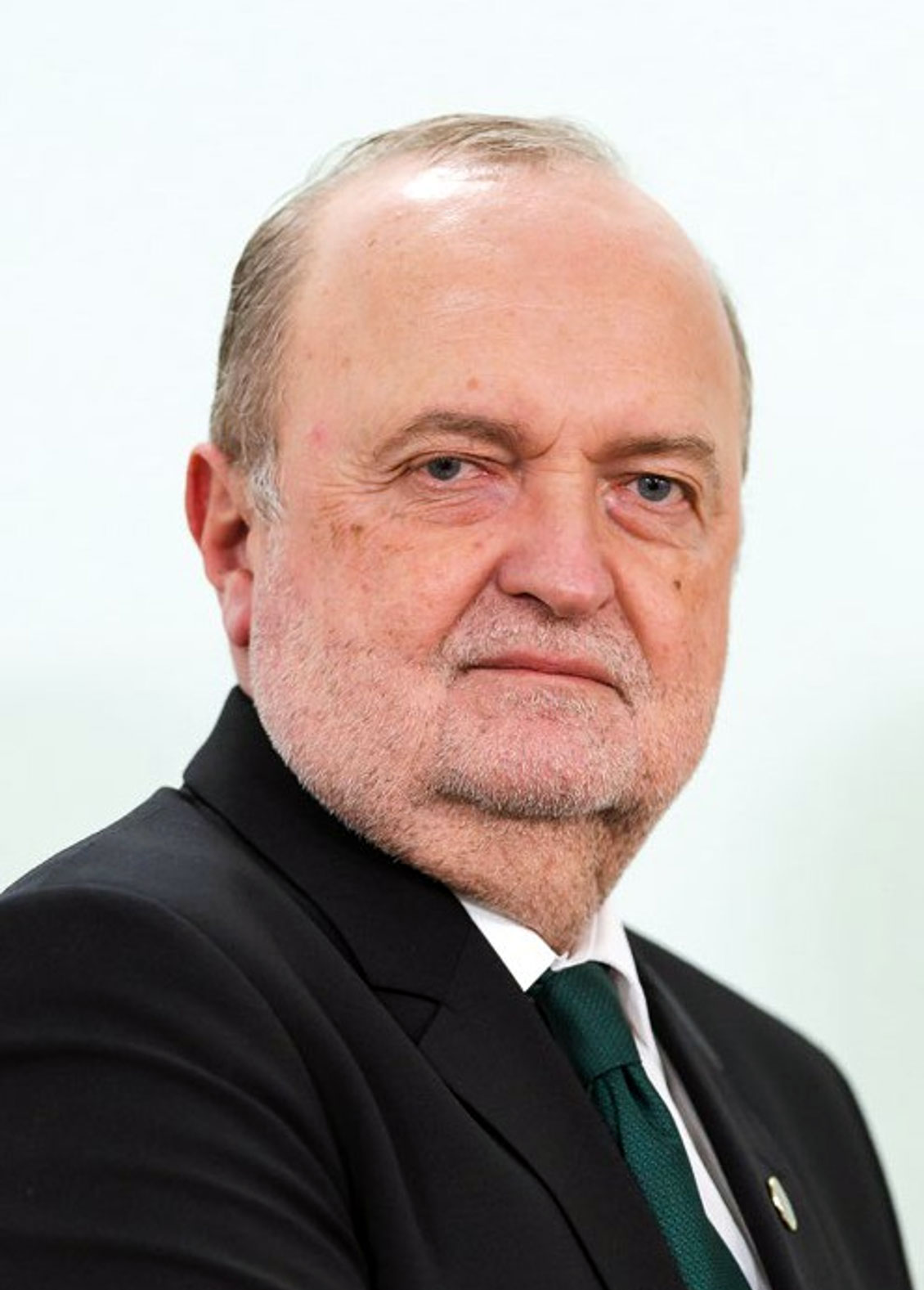
Professor Viorel Scripcariu,
MD, PhD
Rector of Grigore T. Popa University of
Medicine and Pharmacy of Iași
Romanian healthcare does not suffer from a lack of diagnoses. We know the vulnerable points: uneven access to services, pressure on hospitals, the migration of young professionals, the gap between academic training and clinical practice, the slow culture of prevention, and public trust tested too often. The challenge is no longer to describe these problems eloquently. The challenge is to build institutions capable of solving them.
A university of medicine and pharmacy cannot remain only a place where knowledge is transmitted. It must become a strategic platform for national resilience: a place where future health professionals learn not only science, but responsibility; not only procedures, but judgement; not only how to treat disease, but how to strengthen the system in which care is delivered.
This is the mission of a traditional medical university today. Tradition must not be used as a refuge from change. It must become the discipline that gives change direction. At Grigore T. Popa University of Medicine and Pharmacy of Iași, almost a century and a half of medical education is not a decorative argument. It is an obligation to act with clarity, courage and continuity.
The first priority is education closer to clinical reality. Romania does not need graduates who are excellent only in examinations; it needs professionals able to make sound decisions under pressure, communicate with patients, work in teams and use technology without losing clinical judgement. This requires modern curricula, simulation- based training, structured clinical exposure, transparent evaluation and genuine mentorship. Medical education must move from accumulation to competence.
The second priority is to reconnect universities and hospitals into one coherent ecosystem. Too often, education, clinical activity and research are treated as separate worlds. They are not. The patient benefits when the physician is also a teacher, when the teacher remains connected to the ward, and when research begins from real clinical questions. Clinical departments, laboratories and postgraduate programs must function as a single chain of value, from lecture hall to patient outcome.
The third priority is to rebuild the attractiveness of the medical profession in Romania. We cannot ask young doctors to stay only through patriotic rhetoric. We must offer them serious reasons to stay: fair pathways, access to complex cases, research opportunities, international mobility that brings them back stronger, and academic careers based on merit. Retention is achieved by standards, predictability and respect.
The fourth priority is prevention. A modern medical university must be present not only in amphitheatres and hospitals, but also in communities. Screening programs, health literacy campaigns and early diagnosis initiatives are essential public health instruments. In regions where vulnerable populations still reach the doctor too late, the university has the duty to build bridges with family doctors, local authorities, NGOs and community leaders. Prevention is not cheaper medicine; it is smarter medicine.
The fifth priority is technology, used with intelligence and ethics. Artificial intelligence, digital platforms, medical data and telemedicine will transform healthcare. But technology is not a substitute for the physician. It must improve access, precision, efficiency and safety. Universities must train professionals who understand both the power and the limits of these instruments. The future belongs neither to medicine without technology, nor to technology without humanity.
Romania also needs stronger biomedical research. We must move beyond isolated excellence and build ecosystems capable of attracting European partnerships, industry collaboration and young investigators. Medical universities should be engines of innovation, connecting laboratories, clinical practice, public policy and entrepreneurship. Research is the mechanism through which a health system learns to improve.
As Rector of a university rooted in the North-East of Romania, I believe that regional responsibility is national responsibility. A medical university in Iași does not serve only its students. It serves hospitals, communities, public institutions, patients and future generations. It can reduce inequalities, create professional opportunities, attract talent, and project Romanian medical education into Europe.
The next stage for Romanian medical higher education must be defined by execution. We need fewer declarations and more functioning models; fewer fragmented reforms and more institutional continuity; more autonomy, but also more accountability; more internationalization, but also a stronger commitment to the needs of our own society.
Movers and shakers in healthcare are not those who merely speak about transformation. They are the institutions and leaders who turn pressure into reform, tradition into standards, and ambition into measurable progress. The future of Romanian medicine will be built through every decision that brings education closer to patients, science closer to practice, and leadership closer to responsibility.
