
Denisa Marina Protopopescu MD, PhD,
Obstetrics and Gynaecology Reproductive
Medicine Specialist
Assoc Prof
CEO, Centrul Medical Internațional București
ESHRE Assessor ESHRE Coordinator of the SIG Global and Socio Cultural Aspects of Infertility
Vice President and co-founder of GOGB
Abstract
Assisted reproductive technologies (ART) represent one of the most significant achievements in modern medicine, transforming the possibilities of human reproduction for individuals and couples affected by infertility. From the first historical attempts to understand fertility and conception to the development of in vitro fertilization (IVF), reproductive medicine has continuously evolved through advances in embryology, genetics, cryobiology, artificial intelligence (AI), and regenerative medicine.
The birth of the first IVF baby, Louise Brown, in 1978, marked a turning point in reproductive medicine and opened the way for innovative approaches such as embryo selection, time-lapse imaging, preimplantation genetic testing, fertility preservation, and AI-assisted reproductive technologies. Current research focuses on improving implantation success, understanding reproductive aging, enhancing sperm and egg quality, and developing future technologies including in vitro gametogenesis, artificial ovaries, and personalized fertility treatments.
This paper reviews the historical development of assisted reproduction, recent technological innovations, current challenges, ethical considerations, and future perspectives in reproductive medicine.
Keywords: assisted reproduction, IVF, artificial intelligence, embryo selection, fertility preservation, reproductive medicine, regenerative medicine
1. Historical Perspectives on Human Reproduction
Human interest in reproduction has existed since the beginning of civilization. Fertility has been associated with survival, family continuity, cultural identity, and biological understanding.
The concept of reproduction appears throughout ancient texts. In the Bible, the phrase:
“Be fruitful and multiply” (Genesis 1:28) reflects the importance historically attributed to fertility. Ancient civilizations attempted to understand fertility, contraception, pregnancy, and infertility through observation and early medical practices.
Ancient Egyptian papyri contain some of the earliest descriptions of gynecological conditions and fertility- related remedies. These documents demonstrate early attempts to diagnose reproductive disorders and influence fertility.
Greek physicians contributed significantly to early reproductive theories. Hippocrates (460–377 BC) proposed ideas about the contribution of both male and female biological factors to conception. Aristotle (384–322 BC) studied embryonic development and attempted to explain the role of sexual reproduction, although many of his theories were later replaced by modern embryology.
The symbolism of fertility was also deeply present in ancient mythology. The Egyptian goddess Isis represented motherhood, fertility, and the continuation of life the suprem symbol of marital harmony and wifely fidelity, the devoted wife of Osiris 6000bc. The myth of Isis and Osiris reflects ancient beliefs about regeneration, reproduction, and the connection between fertility and renewal.
When Osiris, her husband was killed by Set, Isis fulfilled the rituals to return to eternal life and conceived her son Horus through magic from her husband dead body.
- The Birth of Modern Assisted Reproduction The development of assisted reproductive technologies began with major discoveries in reproductive biology and
A historic milestone occurred in 1978 with the birth of Louise Brown, the first human baby conceived through in vitro fertilization. This achievement was made possible through the pioneering work of: Patrick Steptoe, a gynecologist and laparoscopic surgery pioneer and Robert Edwards, an embryologist whose research established the scientific foundations of IVF Robert Edwards received the Nobel Prize in Physiology and Medicine in 2010 for the development of IVF technology.

Robert Edwards, Nobel Prize in Physiology and Medicine, 2010
 Louise Brown, the first IVF baby in the world
IVF changed infertility treatment by allowing fertilization to occur outside the human body, followed by embryo transfer into the uterus. Since then, millions of children worldwide have been born through assisted reproductive technologies.
TERMINOLOGY CHANGE PCOS IN PMOS
There’s also a major terminology change in women’s reproductive health: PCOS (Polycystic ovarian syndrom) is being renamed to “PMOS” (polyendocrine metabolic ovarian syndrome) to better reflect that it affects metabolism and hormones throughout the body, not just the ovaries.
 3. Artificial Intelligence in Assisted Reproduction
Artificial intelligence is becoming increasingly integrated into reproductive medicine. AI technologies are being developed to improve accuracy, efficiency, and personalization throughout the IVF process.
Current applications include:
- AI-assisted embryo selection
- prediction of ovarian response
- optimization of treatment protocols
- analysis of sperm quality
- fertility cycle prediction
- wearable fertility monitoring devices
One of the most promising applications of AI is sperm identification. Advanced systems can analyze large numbers of sperm cells and identify rare viable sperm that may be difficult for human embryologists to detect, particularly in cases of severe male infertility.
AI-based embryo assessment systems analyze embryo morphology, development patterns, and time-lapse imaging data to assist embryologists in selecting embryos with higher implantation potential.
However, AI does not replace clinical expertise. It functions as a decision-support tool, and ethical concerns remain regarding transparency, data protection, and equal access to advanced reproductive technologies.
4. Time-Lapse Embryo Imaging and Advanced Embryo Selection
One of the most important innovations in modern IVF laboratories is the introduction of time-lapse embryo imaging. Traditional embryo evaluation required removing embryos from controlled laboratory conditions at specific intervals for microscopic examination. Time-lapse technology allows continuous monitoring of embryo development inside specialized incubators equipped with imaging systems.
This technology provides detailed information about:
- embryo division patterns,
- cellular development,
- abnormal developmental events,
- timing of key embryological
By combining time-lapse imaging with artificial intelligence, researchers aim to improve embryo selection and increase implantation success rates. AI algorithms can recognize complex developmental patterns that may not be easily identified by human observation alone.
However, embryo selection remains challenging because implantation depends not only on embryo appearance but also on genetic health, uterine receptivity, maternal age, and other biological factors.
5. Advances in Egg Quality, Fertility Preservation, and Reproductive Aging
Female reproductive aging remains one of the greatest challenges in fertility medicine. Although modern technologies can preserve eggs through freezing, they cannot completely prevent the biological effects of aging on egg quality.
The major problems associated with reproductive aging include:
- increased chromosome abnormalities,
- mitochondrial dysfunction,
- reduced cellular energy production,
- impaired embryo
Egg Freezing and Cryopreservation
Egg freezing has become an important fertility preservation method, especially for women who wish to delay pregnancy or patients undergoing treatments that may damage ovarian function.
The major breakthrough in this field was the development of vitrification, an ultra-fast freezing technique that reduces ice crystal formation and improves egg survival after thawing. Current research focuses on improving:
- cryoprotective solutions,
- warming protocols,
- embryo development after thawing,
- long-term ovarian preservation
Ovarian tissue cryopreservation is another developing technique. It involves freezing ovarian tissue rather than individual eggs and may provide future fertility options for:
- cancer patients before chemotherapy,
- women with premature ovarian insufficiency,
- patients requiring urgent fertility
6. Experimental Approaches to Improve Egg Quality
Researchers are investigating methods to delay or reverse aspects of ovarian aging.
Potential strategies include:
- mitochondrial therapies,
- chromosome stabilization approaches,
- regenerative medicine,
- ovarian tissue
One area of investigation involves proteins involved in chromosome organization during egg maturation. Experimental studies suggest that improving chromosome stability may reduce abnormal egg development, although these approaches remain under research and are not currently standard clinical treatments.
The future goal is not only to preserve fertility but also to improve reproductive lifespan by understanding the mechanisms responsible for ovarian aging.
7. Male Fertility: New Diagnostic and Therapeutic Perspectives
For many years, male infertility evaluation focused mainly on semen analysis, including:
- sperm concentration,
- movement (motility),
- However, modern research shows that fertility depends on much more complex biological factors.
Current research investigates:
- sperm DNA fragmentation,
- oxidative stress,
- mitochondrial function,
- inflammation,
- reproductive microbiome
Sperm DNA Quality
Sperm DNA fragmentation has become an important research area because it may contribute to:
- unexplained infertility,
- recurrent pregnancy loss,
- reduced IVF
New diagnostic approaches evaluate molecular characteristics of sperm, including DNA integrity and mitochondrial activity.
8. Artificial Intelligence and Male Fertility
AI-based systems are increasingly used to analyze sperm characteristics.
Potential advantages include:
- identification of rare viable sperm cells,
- reduced subjectivity between embryologists,
- improved selection for intracytoplasmic sperm injection (ICSI).
Deep-learning technologies may help create more standardized sperm evaluation methods and improve treatment decisions, especially in severe male infertility cases.
9. The Role of Oxidative Stress and Antioxidant Strategies
Oxidative stress is considered an important factor affecting sperm function. Excessive oxidative damage may influence:
- sperm movement,
- DNA integrity,
- fertilization ability,
- embryo
Research is increasingly focused on targeted antioxidant approaches, including compounds such as:
- coenzyme Q10,
- N-acetylcysteine,
- selenium,
- alpha-lipoic
Although some studies show improvements in sperm parameters, treatment remains individualized and further research is needed to establish optimal approaches.
10. Fertility After 35 and 40:
Current Challenges
Female fertility declines with age, primarily because of changes in egg quality rather than simply egg number. After the age of 35, biological changes become more significant, including:
- increased chromosome abnormalities,
- mitochondrial decline,
- reduced embryo implantation
After 40, these changes become more pronounced. Modern IVF techniques, genetic testing, and improved laboratory methods have increased success rates; however, they cannot completely overcome age-related biological limitations.
Current strategies include:
- earlier fertility assessment,
- personalized stimulation protocols,
- embryo banking,
- fertility preservation before advanced reproductive age.
The development of reproductive medicine increasingly focuses on understanding aging at the cellular level, connecting fertility science with:
- longevity research,
- metabolic medicine,
- regenerative
- Future Reproductive Technologies: The Next Generation of Assisted Reproduction The future of reproductive medicine is moving beyond traditional IVF toward technologies that aim to overcome current biological Researchers are exploring
ways to create gametes, restore ovarian function, improve implantation, and personalize fertility treatments using artificial intelligence and regenerative medicine.
Many of these approaches are still experimental, but they represent some of the most promising directions in reproductive science.
11.1 Lab-Grown Gametes
(In Vitro Gametogenesis – IVG)
One of the most ambitious developments in reproductive medicine is in vitro gametogenesis (IVG) — the creation of eggs or sperm from non-reproductive cells, such as skin cells or stem cells.
The basic concept involves transforming ordinary cells into induced pluripotent stem cells (iPSCs), then guiding them through the biological steps required to become mature eggs or sperm.
Interphase
DNA copies once before meiosis while chromatin stays uncondensed.
Potential applications include:
- women with premature ovarian insufficiency producing genetically related eggs,
- men with absent sperm production potentially generating sperm cells,
- fertility options for patients who lose reproductive
function after cancer treatment,
- new possibilities for same-sex genetic reproduction in the future.
Research has achieved important progress in animal models, including the production of mouse eggs and offspring from laboratory-created gametes. However, human clinical use is not currently approved because scientists must solve major challenges involving:
- genetic stability,
- correct chromosome separation,
- epigenetic regulation,
- long-term health of resulting
Because reproductive cells transmit genetic information to future generations, safety requirements are exceptionally high.
11.2 Artificial Ovaries and Ovarian Tissue Engineering
Artificial ovary technology aims to recreate the function of the natural ovary by combining:
- biomaterials,
- stem cells,
- ovarian cells,
- tissue engineering techniques,
- 3D bioprinting
The goal is not only fertility restoration but also restoration of ovarian hormone production.
Possible future uses include:
- women affected by chemotherapy,
- premature ovarian insufficiency,
- early menopause,
- patients who cannot preserve eggs before medical
Researchers are developing ovarian “scaffolds” that can support follicle growth and maturation. A successful artificial ovary could theoretically provide both:
- endocrine function (hormone production),
- reproductive function (egg development).
However, this field remains experimental, and questions remain about long-term safety and whether laboratory-developed ovarian systems can fully reproduce the complexity of natural ovarian biology.
- mRNA-Based Fertility Therapies Following the success of mRNA technologies in other areas of medicine, researchers are investigating whether mRNA delivery can be used in reproductive medicine.
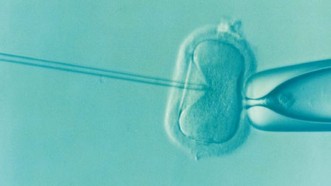
mRNA therapies work by providing temporary instructions to cells, allowing them to produce specific proteins that may influence biological processes.
Potential reproductive applications include:
- improving uterine receptivity,
- repairing damaged endometrial tissue,
- supporting embryo implantation,
- modifying inflammatory pathways involved in
Possible future targets include patients with:
- recurrent implantation failure,
- thin endometrium,
- uterine damage,
- some forms of infertility related to abnormal tissue
The attraction of mRNA technology is that it does not permanently alter DNA; instead, it provides temporary biological instructions. However, clinical translation requires careful evaluation of safety, delivery methods, and effects on pregnancy development.
11.4 AI-Personalized IVF
Artificial intelligence is expected to transform IVF from a standardized process into a highly individualized treatment. Currently, many IVF protocols are based on population-
level medical guidelines. Future AI systems may integrate:
- age,
- hormone levels,
- ovarian reserve markers,
- genetic information,
- previous treatment outcomes,
- embryo development data,
- lifestyle and metabolic
The goal is precision reproductive medicine. AI may help doctors:
Predict ovarian response
AI models may estimate how a patient will respond to stimulation medications and help optimize hormone doses.
Improve embryo selection
AI can analyze:
- embryo morphology,
- developmental timing,
- genetic information,
- implantation
Optimize treatment timing
AI systems may combine hormonal data and cycle information to determine the most favorable moment for procedures such as embryo transfer.
Improve sperm selection
Deep-learning systems may identify viable sperm cells in cases of severe male infertility where traditional methods are limited.
The future IVF laboratory may become a combination of:
- embryology,
- genetics,
- artificial intelligence,
- robotics,
- personalized
11.5 Fertility Extension and Reproductive Longevity
Another emerging research field focuses on slowing reproductive aging.
Scientists are studying whether ovarian aging could be influenced by targeting:
- mitochondrial decline,
- inflammation,
- cellular aging pathways,
- metabolic Experimental approaches include:
- ovarian rejuvenation strategies,
- regenerative medicine,
- mitochondrial therapies,
- drugs that influence aging
At present, these methods remain investigational. The challenge is not only improving fertility but ensuring that any intervention produces healthy pregnancies and healthy offspring.
11.6 Ethical and Social Considerations
Future reproductive technologies raise important ethical questions.
Major issues include:
- safety of children born from new technologies,
- access and affordability,
- genetic selection concerns,
- regulation of embryo research,
- possible misuse of reproductive
As reproductive medicine advances, society will need to balance innovation with careful ethical oversight.
Conclusion: The Future of Assisted Reproduction
The next generation of reproductive medicine will likely combine IVF with artificial intelligence, regenerative biology, genetic technologies, and personalized treatment strategies.
AI-assisted IVF is already becoming part of clinical practice, while technologies such as artificial ovaries, mRNA therapies, and lab-grown gametes represent future possibilities.
Although many breakthroughs remain experimental, the direction of the field is clear: the future of assisted reproduction is moving from simply helping fertilization
occur toward understanding, repairing, and potentially extending human reproductive biology.
The greatest challenge will not only be achieving pregnancy, but ensuring that every new technology is safe, ethical, accessible, and beneficial for future generations.
References
- Steptoe PC, Edwards Birth after the reimplantation of a human embryo. Lancet. 1978;2(8085):366.
- Edwards IVF and the history of assisted reproduction: Nobel Lecture. Nobel Prize in Physiology or Medicine. 2010.
- Edwards RG, Steptoe PC, Purdy JM. Establishing full- term human pregnancies using cleaving embryos grown in vitro. British Journal of Obstetrics and Gynaecology. 1980;87(9):737–743.
- Gardner DK, Schoolcraft Culture and transfer of human blastocysts. Current Opinion in Obstetrics and Gynecology. 1999;11(3):307–311.
- Palermo G, Joris H, Devroey P, Van Steirteghem AC. Pregnancies after intracytoplasmic injection of single spermatozoon into an Lancet. 1992;340(8810):17– 18.
- Practice Committee of the American Society for Reproductive Fertility evaluation and treatment guidelines. Fertility and Sterility. American Society for Reproductive Medicine.
- World Health Organization. WHO Laboratory Manual for the Examination and Processing of Human 6th edition. Geneva: WHO; 2021.
- Cobo A, Diaz Clinical application of oocyte vitrification: a systematic review and meta-analysis of randomized controlled trials. Fertility and Sterility. 2011;96(2):277–285.
- Rienzi L, Vajta G, Ubaldi F. Predictive value of oocyte morphology in human IVF: a systematic review. Human Reproduction 2011;17(1):34–45.
- Meseguer M, Herrero J, Tejera A, et The use of time-lapse imaging and morphokinetics in embryo selection. Fertility and Sterility. 2012;98(2):277–283.
- Kirkegaard K, Agerholm IE, Ingerslev HJ. Time-lapse monitoring as a tool for clinical embryo Human Reproduction Update. 2012;18(5):500–514.
- Cimadomo D, Fabozzi G, Vaiarelli A, et Impact of maternal age on oocyte and embryo competence. Frontiers in Endocrinology. 2018;9:327.
- Franasiak JM, Forman EJ, Hong KH, et al. The nature of aneuploidy with increasing age of the female partner. Fertility and Sterility. 2014;101(3):656–663.
- Agarwal A, Parekh N, Panner Selvam MK, et Male infertility and oxidative stress: mechanisms and clinical implications. World Journal of Men’s Health. 2019;37(3):296–312.
- Aitken The role of oxidative stress in male reproductive dysfunction. Human Reproduction Update. 2020;26(5):625– 644.
- Esteves SC, Agarwal Novel concepts in male infertility diagnosis and management. Asian Journal of Andrology. 2016;18(6):857–863.
- Kirkman-Brown J, Barratt CLR. Male infertility: current challenges and future perspectives. Human Reproduction Update.
- Bormann CL, Kanakasabapathy MK, Thirumalaraju P, et Performance of artificial intelligence algorithms in embryo selection. Human Reproduction. 2020.
- Khosravi P, Kazemi E, Zhan Q, et Deep learning enables robust assessment and selection of human blastocysts. NPJ Digital Medicine. 2019;2:21.
- Goodfellow SD, et al. Artificial intelligence in reproductive medicine: applications and future Journal of Assisted Reproduction and Genetics. 2022.
- Hayashi K, Ogushi S, Kurimoto K, et Offspring from oocytes derived from in vitro primordial germ cell-like cells in mice. Science. 2012;338(6109):971–975.
- Hikabe O, Hamazaki N, Nagamatsu G, et Reconstitution in vitro of the entire cycle of mouse female germ cell development. Nature. 2016;539:299–303.
- Yoshino T, et In vitro gametogenesis and the future of reproductive medicine. Nature Reviews Molecular Cell Biology. 2021.
- Yao T, Asada R, Takada Artificial ovary and ovarian tissue engineering approaches for fertility preservation. Frontiers in Bioengineering and Biotechnology. 2022.
- Oktay K, Bedoschi Ovarian tissue cryopreservation and transplantation: advances and future directions. Fertility and Sterility. 2016.
- Moravek Ovarian tissue cryopreservation: current status and future applications. Clinical Obstetrics and Gynecology.
2021.
- Sato T, et al. The role of mRNA technologies in regenerative medicine and future therapeutic applications. Nature Reviews Drug Discovery.
- oudna JA, Charpentier The new frontier of genome engineering with CRISPR-Cas9. Science. 2014;346(6213):1258096.
- ESHRE Guideline Group on Recurrent Implantation Evidence-based recommendations for implantation failure management. Human Reproduction Open. 2023.
- European Society of Human Reproduction and Embryology (ESHRE). Guidelines and recommendations in assisted reproductive technology. Available from: https://www. eu
- American Society for Reproductive Medicine (ASRM). Clinical guidance and practice committee opinions in reproductive Available from: https://www.asrm.org
- National Institute for Health and Care Excellence (NICE). Fertility problems: assessment and NICE guideline.
- Cohen J, Alikani M, Scott R, et al. Assisted reproductive technologies: ethical and clinical Fertility and Sterility. 2020.
- Ethics Committee of the American Society for Reproductive Ethical considerations of emerging reproductive technologies. Fertility and Sterility. 2022.
- The International Federation of Fertility Societies (IFFS). World report on assisted reproductive 2022.
