
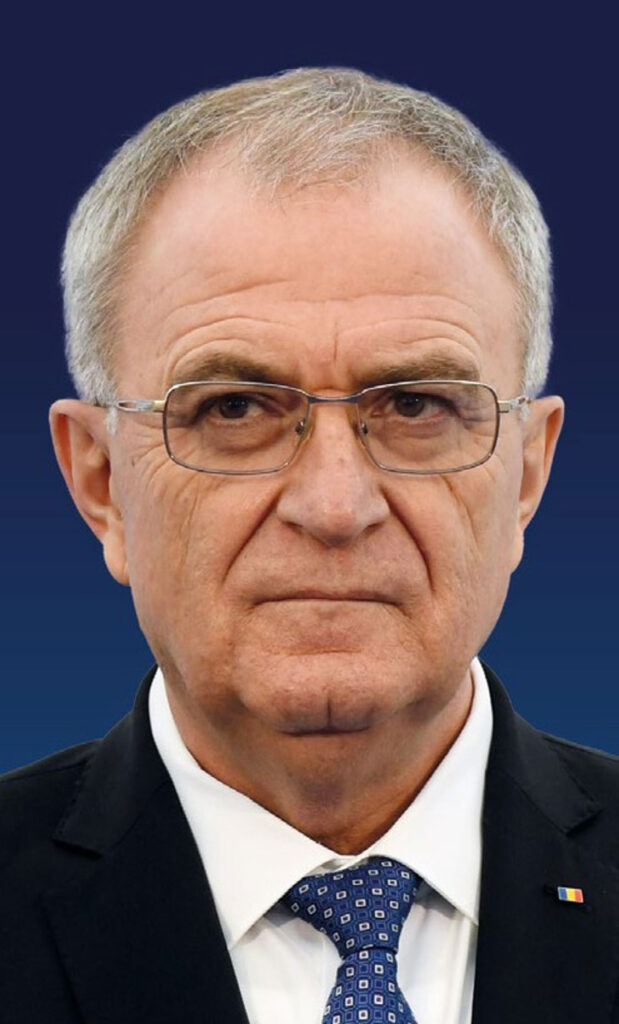
Ion Sterian
Director General of Transgaz
Two decades ago, few would have anticipated that Romania would come to play such a significant role in discussions about Europe’s energy security. The country possessed natural resources, highly skilled
specialists, and a solid infrastructure developed over many years, yet its position within major European energy projects remained relatively limited. Today, the situation is markedly different. Romania is actively involved in the region’s principal energy corridors, participates in large-scale strategic projects, and is regarded as one of the key players in Southeastern Europe. A significant part of this transformation is closely associated with the name of Ion Sterian.
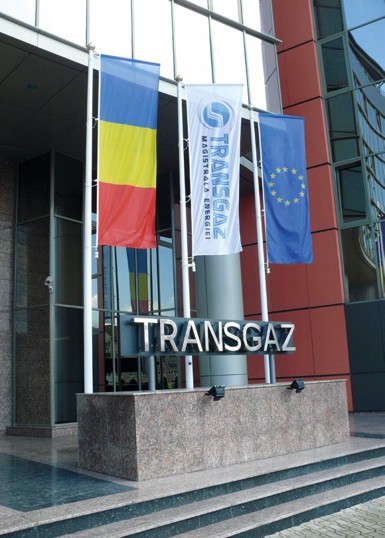
For more than a decade, the Director General of Transgaz has overseen one of the most dynamic periods in the company’s history. During this time, Transgaz has gone far beyond its traditional role of operating Romania’s National Natural Gas Transport System. The company has become an active participant in the energy transformation of the region, while Romania has strengthened its position in a sector that directly influences economic development, investment flows, and geopolitical stability.
Those who know Ion Sterian describe him first and foremost as a long-term strategist. He does not view infrastructure merely as a network of pipelines, compressor stations, and capital investments. Instead, he sees it as a mechanism capable of shaping a country’s development for generations. This perspective, forged through decades of experience in the energy sector, has defined his entire professional career.
Ion Sterian built his career in a field where patience, discipline, and the ability to anticipate change are essential. This vision would later be reflected in his leadership of Transgaz. When he assumed management of the company, Europe was already undergoing profound transformation. Energy market liberalization, the emergence of new supply sources, and growing concerns regarding energy security were compelling European states to rethink their strategies.
For Romania, the challenge was clear: to move from the status of a national energy market to that of an active participant in an integrated regional network.
Under Ion Sterian’s leadership, Transgaz responded to this challenge through an ambitious investment program.
Rather than adopting a defensive strategy, the company chose to invest sustainably in development, interconnectivity, and the expansion of gas transport capacity.
Among the projects that have defined this period is BRUA, one of the most important energy corridors developed in Central and Southeastern Europe since Romania’s accession to the European Union. To the general public,
BRUA may appear to be simply a natural gas pipeline. For industry specialists, however, it represents one of the investments that has fundamentally reshaped the energy architecture of the region.
By connecting Bulgaria, Romania, Hungary, and Austria, BRUA created new opportunities for natural gas transportation and contributed to the diversification of supply routes. At a time when Europe is seeking solutions to reduce its energy vulnerabilities, projects of this kind have become essential.
The same strategic approach can be seen in Transgaz’s role in designing and advancing the Vertical Gas Corridor, a project aimed at connecting the energy systems of Greece, Bulgaria, Romania, the Republic of Moldova, and Ukraine. Against the backdrop of geopolitical changes generated by the conflicts in Ukraine and the Middle East, the importance of such interconnections has become evident across Europe.
Romania, through Transgaz, promoted the concept of the Vertical Corridor as early as 2016 as a strategic initiative designed to reduce dependence on Russian natural gas and facilitate access to liquefied natural gas (LNG) supplied by American companies operating both in the United States and in other regions of the world, including North Africa, offshore Cyprus, and the Leviathan and Tamar gas fields.
The Vertical Corridor is one of the most ambitious regional projects in the field of natural gas transmission. It has the potential to fundamentally reshape energy flows across Central and Eastern Europe by creating new transportation routes and diversifying energy sources for the entire region.
If one project carries a particularly strong symbolic dimension, however, it is the Iași–Ungheni–Chișinău gas pipeline. For the Republic of Moldova, Romania’s investments in this project provided access to alternative sources of supply and significantly enhanced energy security. For Romania, it represented one of the clearest demonstrations that infrastructure can generate an impact extending far beyond economics alone.
Behind this achievement stood years of preparation, coordination, and cooperation between institutions on both sides of the border. The result was a project that brought two countries closer together and laid the foundations for stronger energy cooperation.
In recent years, Ion Sterian’s attention has also focused on one of Romania’s most important economic opportunities: the development of natural gas resources in the Black Sea. Offshore discoveries offer Romania the prospect of becoming one of the European Union’s leading natural gas producers. Yet resources, however significant, cannot generate value without the infrastructure required to transport and distribute them.
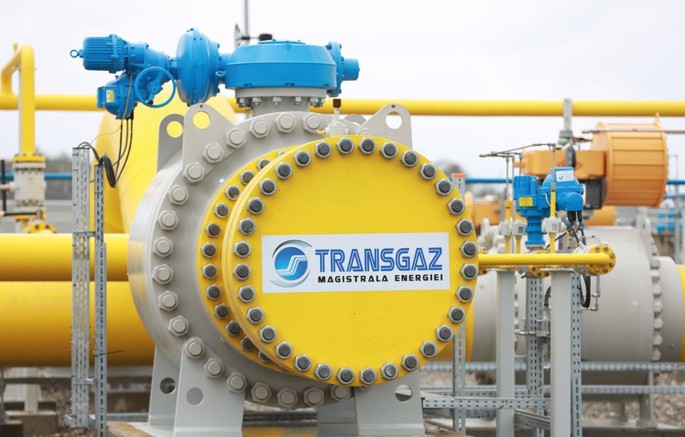
For this reason, Transgaz has developed projects designed to integrate Black Sea production into both the national and European energy systems. Among them is the Black Sea Shore–Podișor gas pipeline, a €500 million investment that has already been completed and put into operation. For the company, long-term strategic investments remain one of the most important pillars of future development.
Beyond these large-scale projects, Ion Sterian’s tenure has also been characterized by the continuous modernization of the company. The digitalization of processes, infrastructure automation, and the introduction of advanced monitoring technologies have all contributed to greater operational efficiency and safety.
These changes may be less visible than the inauguration of a new pipeline, but they are essential to the functioning of a modern energy system. In an industry undergoing constant transformation, technological adaptation has become a fundamental prerequisite for competitiveness.
Today, in a context where energy has become one of the most important components of economic and geopolitical security, many of the projects that define Romania’s position on Europe’s energy map bear the imprint of Ion Sterian’s leadership. His career is closely linked to the transformation of Transgaz into a significant regional player and to the strengthening of Romania’s role in a sector undergoing continuous change and thus he has demonstrated that investments in infrastructure can generate effects measured not in years, but in generations.
