
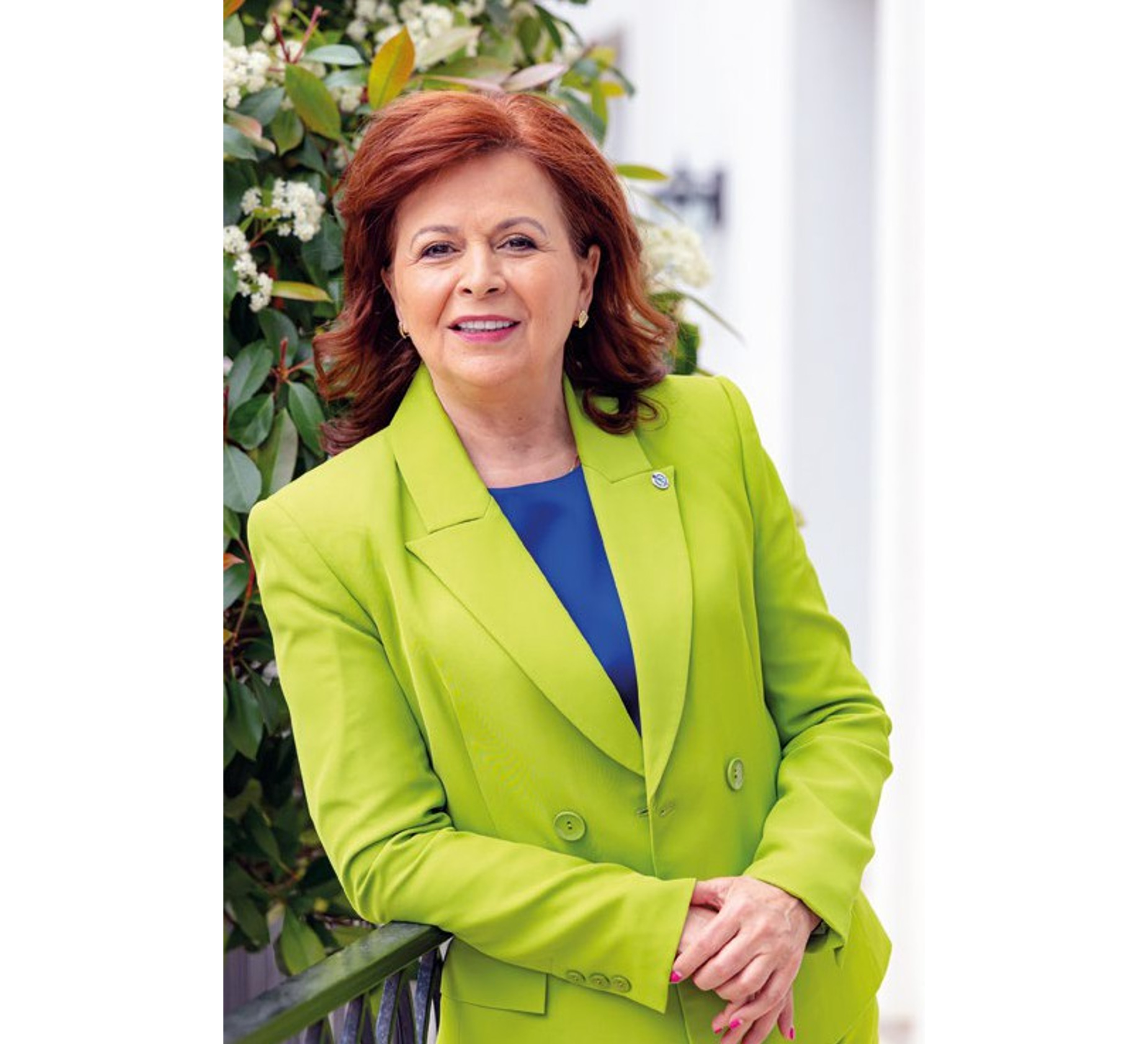
Mihaela Rodica Suciu,
General Director of DEER
What are the most important challenges you face in managing and modernising the distribution grid, and how do they influence the quality of services provided to users?
Managing and modernising the distribution grid is today one of the most complex missions in the energy sector. We are no longer talking only about distributing electricity safely and reliably, but about transforming critical infrastructure into an intelligent platform capable of supporting future economic development.
The main challenge is the modernisation of an extensive grid, developed in different stages and currently undergoing a continuous process of adaptation to new technological requirements and evolving consumption patterns. At the same time, we are witnessing the fastest transformation of the energy sector in recent decades: the integration of renewable generation, the growing number of prosumers, the development of electric mobility and the digitalisation of electricity consumption.
Today, the success of a Distribution System Operator is no longer measured only by kilometres of grid infrastructure built or modernised, but by its ability to create a flexible, digitalised and resilient infrastructure, ready for the next 20 to 30 years.
Another major challenge is the increasing frequency of extreme weather events. Distribution grids are increasingly exposed to difficult conditions, and our responsibility is to invest continuously in strengthening grid resilience and shortening response and restoration times, so that the impact on consumers is kept as low as possible.
In this context, investments are no longer merely a development objective, but an essential condition for energy security and for the economic competitiveness of the regions in which we operate.
For DEER, grid modernisation means more than replacing equipment. It means building an infrastructure that enables the integration of new technologies, improves service quality and meets the expectations of a society that is increasingly connected and increasingly dependent on electricity.
A key challenge is also the availability of a qualified and well-trained workforce. The accelerated modernisation of grids and the digitalisation of processes require skilled specialists and an organisational culture focused on performance and continuous adaptation. Technology is essential, but its value is given by the people who implement and use it. That is why we constantly invest in the professional development of our employees, in attracting new generations of specialists and in strengthening a team capable of responding to the increasingly complex challenges of the energy sector.
All these challenges directly influence the quality of services provided to users. Electricity distribution is undergoing a paradigm shift: from traditional grids to smart grids. Our role is to accelerate this transformation, so that every investment made today translates tomorrow into greater safety, higher efficiency and better service quality for millions of users.
What concrete results have the investments made in recent years delivered in terms of reducing operational costs, improving grid efficiency and increasing user satisfaction?
Financial results are important, but for a Distribution System Operator, true performance is measured by the ability to transform these results into investments that are visible in the field and into better services for users. In 2021, DEER recorded a loss of RON 140.7 million. Starting in 2022, when I took over the mandate as General Director, together with the DEER team, we managed to fundamentally change the company’s results, recording net profits of RON 389.1 million in 2022, RON 509.1 million in 2023, RON 648.7 million in 2024 and RON 812.7 million
in 2025.
In the last two years, 2024 and 2025, we carried out investments of approximately RON 1.7 billion: RON 775 million in 2024 and RON 852 million in 2025, 10% above the value scheduled in the Investment Programme.
The investments made in recent years have had a direct impact both on the company’s operational performance and on the quality of services provided to users.
A first important result is the increase in the level of grid automation and digitalisation. The implementation of modern monitoring and control solutions enables faster identification of incidents, isolation of affected areas and shorter restoration times. This translates into better continuity of supply and an improved user experience.
At the same time, modernisation and upgrade programmes have contributed to increasing operational efficiency. Modern equipment offers improved performance, requires fewer interventions and enables the optimisation of maintenance activities. As a result, the company’s resources can be directed more efficiently towards the development and strengthening of infrastructure.
Another significant effect is the increased capacity of the grid to integrate the new requirements of the energy transition. The investments made facilitate the grid connection of an increasing number of prosumers and new users, supporting economic development and decarbonisation objectives.
From the users’ perspective, the most important results are visible in the improved reliability of electricity supply, the reduction in the number and duration of outages and greater access to digital services. Users have growing expectations regarding access to fast, transparent and online services, and investments in digitalisation allow us to respond to these expectations increasingly efficiently.
In conclusion, investments in electricity distribution do not generate only technical benefits. They create long- term economic and social value by increasing security of supply, supporting community development and preparing the energy infrastructure for the challenges of the future.
In a sector undergoing profound transformation, efficiency no longer means only cost reduction, but the ability to deliver more value to users through every investment made.
How do you see the company’s role in the transition towards a more sustainable energy system, and what priority investments do you have in this direction for the coming years?
Everyone is talking about new generation capacities, renewable energy and prosumers. But electricity does not reach the consumer by itself. Grids are the backbone of the entire energy system and the foundation on which the energy transition is built.
The energy transition cannot be achieved without large- scale investments in grids, digitalisation and distribution capacity. If we develop only generation and fail to develop the infrastructure, we risk grid bottlenecks, delays and additional costs.
For the 2025–2029 period, DEER has planned investments of more than RON 5.7 billion, of which RON 3.2 billion will be financed through European Union funds.
Our priorities are digitalisation, automation, smart grid development, the integration of renewable energy sources and strengthening infrastructure resilience.
Investments in grids are not only investments in energy infrastructure. They are investments in the competitiveness of the economy, in community development and in Romania’s energy security.
The energy transition cannot be achieved without modern, intelligent and sufficiently robust distribution grids capable of integrating new production and consumption models. From this perspective, DEER’s role is essential: we are the infrastructure that makes the transformation of the energy system possible.
In recent years, energy has become increasingly decentralised. We are talking about a continuously growing number of prosumers, the accelerated development of renewable generation capacities and the expansion of electric mobility. All these developments have one element in common: they depend on grids capable of managing more complex and more dynamic energy flows than in the past.
That is why I believe Distribution System Operators are at the centre of the energy transition. Without consistent investments in grids, the objectives of decarbonisation, energy independence and electrification cannot be achieved at the pace society expects.
Our priorities for the coming years focus on accelerating the digitalisation and automation of the grid, developing the infrastructure required to integrate an increasing volume of renewable energy, modernising substations and distribution lines, and strengthening system resilience in the face of extreme weather events.
At the same time, we will continue to invest in intelligent monitoring and control solutions, which allow real-time grid operation and provide users with services that are more efficient, more transparent and better adapted to future needs.
Our vision is clear: the distribution grid must evolve from its traditional role as passive infrastructure into an intelligent energy platform, capable of connecting producers, consumers, prosumers and new technologies within an efficient and sustainable ecosystem.
The energy transition is not only a technological change. It is a broad economic and social transformation, and
DEER’s mission is to provide the foundation on which this transformation can be built safely, efficiently and sustainably.
Over the next decade, economic competitiveness and quality of life will increasingly depend on the performance of energy infrastructure. That is why investments in grids are not only investments in energy, but investments in Romania’s future.
What are the main benefits that users experience today as a result of the company’s investments in the grid and digitalisation?
Grid modernisation and digitalisation have a very clear objective: improving the services provided to users, by ensuring electricity distribution services at the highest possible standards.
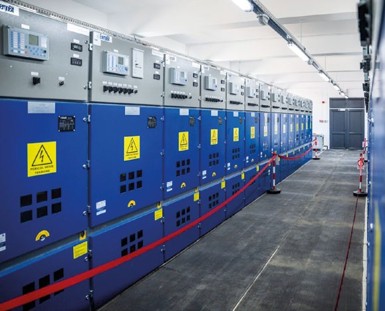
The most important benefit is ensuring continuity and safety of electricity supply. Modernised grids and automated systems help reduce the number and duration of outages, improve power quality, enable faster response in case of failures and provide digitalised services for users.
Smart metering provides access to accurate consumption data and contributes to a more transparent relationship between the operator and the user. At the same time, the digitalisation of internal processes and of core distribution services helps reduce response times and improve interaction with users.
The benefits of investments in the grid and in digitalisation are directly experienced by users today, even though the infrastructure that generates them often remains invisible.
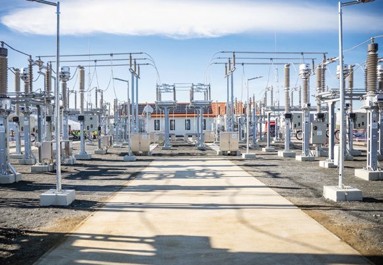
First of all, users benefit from a safer and more reliable electricity supply. Grid modernisation, the automation of installations and the implementation of intelligent technologies help reduce the number of incidents and shorten the time required to identify and resolve them when they occur.
Another important advantage is the improvement in service quality. Through digitalisation, many processes have become faster, more transparent and more accessible. Users can access information, submit requests and interact with the company through digital channels, saving time and benefiting from a simpler and more efficient experience.
The investments made also allow the grid connection of new users and prosumers at a better pace, contributing to community development and expanding access to modern energy solutions. At the same time, digitalisation gives us the ability to monitor and manage the grid in real time, which means faster interventions, greater capacity to anticipate problems and more efficient use of resources.
For users, the simplest measure of the success of these investments is this: electricity is available when they need it, and when unexpected incidents arise, the company’s response is faster, more efficient and more transparent.
I believe this is the most important result of the transformation we are going through: technology should not be visible through its complexity, but through the comfort and safety it provides to people.
Ultimately, our objective is not only to build a more efficient grid, but to give every user the confidence that they benefit from a modern, safe and future-ready service.
The integration of renewable energy sources and the growing number of prosumers represent a challenge for distribution grids. How is the company preparing for this transformation?
A few years ago we were talking about a distribution grid, in 2026, we are talking about a distribution system. This change in language is not merely semantic — it reflects a paradigm shift. The grid is no longer a simple channel for transporting electricity from producer to user; it is an active platform that must manage complex, bidirectional flows, diverse sources and increasingly unpredictable demand patterns.
The growth in the number of prosumers is one of the most interesting and, at the same time, most complex transformations the distribution sector is undergoing. The grid was designed for a unidirectional flow of electricity; today, the same consumer can also be a producer — and this fundamentally changes the operational logic of the system.
We are witnessing one of the most important changes in the recent history of the energy system, and grid connection is no longer only a technical issue. It has become an essential condition for economic development, energy investments and Romania’s competitiveness.
Ten to fifteen years ago, grid connection requests were predictable, consumption was growing slowly, and energy flow was almost exclusively unidirectional.
In DEER’s service area, the number of prosumers has increased tenfold in four years, from approximately 15,000 at the end of 2022 to over 145,000 at present.
We are preparing for this transformation on several levels simultaneously. We cannot talk about renewable energy without infrastructure capable of integrating it. We cannot talk about efficiency without digitalisation, and we cannot build resilience without continuous investment.
The development plans approved for the 2025–2029 period provide for investments of over RON 5.7 billion, of which approximately RON 3.2 billion comes from the Modernisation Fund and the Sustainable Development Programme.
Our priorities are clear: the digitalisation of infrastructure through the integration of intelligent monitoring and control systems, the development of grid connection and renewable integration capacity, and the strengthening of grid resilience in the face of extreme climate events.
We aim to support clean energy and energy efficiency by ensuring the distribution of electricity produced from renewable sources, by reducing technical losses, by lowering maintenance costs — especially transport-related costs — and by using equipment with advanced technical characteristics and low-maintenance requirements.
Our development plan provides for grid digitalisation and the step-by-step implementation of the Smart Grid concept, through digital solutions for fault isolation and power restoration in rural and urban areas, through the digitalisation of transformer substations and through remote grid control solutions. This includes the integration of substations into SCADA, the use of intelligent equipment and systems to ensure power quality — smart metering systems and analysers —, greater flexibility of the distribution system through digitalisation and the development of smart metering.
DEER has an approved timetable for the implementation of smart metering systems, according to which, by the end of 2028, approximately 35% of connected users are expected to be integrated into the smart metering system. We are also targeting an increase in the coverage of intelligent monitoring systems to 70% for real-time consumption monitoring. By 2030, our objective is to increase the level of automation to 100% in substations and 15% in secondary substations.
We pay particular attention to energy security and the resilience of electricity infrastructure, with strategic objectives that include the automation and digitalisation of processes to a level of 80% by 2030, alongside the implementation of advanced analytics and predictive maintenance technologies.
As grids become increasingly digitalised, the need for cybersecurity also grows. DEER has fully recognised these risks and has adopted a cybersecurity strategy that includes advanced measures for prevention, detection and rapid response to incidents. We continuously invest in state- of-the-art technologies, in strengthening IT infrastructure and in training cybersecurity specialists in order to ensure system resilience.
We are actively involved in developing a framework for cooperation and the exchange of best practices at national and regional levels, by organising and supporting reference events. In this respect, on 29–30 October, we are hosting the fourth edition of the Energy Cybersecurity Forum, an event that brings together experts, decision-makers and industry representatives to discuss the latest challenges and solutions in the field.
For DEER, preparing for this new reality means developing a smarter, more flexible grid, capable of responding dynamically to market requirements. We continuously invest in the modernisation of lines and substations, in the automation of operational processes and in the implementation of advanced monitoring and control systems. These investments allow us to manage the production variability specific to renewable energy sources more efficiently and to maintain the stability and safety of electricity supply.
We see the development of prosumers not only as a challenge, but also as an opportunity to modernise the energy sector. Each new prosumer contributes to transforming the consumer into an active participant in the energy market, and our role is to ensure the infrastructure required for this evolution to take place efficiently and sustainably.
The future of energy will be more decentralised, more digitalised and greener. That is why the investments we are making today are designed not only for the current needs of the system, but also for the requirements of the coming decades.
The energy transition will not be measured only in megawatts of installed renewable capacity, but also in the capacity of distribution grids to integrate this energy safely, efficiently and at scale. This is one of DEER’s major strategic objectives.
What is your vision for the relationship with consumers over the next 5 to 10 years, and what new services or solutions do you intend to provide in order to increase the quality and safety of electricity supply?
My vision is simple in essence, although complex in implementation: the user must become our partner, not our passive recipient. This change of perspective is not rhetorical — it is operational and strategic.
Over the next 5 to 10 years, the user will become an active participant in the operation of the energy system. The traditional consumer is increasingly becoming an electricity producer as well. To respond to this transformation, we are investing in the modernisation and expansion of grids, in intelligent monitoring and control systems and in simplifying grid connection processes.
Our objective is to provide greater transparency, greater control over consumption and a simple and efficient digital interaction for our core distribution services.
Smart metering is the first step in this transformation. We are currently implementing an extensive digitalisation programme through the installation of 1.1 million smart meters, and by 2030 our objective is to exceed the threshold of 3 million smart meters.
In my view, investments are the most important form of respect that a Distribution System Operator can show its users. Because, ultimately, the quality of the relationship with the consumer is not defined by statements or promises, but by the quality of the service they receive every day.
A more modern grid means fewer outages, shorter intervention times, better power quality and greater capacity to respond to the future needs of communities and the economy. A more digitalised grid means faster information, more efficient services and a better user experience.
That is why DEER’s strategy is built around investments. Every modernisation project, every automated substation, every kilometre of upgraded grid and every smart meter installed directly contributes to improving the quality of the distribution service.
My vision is for DEER to evolve from the status of operator of essential infrastructure to that of a trusted partner for the communities we serve. This means more accessible services, real-time information, simplified processes and permanent, transparent communication focused on users’ needs.
Digitalisation will play a central role in this transformation. We aim to expand digital solutions that allow users to quickly access information about the grid, scheduled works, unplanned outages, the status of requests or the grid connection process. Today’s consumers expect the same speed and transparency they experience in other digital services they use every day, and we must respond to these expectations.
At the same time, we will continue to invest in grid automation and digitalisation in order to increase security of supply and reduce the impact of incidents. Smart grids, real-time monitoring and the use of advanced data analytics technologies will allow problems to be identified and remedied in an increasingly shorter time, before they affect a large number of users.
As the number of prosumers, electric vehicles and new energy solutions increases, we will develop the infrastructure and services required to support this evolution. Users will no longer be only recipients of electricity; they will become active players in the energy system, and the grid must be prepared for this shift.
I believe that, over the next decade, the most important expectation of consumers will not be only access to energy, but access to an energy service that is safe, predictable, digital and tailored to their needs. This is the objective towards which we direct all our investments and transformation projects.
Electricity will become increasingly important for the economy and for everyday life. That is why our mission is to ensure that this growing dependence on electricity is accompanied by an equally high level of safety, reliability and trust.
In my view, the success of a Distribution System Operator will no longer be defined only by the technical performance of the grid, but by the confidence users have that the electricity they depend on in everyday life and economic activity will be available, safe and managed through modern services, at the standards of a digital economy.
