
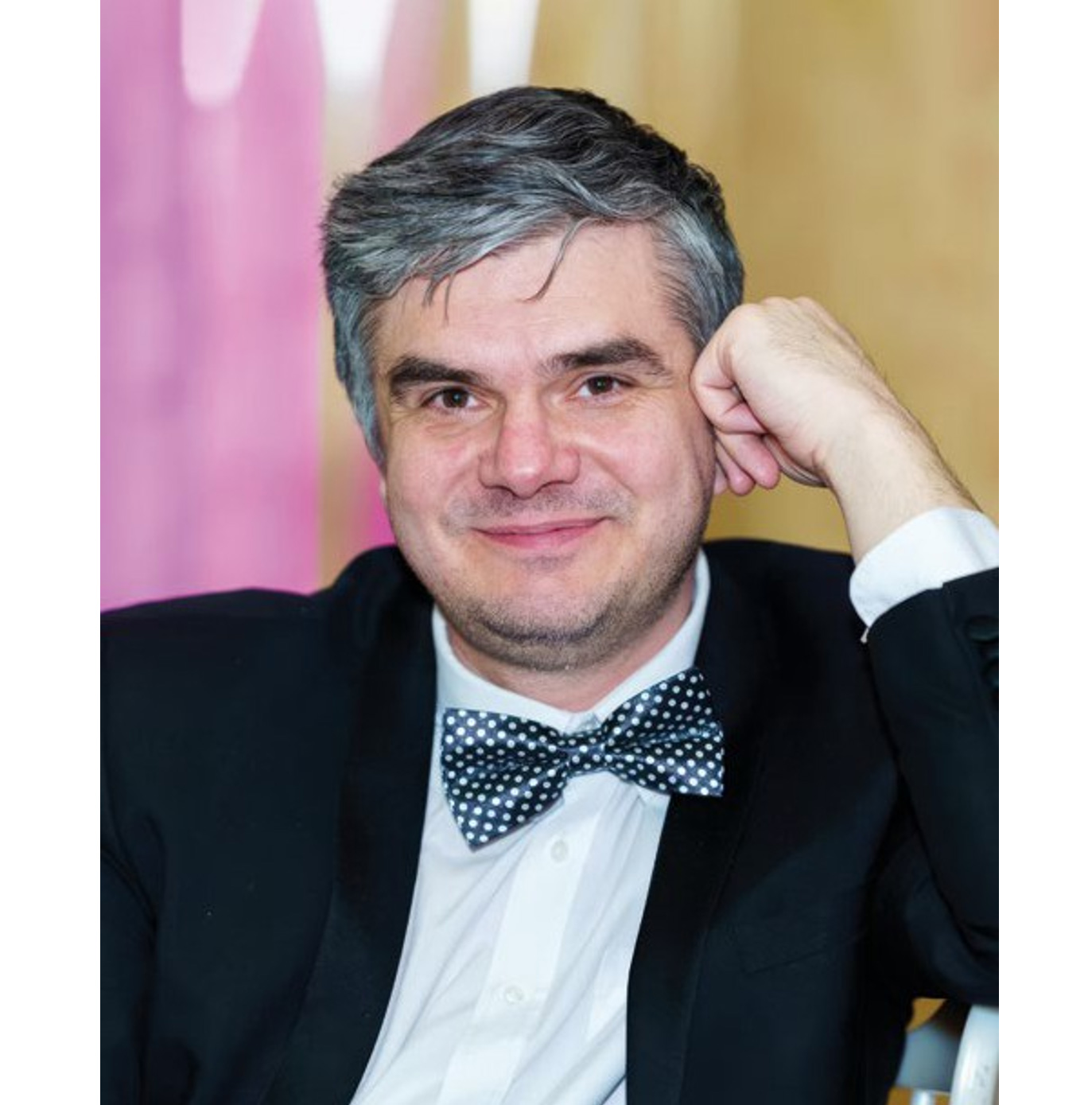
Răzvan Orășanu,
President ‘Up to Us (Ţine de Noi)’ Association
The NGO I founded aims to help us build normality: a country where well-made public policies become a reflex, both locally and nationally. We have had some notable successes over the past 21 years, but they remain modest against our acute problems, which are still treated superficially, with the advanced science of hot air and waffle, trying to reconcile the irreconcilable, with the ideology of “Mioriţa” or nationalism that still haunts the public space, with the perpetual return to Dacian ancestry. Because, in the end, it is up to us to change the reality of the present!
For Romania to be protected in the future, as the generous idea that united all those present in this cross-party project, we need the right man in the right place, dedicated and impartial professionals, infrastructure, and knowledge, and we also need to learn from our mistakes. In other words, we would have needed, just yesterday, a set of public policies developed by dedicated professionals. But none of these elements I consider to be dominant in today’s public discourse; our democratic system continues to promote nullities, whereas the mistakes made, for example, in the public budgeting field or those made in the 2009 crisis, are not even recognized by the Romanian people, so we cannot learn not to repeat them.
This is why it will probably take at least another 21 years of efforts in this direction, especially today, when we talk about multiple, overlapping crises: an identity crisis, a security crisis, including the fragmentation of the trans- Atlantic world, and an economic crisis.
Let’s start, as Romania should do but is not, with public policies in education field. The lack of a truly profound diagnosis, both in the pre-university and university areas, the lack of certain data, and the lack of a culture of creating public policies in this field have led to a disaster that can be easily compared to Romania’s past of enlargement. We only need to read one old but still current document—the exceptional x-ray of education reforms in Spiru Haret’s report to King Carol I—to see how far we are. If we are to go into a little detail, the “Up to Us Association” has implemented three types of interventions in this area of education over the last eight years.
First of all, we tried to create a national reform related to pilot schools, an experimentation area that can be the foundation of a new education system in Romania. We are talking about schools that have graduated their curricula, changed their content and pedagogy, and also changed the way they work. In the meantime, some of them have become victims of their own success, with such enthusiasm that at least one overcrowded school had to partially discontinue this experiment.
The second area we tried to focus on was the creation of sound public policies worthy of this name. We focused on framework plans and pre-university content, explored alternative methods, and we were very vocal at key moments, such as adopting framework plans and creating reform programs.
The third area we tried to focus on was creating a community. Through the over 40,000 people enrolled in the more than 260 events we have organized in recent years, the Association has built one of the largest education communities in Romania: a community of reform-minded people who want, in their environment, to change the state of education in Romania.
The second category of interventions was in the energy area. We held conferences dedicated to the National Energy Strategy and specialized conferences on renewable energy, and elaborated many contributions during the period when Romania’s strategic plans were being written. Also, within this energy topic, we have carefully learned and continue to do so to identify possible solutions for the central heating system of Bucharest, a system under continuous pressure, Bucharest being the largest of the 60 cities in Romania with such a system.
The third category of interventions focused on national values and the recognition of contemporary Romanian leaders. In this area, I was happy to contribute to two separate exhibitions. The first and most important was at the Museum of the Romanian Peasant, linked to the exceptional destiny of Ion Rațiu, a model for Romanian democracy. The exhibition was very successful after its opening at the Museum of the Romanian Peasant, with an itinerant route across Romania and presence in several places, attracting several thousand people.
The second exhibition, a few months before the death of the late Ion Caramitru, was called Democracy and Protest and featured the exceptional Ana Blandiana, in a collaboration between the “Up to Us Association” and the Civic Academy Foundation. Democracy and Protest covered 80 years of protest in Romania, starting with the last pro-monarchist protest in 1947, then the protests of the 1989 Revolution, and continuing with the protests in University Square and the #Rezist protests. Besides these two projects of remembrance of history, the third ongoing project at “Up to Us Association” is creating a route in Bucharest featuring the houses of the Brătianu family, to remember several key moments in the work of some founders of modern Romania. Because the return to greatness goes through the recognition of the past and the awareness of the roots.
In the future, one of the constants we will maintain is the creation of generations of public policy experts. This initiative has already reached the third generation of policymakers. The workshop, which generally lasts 3 to 5 months, aims to accompany each author of public policy through a rigorous selection process. The goal is to innovate the public policy field, at the national level, so as to create the reflex of evidence-based public policy, importing a methodology used not only at the Harvard Kennedy School and the Hertie School in Berlin, but also across the civilized, Euro-Atlantic world. Unfortunately, this effort remains solitary, in the absence of a broader infrastructure of meaningful and methodical public policies and, with a few exceptions, of academia’s openness to practice.
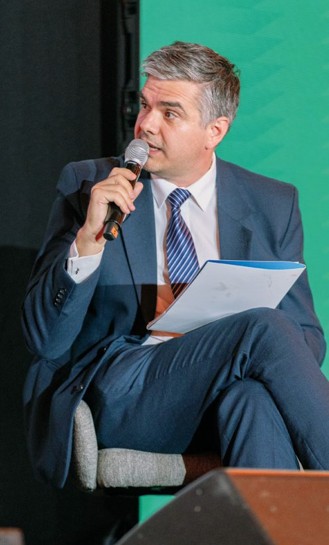
As a conclusion, the Romanian public space, the space for reflecting on a strategy for Romania in 2050, is narrowing more and more. The main contemporary themes are those of bad taste, a particular type of commercial slaughter, egoism in public space, and deculturalization. Therefore, MediaUno’s approach of bringing together a number of enlightened minds to create a circle of eminent people eager for progress is a fantastic idea for a fragmented society such as Romania’s. Success has been great so far, and it is one of the reasons why I am very proud to be part of this community. Those who express their opinions in the public space or create public policies will have to make a joint effort to build additional solidarity for implementing their ideas, including by exerting greater influence in the political arena, which, in certain important sectoral fields, has serious gaps and a lack of advanced expertise.
