
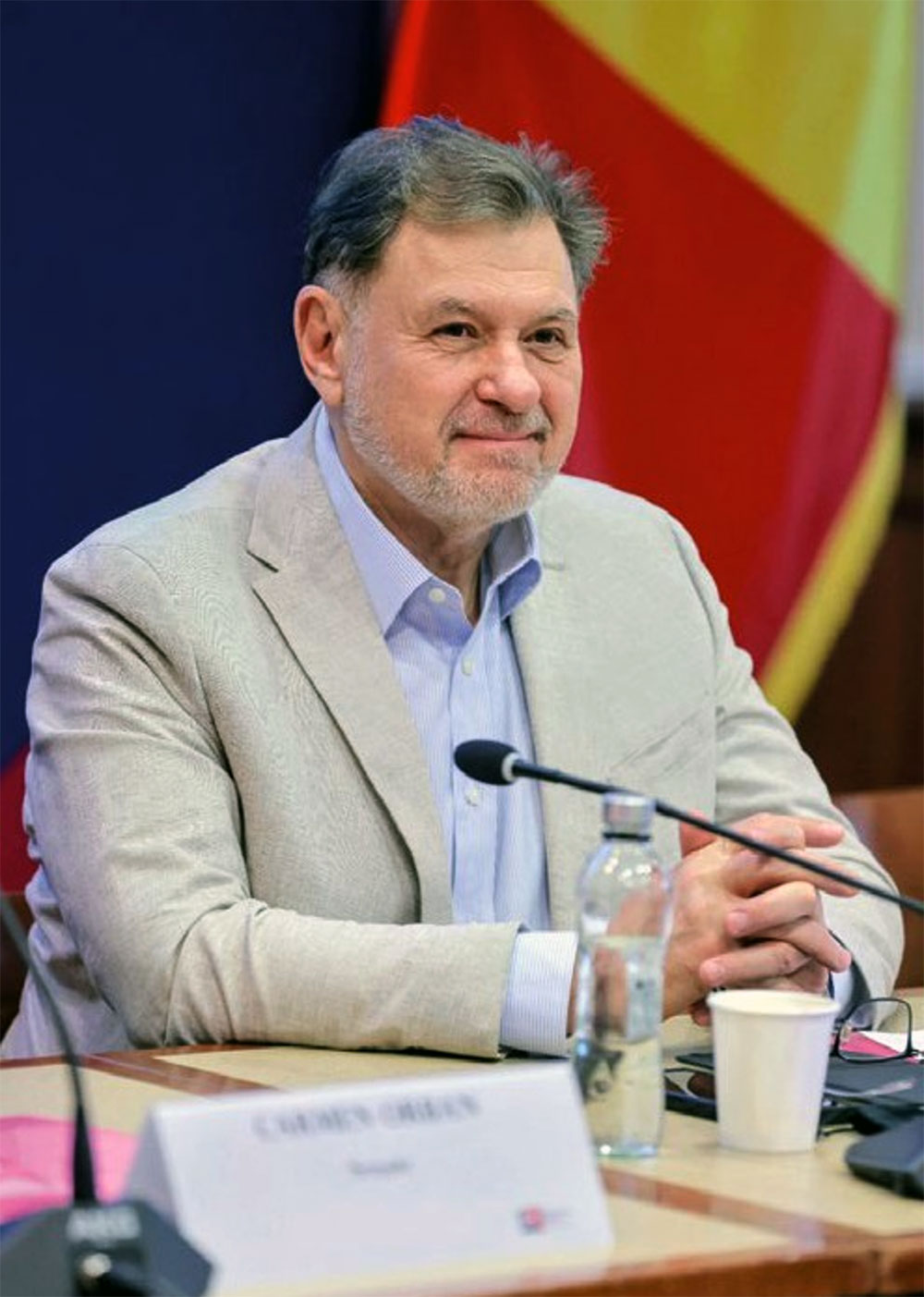
Professor Alexandru Rafila
Chairman of the Committee on Health and Family in the Chamber of Deputies
Professor Alexandru Rafila, MD, PhD, is one of the most prominent figures in contemporary Romanian medicine—a professional who has devoted his entire career to public health, scientific research, medical education,and the development of Romania’s healthcare system. Spanning more than three decades, his professional journey has been distinguished by expertise, balance, strategic vision, and a constant commitment to improving the health and well-being of the population.
A graduate of the “Carol Davila” University of Medicine and Pharmacy in Bucharest, Professor Rafila built his career in the fields of microbiology and public health. As a university professor, researcher, and nationally and internationally recognized specialist, he has contributed to the education of numerous generations of physicians.
He is widely respected for his scientific rigor, academic leadership, and ability to successfully combine teaching, research, and healthcare management. His scientific contributions include landmark publications, university textbooks, articles published in specialized journals, and participation in numerous international projects focused on public health and communicable diseases.
Professor Rafila’s expertise has been acknowledged by prestigious organizations such as the World Health Organization (WHO), the European Commission, and other international institutions. Within these frameworks, he has contributed to the development of policies and programs aimed at controlling communicable diseases, strengthening healthcare systems, and enhancing preparedness for public health emergencies. He has also held important positions within Romania’s healthcare administration, playing a significant role in shaping public policies with a direct impact on population health.
In recognition of his exceptional contributions to public health and medicine, the President of Romania awarded him the Order of “Sanitary Merit” in the rank of Knight in 2010 and the Order of “Sanitary Merit” in the rank of Officer in 2019.
His tenure as Minister of Health represents one of the most significant chapters of his career. During a period marked by complex challenges, Alexandru Rafila succeeded in providing the Romanian healthcare system with a strategic direction based on investment, structural reform, and the development of sustainable public policies. Under his leadership, unprecedented investments in healthcare infrastructure were launched and accelerated, many of which are now in advanced stages of implementation.
Among the most important achievements has been the advancement of the three Regional Emergency Hospitals in Iași, Cluj-Napoca, and Craiova—strategic projects awaited for more than three decades and expected to fundamentally transform access to high-performance medical services for millions of Romanians.
Professor Rafila’s vision for healthcare modernization also focused on strengthening outpatient and primary care services. Under his mandate, 79 specialized outpatient clinics received funding and development support, investments were made in 2,500 family medicine practices, extensive modernization and equipment programs were implemented for neonatal care units across the country.
A major contribution of his tenure was the consolidation of Romania’s strategic healthcare framework. Under his coordination, the National Health Strategy and several essential sectoral strategies were developed and implemented, including those related to healthcare workforce development, tuberculosis control, HIV/AIDS prevention and treatment, the National Vaccination Strategy, prevention and control of healthcare-associated infections, cardiovascular and cerebrovascular diseases. In parallel, 129 hospitals benefited from dedicated programs aimed at combating healthcare-associated infections and improving patient safety.
Professor Rafila’s mandate was also characterized by concrete measures designed to improve access to treatment. Access to reimbursed medicines was expanded for numerous categories of patients suffering from chronic illnesses, reducing their financial burden and facilitating access to essential therapies. One of the most significant public health decisions during this period was the extension of free HPV vaccination to both girls and boys up to the age of 19—a measure expected to have a substantial impact on preventing cancers associated with human papillomavirus infection.
In the field of pharmaceutical policy, Alexandru Rafila promoted important reforms aimed at ensuring continuity of treatment and protecting patients’ access to essential medicines. Legislative measures were introduced to reduce the risk of low-cost medicines—particularly generic drugs—disappearing from the market. Prices for medicines valued below 50 lei were updated, pricing mechanisms for generic and innovative medicines affected by economic pressures were revised, and measures were implemented to reduce the impact of the clawback tax on pharmaceutical manufacturers. These interventions contributed to stabilizing the pharmaceutical market and improving patient access to necessary treatments.
One area where results were particularly visible was clinical research and healthcare innovation. During his tenure, the Romanian Health Innovation Hub was established through a partnership involving medical and pharmaceutical universities and healthcare industry representatives. At the same time, the National Plan for the Development of Clinical Trials was adopted, a document that received recognition at the European level as an example of good practice. As a direct result of these initiatives, the number of clinical trials conducted in Romania in 2024 was approximately three times higher than in 2021. This expansion provided patients with faster access to innovative therapies while strengthening Romania’s position within the European medical research landscape.
A distinct chapter of Professor Rafila’s tenure concerns the management of the final stages of the COVID-19 pandemic and the post-pandemic recovery period. At a time when societies worldwide were seeking a return to normality, his policies focused on restoring the balance between protecting public health and ensuring the normal functioning of society. Under his coordination access to healthcare services improved significantly, medical activities for both acute and chronic patients were resumed and expanded, new mechanisms were developed to facilitate rapid diagnosis and treatment for COVID-19 patients, access to specific therapies was expanded,vhealthcare pathways were optimized to improve efficiency and responsiveness.
These measures contributed to reducing mortality and limiting the overall impact of the disease on the population. At the same time, Professor Rafila supported the continuation of in-person education. Romania succeeded in maintaining and resuming classroom-based schooling without prolonged interruptions, generating important benefits for the development and well-being of children and young people.
University Professor Alexandru Rafila has demonstrated that progress in healthcare is built through professional competence, strategic vision, and perseverance. His achievements extend far beyond the accomplishments of an individual career. They are reflected in the projects, institutions, reforms, and public policies that will continue to benefit future generations. For his contribution to the advancement of Romanian medicine, the modernization of the healthcare system, and the promotion of the public interest, Professor Alexandru Rafila deserves the recognition and appreciation of both the medical community and Romanian society as a whole.
