
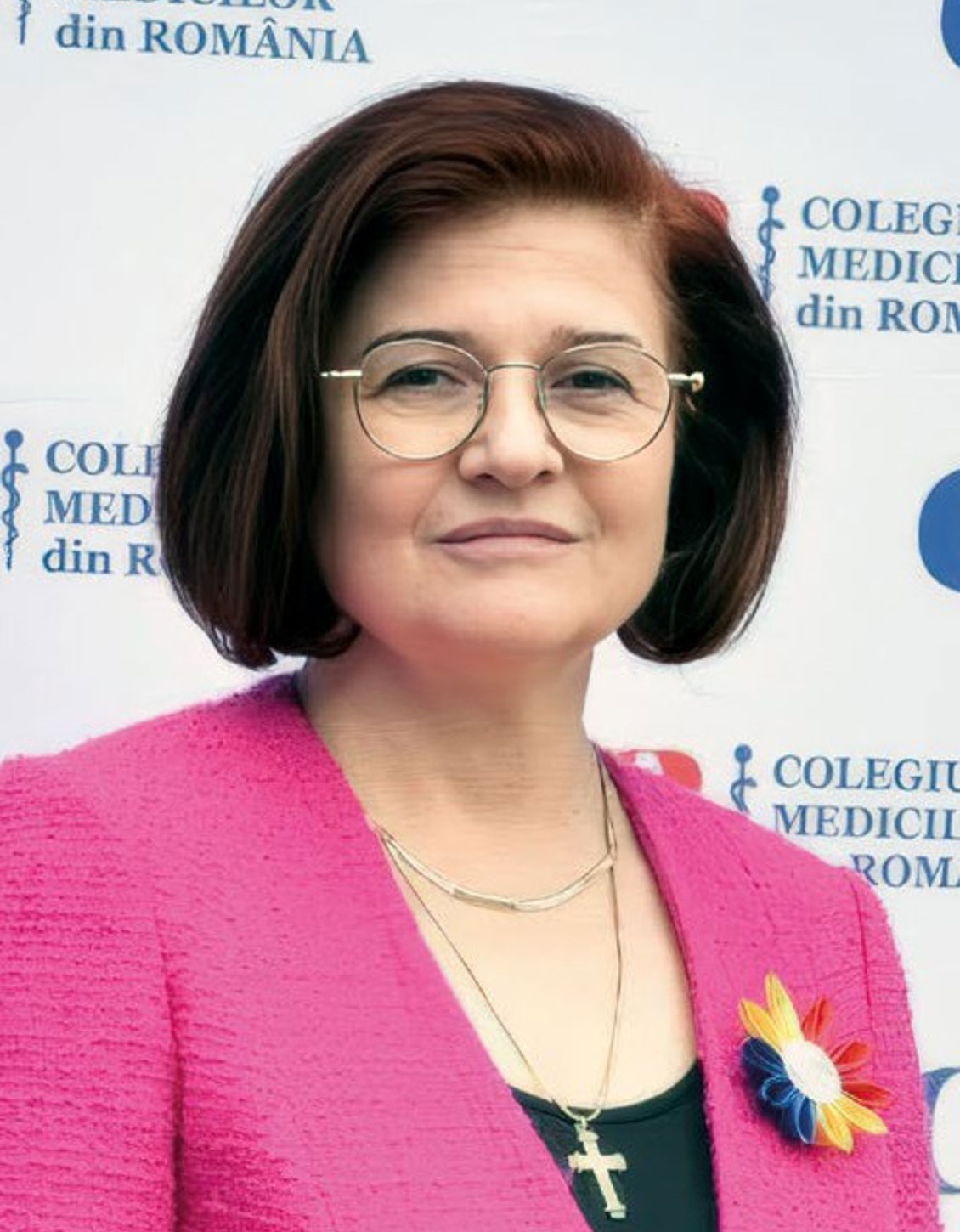
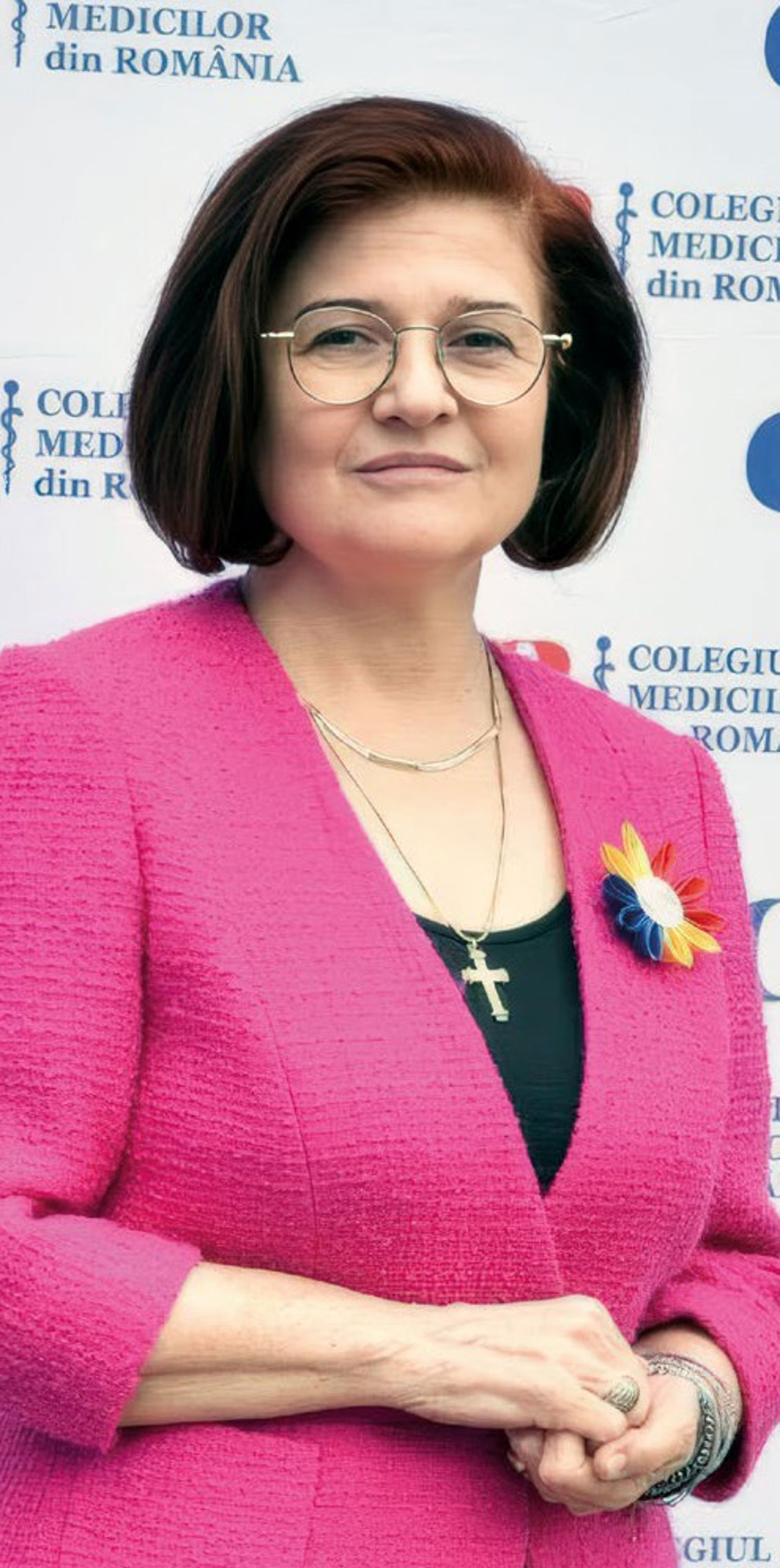
Prof. Dr. Cătălina Poiană,
President of the Romanian College of Physicians
Prof. Dr. Cătălina Poiană:
“We cannot build the healthcare system
of the future using rules that no longer
reflect the realities of the present.”
For Prof. Dr. Cătălina Poiană, President of the Romanian College of Physicians, one of the most pressing challenges today is updating the legislative framework governing the healthcare system.
In a context where medicine is evolving rapidly and the needs of both patients and healthcare professionals are continuously changing, legislation must keep pace with the realities of hospitals, clinics, outpatient facilities, and medical practices, while providing concrete solutions to long-standing challenges affecting the healthcare sector.
“Healthcare modernization is not limited to new hospitals, modern equipment, or digitalization. All these elements are essential, but they must be supported by a legislative framework adapted to current realities. We cannot build the healthcare system of the future using rules that no longer address the challenges of the present,” states Prof. Dr. Cătălina Poiană.
From Infrastructure to Functionality
Romania has made significant progress in healthcare infrastructure development over recent years. Projects financed through the National Recovery and Resilience Plan (NRRP) and other investment programs have created the conditions for meaningful transformation.
However, modern infrastructure alone cannot generate results without efficient organizational and operational mechanisms.
According to the Romanian College of Physicians, one of the major priorities is to continue and accelerate the modernization of healthcare infrastructure while simultaneously developing coherent policies regarding human resources and healthcare service organization.
“The healthcare system must be viewed as a whole. A new hospital is extremely important, but equally important are adequate staffing levels, functional mechanisms, and clear regulations that allow for the efficient use of resources. Modernization must be integrated,” emphasizes the President of the Romanian College of Physicians.
Access to Healthcare Services Remains a Major Challenge
One of the key issues identified by the Romanian College of Physicians is the unequal access to healthcare services across different regions of the country.
 While major university centers benefit from highly qualified specialists and advanced infrastructure, many communities continue to face difficulties in accessing basic healthcare services.
The shortage of healthcare professionals in certain regions and specialties remains one of the structural challenges of the healthcare system.
“We cannot speak about equity in healthcare as long as significant disparities persist between regions regarding access to medical services. We need measures that stimulate the development of healthcare services in underserved areas and support professionals who choose to work in these communities,” says Prof. Dr. Cătălina Poiană.
Strengthening Primary Care and Outpatient Services
Another strategic priority is the consolidation of primary healthcare and outpatient services.
Experts believe that many healthcare system challenges can be prevented or managed more effectively through stronger family medicine services and specialized outpatient care.
Such a model contributes to reducing pressure on hospitals while increasing patient access to healthcare services.
“A high-performing healthcare system begins within the community. Family medicine and outpatient care must become central pillars of the system because this is where prevention, early diagnosis, and patient monitoring take place. Investing in these components means investing in population health,” explains the President of the Romanian College of Physicians.
Prevention Must Become a Real Priority
Although the importance of prevention is widely acknowledged, preventive programs remain insufficiently developed and underutilized.
The Romanian College of Physicians considers the functionality and expansion of preventive programs to be among the major priorities of healthcare policy.
“A modern healthcare system is defined not only by its
ability to treat disease but also by its capacity to prevent it. Prevention must become a central component of public health policies and benefit from sustainable funding, continuity, and ongoing evaluation,” says Prof. Dr. Cătălina Poiană.
Reducing Bureaucracy and Supporting the
Medical Profession
Among the issues frequently raised by physicians is the substantial volume of administrative work that consumes time and resources which could otherwise be dedicated to patient care.
Reducing bureaucracy is regarded as an essential condition for improving system efficiency and increasing physicians’ professional satisfaction.
At the same time, the Romanian College of Physicians advocates for a balanced approach to on-call duty compensation and workload regulation, as well as coherent policies aimed at limiting physician migration.
“Physicians should be able to dedicate their energy and expertise to patients. Any unnecessary bureaucratic process represents lost time for both doctors and patients. At the same time, we must maintain a constant focus on working conditions, recognition of professional effort, and retaining human resources within Romania’s healthcare system,” states Prof. Dr. Cătălina Poiană.
Functional Legislation, Not Merely Adopted
Legislation
A frequently highlighted issue within the healthcare system is the existence of legislative acts that, although adopted, cannot be effectively implemented due to the absence of application norms.
According to the Romanian College of Physicians, healthcare modernization requires not only the adoption of new laws but also ensuring their functionality and practical applicability.
“We need clear, coherent, and enforceable legislation. A law that cannot be implemented does not generate change. For this reason, we consider the development of implementation norms for adopted legislation and the continuous assessment of their impact on the healthcare system to be a priority,” explains the President of the Romanian College of Physicians.
Reform Must Be Measured Through Results For the Romanian College of Physicians, every healthcare objective should be accompanied by realistic implementation timelines, performance indicators, and transparent evaluation mechanisms.
Only in this way can progress be measured and adjusted when necessary.
“Healthcare requires predictability, continuity, and accountability. Reforms should not be assessed by the number of documents produced, but by the outcomes achieved for patients and healthcare professionals. Healthcare modernization begins with legislative modernization, but it must continue through implementation, evaluation, and constant adaptation to the real needs of the system,” concludes Prof. Dr. Cătălina Poiană.
“Romania’s Medical Community Matters” – A Vision of Modernization and Responsibility For Prof. Dr. Cătălina Poiană, healthcare modernization is not merely a sequence of administrative or legislative measures; it represents a shift in perspective regarding how the healthcare system is built and developed.
This vision is reflected in the strategic direction promoted during her mandate as President of the Romanian College of Physicians under the concept “Romania’s Medical Community Matters” (România Medicală Contează).
The concept is based on the belief that healthcare system development must be built together with healthcare professionals and must respond to the real needs of patients and medical communities throughout the country.
“Romania’s Medical Community Matters means respect for
the profession, responsibility toward the patient, and active involvement in the development of the healthcare system. It means building public policies based on the realities of clinical practice and providing healthcare professionals with the framework necessary to practice medicine at the highest standards,” states Prof. Dr. Cătălina Poiană.
Within this vision, legislative modernization represents one of the fundamental pillars of healthcare system development.
Clear, functional, and up-to-date legislation can support not only the advancement of healthcare infrastructure and medical technology but also the strengthening of human resources, the reduction of bureaucracy, and improved patient access to healthcare services.
“I believe that Romania’s Medical Community Matters also means our ability to build a modern, predictable, and sustainable healthcare system. Achieving this requires dialogue, institutional collaboration, and legislation that enables the implementation of the solutions the system truly needs,” emphasizes the President of the Romanian College of Physicians.
In her view, the success of healthcare reforms should not be measured solely by the number of legislative acts adopted but by their tangible impact on patients’ lives and on the conditions under which physicians practice medicine.
“Healthcare modernization begins with legislative modernization, but it is built through people, dialogue, and responsibility. This is also the philosophy behind the Romania’s Medical Community Matters initiative—a vision that places patients, physicians, and the need to build a stronger, fairer, and higher-performing healthcare system at the center of reform,” concludes Prof. Dr. Cătălina Poiană.
