
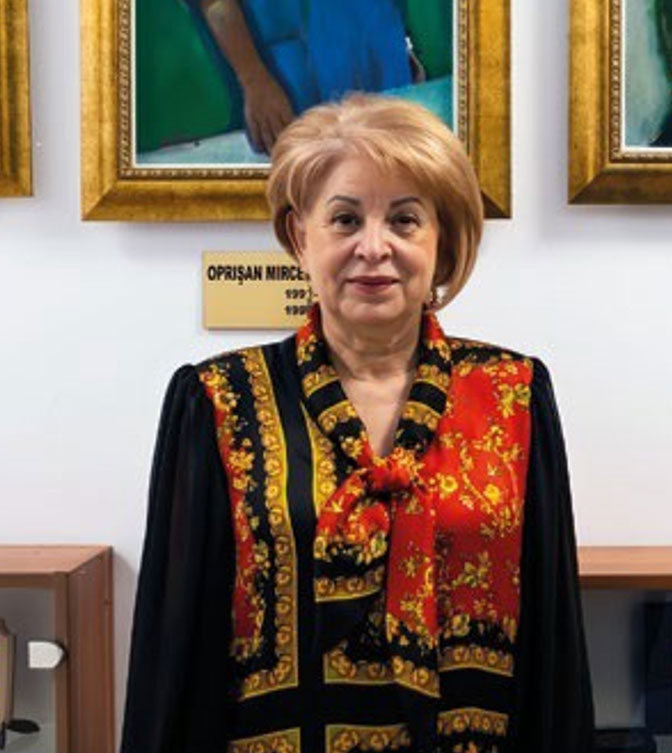
Dr. Alis Grasu
General Manager of the
Bucharest-Ilfov Ambulance Service (SABIF)
There are professions measured in years and professions measured in heartbeats. For Dr. Alis Grasu, General Manager of the Bucharest-Ilfov Ambulance Service (SABIF), a three-decade career represents more than just a statistic; it is an uninterrupted succession of critical moments where the right decision saved lives. Leading the institution for 18 years, Dr. Grasu has transformed “The Rescue” into a precision mechanism, adapted to the challenges of an ever-expanding metropolis.
I. Technology: An Ally in the Race Against Time
The expansion of technological vision under Dr. Alis Grasu’s mandate was not limited to acquiring vehicles, but to creating an integrated digital ecosystem. In a metropolis where the urban landscape is constantly shifting, the SABIF manager understood that a static map is a useless map. Thus, implementing GPS monitoring systems and mobile data terminals on every ambulance provided the dispatch center with real-time visibility, turning coordination into a flawlessly executed “musical score.”
“Digitalization is not a luxury, but a necessity for survival,” Dr. Grasu often states. Under her guidance, the foundations were laid for a telemedicine system that allows the transmission of request coordinates (from medical dispatch) to the ambulance and, subsequently, the patient’s vital parameters to the Emergency Department (UPU). This “hospital coming to the patient” approach has shortened the therapeutic window in cases of acute myocardial infarction or stroke, where every lost minute means thousands of destroyed neurons or cardiac cells. Furthermore, the infrastructure expansion strategy through ambulance sub-stations was a direct response to the demographic explosion in Ilfov County. Dr. Alis Grasu advocated for a polycentric distribution of resources, so that ambulances no longer depart from a crowded central point but are already “in the neighborhood,” ready for intervention. This logistical vision transformed SABIF from a reactive institution into a proactive one, capable of “anticipating” the city’s pressure points.
II. Investing in Human Excellence
In Manager Alis Grasu’s view, emergency medicine is, above all, a test of psychological resilience. An ambulance doctor or nurse must be more than a good diagnostician; they must be a pillar of emotional stability in the midst of disaster. For this reason, the professional development programs introduced at SABIF do not focus solely on medical maneuvers like BLS (Basic Life Support) or ALS (Advanced Life Support), but also on stress management and crisis communication.
Dr. Grasu has promoted a leadership model based on mentorship. “We don’t just train employees; we build characters,” is the principle governing the SABIF training center. Under her supervision, young doctors, nurses, and ambulance drivers learn that empathy toward the patient and their relatives is as therapeutic as administering medication. This “humanization of the emergency” has become the trademark of the Bucharest ambulance service. The major challenge remains the staff shortage. In a system where the workload is often overwhelming, Dr. Alis Grasu has managed to maintain team morale through transparency and by recognizing the value of every member. She has created an environment where vocation is protected from bureaucracy, giving staff the feeling of belonging to a large family—an elite group of saviors. Human resource management under her mandate has meant a continuous struggle for better working conditions and salaries that reflect the enormous risks crews face every day.
III. Public Responsibility and Involvement Beyond Guinness World Records, Alis Grasu’s vision on public training has a deep sociological foundation. She believes that a citizen trained in first aid maneuvers is, effectively, the “first responder” on the scene—an extension of the ambulance service.
The partnership between SABIF and the Bucharest Rescue Society in running the “There is a Hero in Each of You” program and presence at stadium events were not mere PR exercises, but a public security strategy carried out in the service of the citizen.
Thus, the public became aware that survival in cardiac arrest depends on the “chain of survival,” where the first link is the witness. By training tens of thousands of people, the SABIF manager contributed to creating a critical mass of citizens capable of intervening in life-or-death situations. This democratization of medical knowledge shifted the paradigm: the savior is no longer just the one in uniform arriving with sirens blaring, but can be a colleague, a neighbor, or a passerby.
These initiatives also played a major educational role in reducing non-urgent calls. By explaining how the emergency system works, Dr. Alis Grasu cultivated greater civic responsibility, helping citizens understand the importance of keeping lines free for cases hanging between life and death.

IV. Leadership Facing the Future
The ultimate test of any manager is an unforeseen crisis. In recent years, under Dr. Alis Grasu’s coordination, SABIF has navigated periods of unprecedented intensity, from the pandemic crisis to managing refugee flows or interventions in collective catastrophes. In these moments, her strategic vision stood out through the ability to rapidly reorganize workflows.
The manager implemented strict triage and protection protocols, ensuring that, despite the risks, the ambulance service remained functional 24/7. “An ambulance manager never sleeps with both ears on the pillow,” she says, reflecting the state of permanent alertness required to lead such an institution. Close collaboration with the Department for Emergency Situations (DSU) and other state structures transformed SABIF into a central hub of urban resilience.
Dr. Grasu’s leadership is defined by a combination of administrative rigor and a broad vision of preventive medicine. She views the future of SABIF not only through material equipment but also through the integration of Artificial Intelligence in dispatching, constantly optimizing response times.
Conclusion: A Legacy of Dedication
Closing this analysis of three decades of dedication, it becomes clear that Dr. Alis Grasu has moved beyond the role of a simple medical service administrator. She has become a symbol of resilience and professionalism in the Romanian healthcare system. Her legacy at SABIF is one of excellence: a modernized fleet, elite personnel, and a more informed public.
Through her vision, Dr. Grasu demonstrated that in the face of suffering and emergency, the only valid response is competence coupled with love and empathy for people. Under her leadership, the Bucharest-Ilfov Ambulance Service is not just an institution, but a promise kept daily: that regardless of the hour or conditions, someone will come to fight for your life, under the motto that symbolizes the service: “Always and to everyone, ready to help!”
It is the story of a destiny placed, with modesty and strength, in the service of others.
