
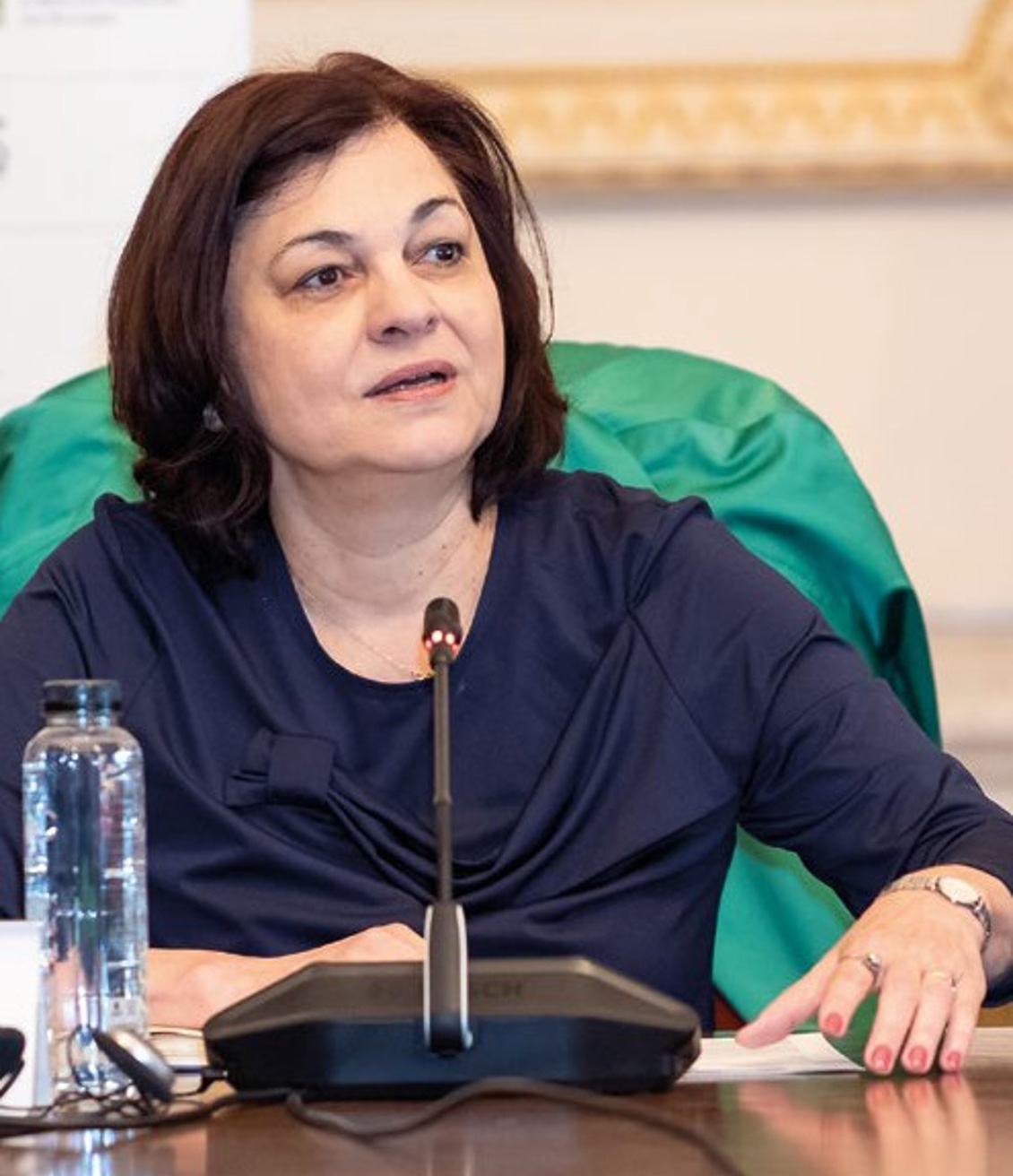
Silvia Vlăsceanu,
Executive Director HENRO
Almost every day of 2026 brings new news and debates related to the energy sector, the energy market, prices, projects for developing new energy capacities, and many other topics — some involving personal attacks that undermine the feasibility of important projects.
If we add the dynamics of international events affecting the energy market, the offensive by supporters of electricity generation from renewable energy sources — especially photovoltaic and wind — is being resumed with new arguments, with a political flavor, while omitting technical constraints and incidents that are directly related to the operation of photovoltaic power plants.
Even though the goal is an urgent energy transition, no national energy mix is evaluated based on its real impact on the environment. Analyses carried out in other European countries indicate that, by the 2060s, the greater the share of nuclear energy, the less the environment is affected.
The question that arises is: what is the most ecological energy mix? Romania’s energy strategy sets certain targets and commissioning deadlines… Depending on the objectives and planning, and on the proposed energy mix, one kWh produced will not have the same environmental footprint.
Thus, operating normally, without natural disasters or other calamities, nuclear energy has the smallest environmental impact. Starting from a gradual increase in consumption driven by the electrification of sectors and domains — such as transport, industry, home heating, and consumption related to the development of data centers — we can imagine a scenario in which no new nuclear capacities are implemented to replace the current ones, whose operation will likely cease between 2060 and 2070. Another scenario is one in which the share of nuclear energy in the energy mix grows from 18–20% to around 50% through the construction of new nuclear units, hydropower sees moderate growth, and wind and photovoltaic plants have variable shares in any scenario.
For the same level of electricity consumption, the scenario without new nuclear units requires more installed capacity, for two reasons:
- First, because wind and photovoltaic plants cannot be scheduled, as their output depends on weather conditions. In fact, these plants have a fairly low- capacity factor — wind and sun rarely allow them to produce at installed capacity. For example, a 1 kW photovoltaic installation will only sometimes produce at that level, in summer, towards the afternoon, but on average over a year it operates at around 150
- The second reason is related to the need to store this intermittent production for use when required. We might consider battery storage or hydrogen, but the conversion efficiencies in both storage options indicate losses that must be compensated, which also leads to the need to increase installed
One must also not overlook the fact that the manufacturing and recycling of these storage means represents an additional environmental impact.
Nor should we forget that, although wind, photovoltaic, hydro, and nuclear generation technologies emit little or no pollutants and greenhouse gases during operation, if wind and nuclear emit approximately 12 g CO2/kWh, photovoltaic emits between 41 and 48 g CO2/kWh.
However, a comparison solely from the perspective of carbon emissions is not sufficient: these electricity sources also have an environmental impact during the construction of production capacities and throughout their entire lifespan. Studies show that ground-mounted photovoltaic (a distinction must be made from solar panels installed on rooftops) requires the same amount of concrete as a nuclear capacity with equal electricity production. The International Energy Agency noted in 2022 that solar panels consume large quantities of aluminium. Additionally, for the same amount of energy produced, far more steel is consumed for wind technology than for nuclear.
A synthesis of impact studies conducted in 2021 for the European Commission concluded that nuclear energy has the smallest environmental impact when considering multiple criteria.
Very importantly, the lifespan of production assets must be taken into account. In general, a hydroelectric dam is considered to last 80 years, a nuclear unit 60 years, a photovoltaic panel 30 years, and a wind turbine 25 years.
Life cycle analysis is a method that enables evaluation of environmental impact from the stage of raw material extraction through to the end of the product’s life. This method uses international databases that allow quantification of raw material consumption, energy, land use, and resulting waste. Among the 11 criteria evaluated are resource depletion, climate change, ozone layer reduction, human toxicity, impact on freshwater and marine reserves, photochemical oxidation (related to air pollution), acidification, and water eutrophication.
The conclusion of this analytical method is that photovoltaic technology has the greatest environmental impact, while hydropower has the smallest. These results are linked to the quantity of materials used and the lifespan of energy production installations and equipment.
Even if we were to account for certain specific environmental criteria that might alter the ranking of the technologies analyzed— the most widely used — which evaluates 22 criteria, photovoltaic scores the worst on 18 of them.
However, this should not be taken to mean that photovoltaic and wind technologies are useless for the energy transition: these renewable sources are very useful because they allow the avoidance of electricity generation from far more polluting fossil fuels than the technologies we have analyzed here.
Moreover, nuclear energy and hydropower alone will not be able to cover consumption for electrification and the fulfilment of NIESC targets. In choosing an energy mix for an energy future that relies as little as possible on fossil fuels, nuclear energy is inevitable within the greenest possible mix. As the results of the analyses show, the greater the share of nuclear in the energy mix, the less need there is for other material-intensive installations and technologies, and the smaller the environmental impact.
For this reason, the continuation and development of the Romanian nuclear program — whose performance to date is unquestionable — must be a priority for authorities, companies, and society, given that energy security and safety must be the norm, just as we have always perceived it.
We can protect Romania, we can advance Romania’s development through a strong economy and well- educated, well-trained citizens, if we honor our commitments and objectives set out in strategies and public policies — in a coherent, continuous, predictable, and stable manner.
