

Ștefan Vuza,
Chairman & General Manager
of Chimcomplex
At a time when many of Romania’s major industrial plants were shutting their doors, Ștefan Vuza chose a different path. While others saw decline, he saw opportunity. He invested where Romania seemed to be losing its industrial foundations: manufacturing. For Vuza has long believed that a strong industrial base is essential to a nation’s ability to control its own economic destiny.
A defining moment in this journey was the acquisition and integration of a significant portion of the assets of Oltchim, one of Romania’s most important chemical producers. The circumstances were far from favorable. Energy costs were rising sharply, global competition was intensifying, and European industrial companies faced increasing pressure from regulations, operating costs, and market uncertainty.
Where many saw the end of an industrial story, Ștefan Vuza saw the beginning of a new chapter. He recognized valuable expertise, skilled people, industrial infrastructure, and a manufacturing identity worth preserving. At a time when financial institutions showed little confidence in Romania’s chemical industry, Vuza committed himself and his resources fully to rebuilding a strategic industrial sector.
The results are visible today. Under his leadership, Chimcomplex has become the largest Romanian-owned chemical producer and one of the most significant players in the chemical industry of Southeast Europe. Its products are exported across European markets and serve essential sectors of the economy.
Chimcomplex is Romania’s largest chemical manufacturer, operating production platforms in Onești and Râmnicu Vâlcea. Over the years, the company has undergone extensive modernization, technological upgrades, and utility improvements, continuously investing in high- efficiency integrated chemical technologies.
Its portfolio includes a broad range of chemical products, including polyols, chlor-alkali products, inorganic chlorides, compressed gases such as hydrogen, propylene oxide, propylene glycols, synthesis intermediates, dual-use products, alkylamines, and other specialized chemical compounds. To support both chemical production and the generation of electricity and thermal energy required for operations, the company processes raw materials sourced primarily from the domestic market, including salt, limestone, natural gas, and petroleum derivatives. In this way, Chimcomplex remains deeply integrated into Romania’s economic ecosystem, supporting domestic production and industrial value chains.
Many of Chimcomplex’s products are considered essential at the national level. They are used in the treatment of drinking water for more than 90% of water purification facilities in Romania, Bulgaria, and the Republic of Moldova; in the disinfection of hospitals and public spaces; in municipal and industrial wastewater treatment; in the energy sector; and in numerous industrial applications, including metallurgy, detergents and cosmetics, food processing, industrial gases, automotive manufacturing, furniture production, pulp and paper, high-performance thermal insulation, oil and gas industry, fertilizers, plasticizers, solvents, and chemical intermediates.
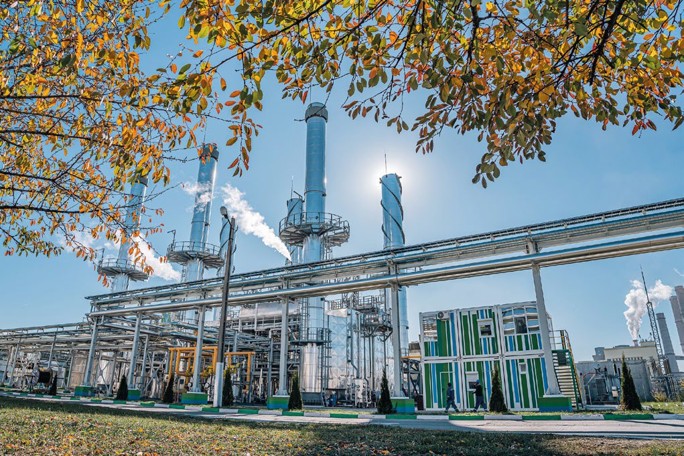
For several of these products, Chimcomplex is Romania’s sole producer and one of the largest suppliers across Central and Eastern Europe. As a result, the company plays a strategic role not only within the Romanian economy but also within the broader regional industrial landscape. Yet Romania is merely the foundation, not the limit.
Today, the European chemical industry faces one of the most challenging periods in its modern history. Production capacity is shrinking, investment is slowing, and competitiveness is under unprecedented pressure. A report by the European Chemical Industry Council (CEFIC) and the international consultancy Roland Berger highlights the scale of the challenges faced by the sector between 2022 and 2025, documenting the growing number of facilities closed or investments postponed across Europe.
Both the European and Romanian chemical industries are experiencing prolonged difficulties, driven largely by the energy crisis caused by the war in Iran. But especially due to electricity and natural gas prices in Europe remaining significantly higher—often between 300% and 500% above those of competitors in North America, Asia, the Middle East, and Africa.
As a result, many multinational chemical producers have reduced or completely closed production facilities across Europe. Over the past two years alone, more than 85 chemical plants or industrial platforms have reportedly ceased operations, with their market share increasingly replaced by imported products manufactured in countries benefiting from lower energy costs, lower environmental compliance costs, and more favorable regulatory environments.
Medium-sized industrial companies have been particularly affected. Because they lack the specific leverage that multinational companies have, many have cut production dramatically or suspended operations altogether in the last two and a half years.
Chimcomplex belongs to this category of industrial producers. Despite operating at approximately half of its production capacity during the most difficult periods, the company has maintained operations thanks to its diversified product portfolio and integrated production model. According to publicly available industry data, Chimcomplex has recorded significantly lower losses than many comparable competitors.
In addition to the challenges already faced by energy- intensive industries, wages in Romania have doubled over the same period. For export-oriented companies, competitiveness relative to their European counterparts has deteriorated significantly. When we also consider the influx of good-quality products entering the European market at dumping prices from Asia, it becomes clear how major European producers are responding by lowering prices, while Romanian companies operating in strategic sectors such as chemicals and metallurgy are being pushed into a critical position. To these pressures must be added the additional costs associated with CO2 emission allowances, which apply throughout Europe, unlike in countries outside the European Union that are not subject to such obligations. Furthermore, state aid intended for industries at risk of relocation is granted in full across most EU member states, whereas in Romania it is provided only partially—at less than 25% of the eligible level, amounting to approximately RON 20 million annually instead of RON 70 million.
In this challenging environment, the Romanian Government has not introduced support programs for domestic manufacturers—despite their potentially significant macroeconomic impact—while countries such as France, Spain, and Germany have already implemented assistance measures at an accelerated pace.
One of the most visionary and unique initiatives in Romania’s economic history, conceived and championed by Ștefan Vuza, is the creation of the Romanian Chemical Company. Designed not merely to ensure the survival of the chemical industry but also to enable its development and strengthen Romania’s economic independence in the production of materials vital to the entire economy, this initiative incorporates a new organizational model. At this stage, the details remain confidential, as it represents an adaptation to the current international business environment and is built upon a public-private partnership framework.
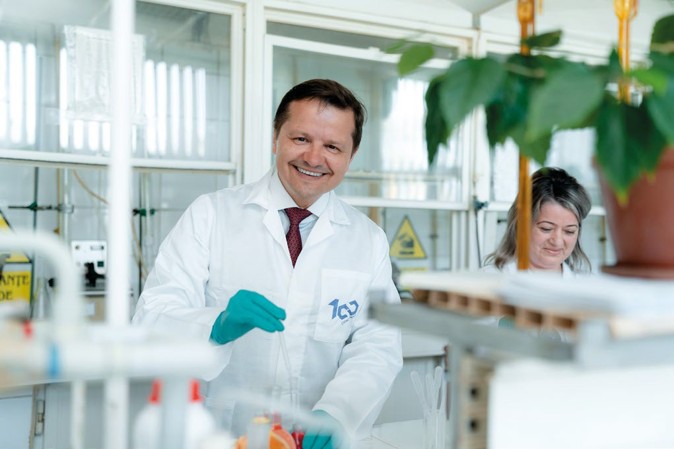
When a factory closes, a country loses more than production capacity. It loses skilled workers, trades, technical schools, suppliers, and entire communities. This is why Ștefan Vuza has become one of the strongest public voices advocating for Romanian industry. In recent years, he has consistently drawn attention to the risks of deindustrialization, the burden of energy costs, and the need for Romania to defend its economic interests with greater determination and courage.
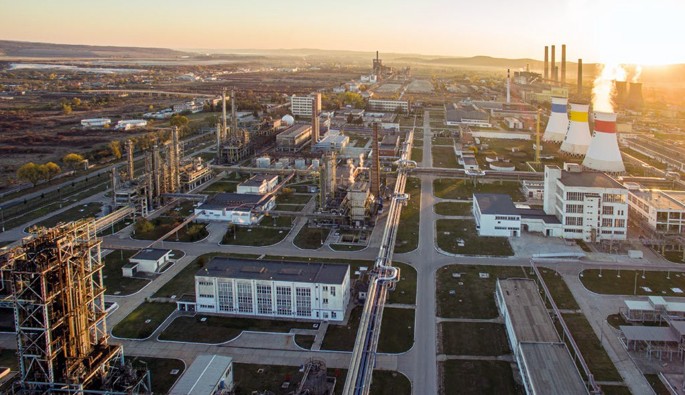
At a time when many industrial structures are under pressure, Ștefan Vuza continues to lay the foundations for the future of the chemical industry through technological modernization, digital transformation, energy efficiency, sustainability, and the company’s ability to adapt to new economic realities. He has chosen to continue investing in green energy projects through photovoltaic installations in Vâlcea, Onești, and Dej, as well as in energy-efficiency initiatives, including the modernization of membrane electrolysis units across the company’s two chemical platforms and the expansion of electricity and thermal energy production and supply capabilities.
The industrial vision promoted by Ștefan Vuza cannot be measured solely in financial figures. It is measured in production capacity, preserved jobs, exports, retained expertise, and in a nation’s ability to remain relevant in an increasingly competitive global economy.
In a world where many decisions are driven by the pursuit of short-term results, Ștefan Vuza emphasizes that, within the logic of major economic cycles, the greatest opportunities emerge when an industry is undervalued, misunderstood, or abandoned by those who can no longer think in the long term. He thinks in long cycles and industrial generations. For him, building a sustainable industrial company is like climbing a mountain—requiring hard work, discipline, character, and above all the vision that what is being built today will become essential tomorrow.
Ștefan Vuza is among those who understand that industry is not Romania’s past, but one of the essential conditions of its future. Because, as he often reminds us, although chemistry is not everything, everything comes from chemistry.
