
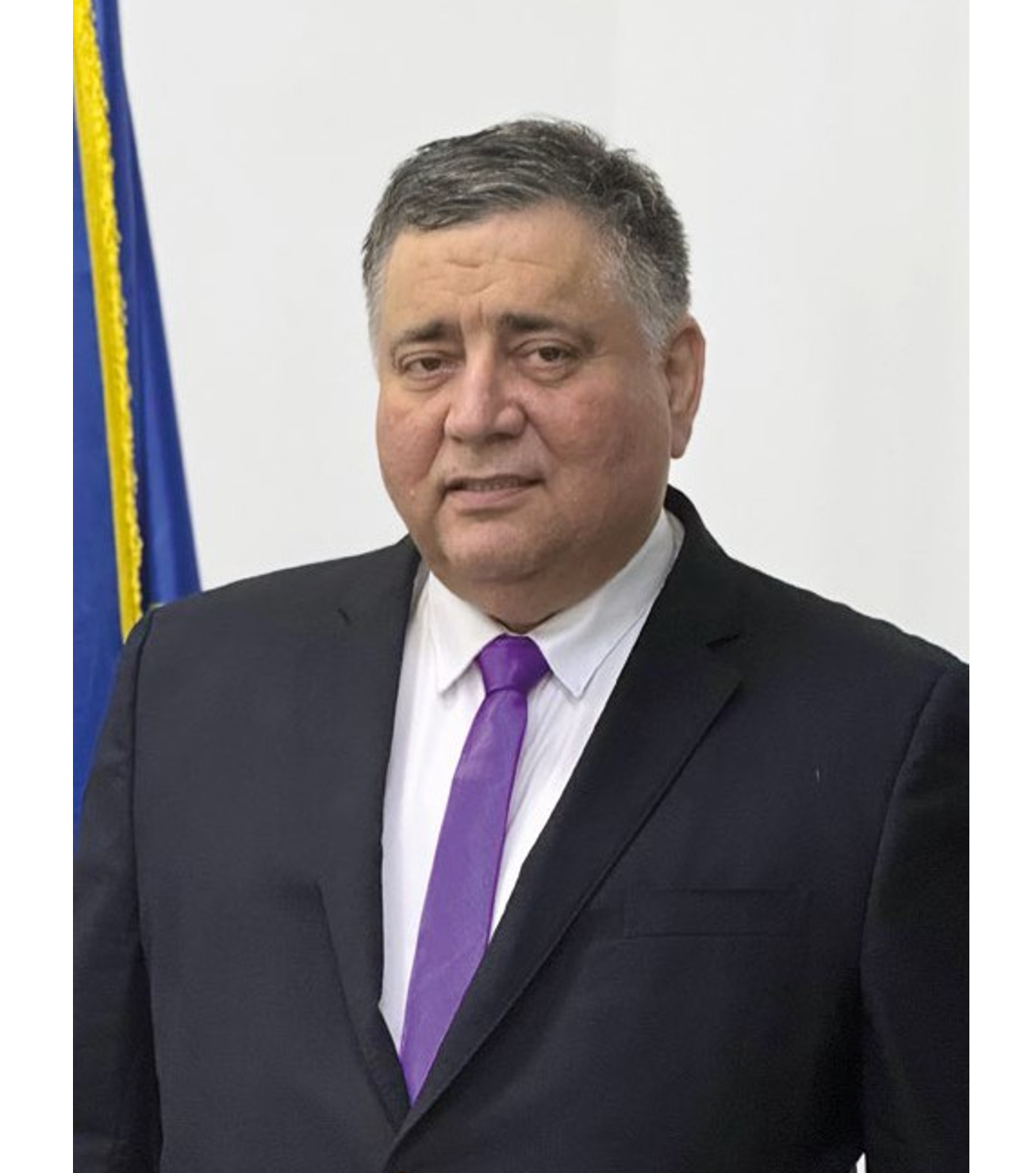
Emil Sîrbu is a leader who has built his career around a mission. His professional journey is the story of a manager who transformed personal ambition, technical discipline, and the ability to mobilize people into projects of national significance. His profile is defined by the consistency with which he has pursued a strategic direction and by his ability to build organizations around long-term objectives.
Born in 1962 into a modest rural family, Emil Sîrbu developed a strong sense of responsibility from an early age. Growing up in an environment where resources were limited, he learned the value of hard work and the importance of community solidarity. At the age of 14, he left home—a defining moment that shaped his character and fostered his independence. Rather than viewing challenges as obstacles, he regarded them as natural stages of personal development.
His professional education followed a natural path for a young man who understood the importance of preparation and expertise. After completing high school, he enrolled in the Faculty of Electronics and Telecommunications, choosing a field that requires precision, logical thinking, and analytical skills. His subsequent experience as an engineer across various sectors provided him with practical insight into how complex systems operate and reinforced his appreciation for solutions built on sound technical foundations.
This engineering background is directly reflected in his management style. Emil Sîrbu is not the type of leader who relies solely on intuition or impulse. His decisions are grounded in information, research, and rigorous risk assessment. In many respects, he leads like an engineer: defining the problem, identifying solutions, testing hypotheses, and overseeing implementation until results are achieved.
Following Romania’s Revolution, Emil Sîrbu took the entrepreneurial path. Like many business pioneers of his generation, he initially entered sectors that addressed the market’s most immediate needs. What distinguishes him, however, is that he never remained confined to a comfortable business model. Instead, he consistently sought projects capable of generating meaningful impact and addressing real societal challenges.
This mission-driven approach is one of the defining characteristics of his managerial profile. For Emil Sîrbu, business development has never appeared to be an end in itself. Rather, business has been the instrument through which he sought to solve problems he considered important. This also explains his early interest in climate change and extreme weather phenomena—subjects he embraced long before they became central topics in public discourse.
In 2008, recognizing the increasing impact of drought and severe weather events on agriculture, he decided to invest in a field that many at the time considered overly complex and risky. He chose to build an entirely new sector based on research, technology, and scientific expertise, stepping away from the comfort of businesses operating within already validated models.
This vision led to the creation of a company specializing in active atmospheric interventions, applied research, and the development of technologies designed to mitigate the effects of extreme weather phenomena. With nationwide operational infrastructure, research projects, and investments in innovative solutions, the organization has become a tangible expression of Emil Sîrbu’s managerial philosophy: combining scientific research with practical application and transforming ambitious ideas into functional systems.
One of Emil Sîrbu’s most significant managerial strengths has been his ability to build multidisciplinary teams. At a time when many Romanian companies struggle to attract and retain highly skilled professionals, he has succeeded in developing an organization that brings together researchers, PhDs, engineers, and experts from a wide range of disciplines. More than 1,500 employees, researchers, and doctoral-level specialists have worked under his leadership, united by a common purpose and inspired to collaborate toward ambitious objectives.
At the same time, he has consistently focused his business strategy on long-term investment. In an economic environment where immediate results are often prioritized, Emil Sîrbu chose to allocate substantial resources to research and development. Such a decision requires endurance, the ability to maintain strategic direction even when benefits are not immediately visible, and a willingness to commit to objectives linked to the long-term sustainability of a project.
His philosophy is reflected in a continuous interest in emerging technologies and in fields situated at the intersection of science, energy, and environmental protection. His commitment to initiatives involving green hydrogen and climate-impact reduction solutions demonstrates a focus on the challenges of the coming decades rather than merely those of the present.
Beyond his technical and managerial expertise, Emil Sîrbu embodies the image of a leader who places great emphasis on responsibility. Concepts such as legacy, contribution, and obligation toward future generations frequently appear in his public statements. This perspective goes beyond the traditional logic of economic performance and points toward a model of leadership driven by purpose and social impact.
Shaped by the technical culture of engineering, Emil Sîrbu has preserved his professional discipline throughout his business career, distinguishing himself through innovation, perseverance, and the ability to coordinate complex projects. Throughout a career marked by major challenges—which he has faced with determination and personal sacrifice—he has consistently placed the strategic interests of the nation and the community above personal gain, offering an authentic example of responsibility and patriotism.
Moreover, his vision has extended well beyond national borders. His projects have been designed in full alignment with European standards and values. By promoting technological innovation and sustainability, Emil Sîrbu has contributed directly to integrating Romanian engineering expertise into the broader European framework, demonstrating that local solutions can successfully address the global challenges facing Europe today. This integrated approach leaves behind a lasting legacy—one deserving of recognition and appreciation at the highest level.
