
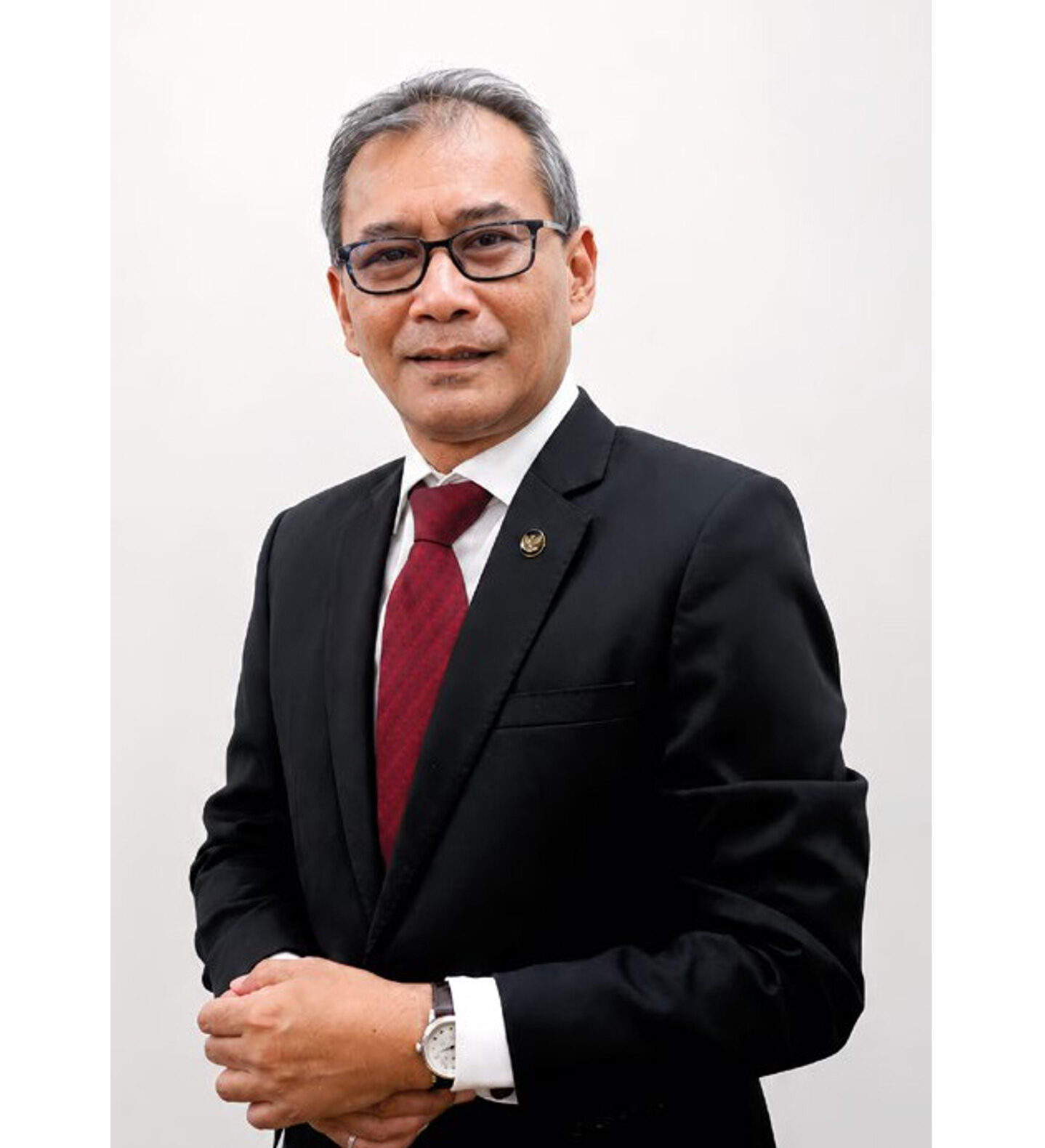
Remarks
by His Excellency Meidyatama Suryodiningrat,
Ambassador Extraordinary and Plenipotentiary of the Republic of Indonesia to Romania
at the Diplomacy Conference within the
“Bucharest Leaders’ Summit: United for Better Future” (Bucharest, May 22, 2026)
In this age of new diplomacy, of new technology, I will tell you a story about legacy and classical diplomacy, which remains, I think, still part of the primary narrative. So in this story, if you can imagine an oceanic region with some 25,000 islands, with a combined landmass which is bigger than the European Union, and if you incorporate the maritime domains, it’s roughly about 12 million square kilometres, which is about 3% of the total global surface. Imagine further, this region has about 700 million people, fractured with a history of colonialism, with disparate races, ethnicities, religions, faiths, and probably a region with the highest economic disparity of any regional bloc in the world.
Imagine further that this region has a divergent political system and ideologies, from the world’s fourth largest or third largest democracy in the world to absolute monarchy, a socialist one-party system, an Islamic state, an autocracy, and even a country which has never had an election in its life. And if that was not challenging enough, imagine this region is dissected by opposing superpower allegiances and strategically located in a part where 40-60% of global shipping passes every day, and about as much or even more oil passes than the Straits of Hormuz. That region, ladies and gentlemen, is the association of Southeast Asian nations.
It is comprised, and I have to remind this, Malaysia, Singapore, Philippines, Thailand, Brunei, Vietnam, Laos, Myanmar, Cambodia, Timor-Leste, and of course the big kid on the block, Indonesia. I argue always that ASEAN is probably currently the most successful regional organisation in maintaining geopolitical peace and stability. If not the most successful, it is at least on par with the European Union.
You have to remember that from a volatile zone which has been plagued by border wars, insurgencies, colonial fallouts, since 1967, which is an important year because that’s the year when ASEAN was formed, and it was also, by the way, the year I was born, so it’s a very important year, no ASEAN member has ever gone to full-scale war with each other. And simply the question is, why and how? Well, you may know and heard of what we call the ASEAN way, and to encapsulate that, I put three things which is called the ASEAN way. First is a fundamental and continuous respect for non-interference, something again which is very classical, very basic in international relations, which some may have forgotten.
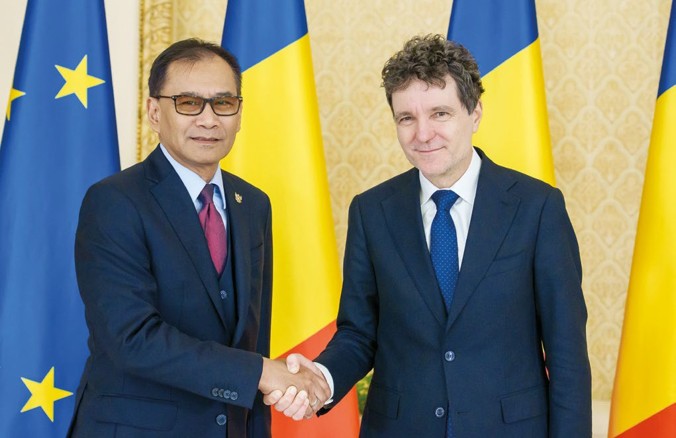
Non-interference remains the cornerstone of ASEAN foreign policy. The second is ASEAN centrality, which is a hub and spoke regional security architecture where ASEAN is at its core. This allows for strategic hedging through continuous dialogue, sometimes they call it unending dialogue, making ASEAN a forum for engagement to prevent conflicts from escalating into proxy wars.
ASEAN thus, with this security architecture and being in the middle, acts as a stabilising force which enables integration without the necessity of political convergence. This is something we have learned from the EU and decided to go a separate path given our conditions. In many ways, with ASEAN in the middle, we have brought in everyone on continuous dialogue, whether the EU, the United States, China, Russia, Japan, Korea, bringing them all together.
And we have found that with this platform, during times of tension, ASEAN actually provides a forum for dialogue and connection between leaders who are opposing each other. The third and final part is quiet diplomacy. Our leaders meet very often, sometimes too often.
But I think it was Churchill who said that I would rather be talking at the summit than standing on the edge of a precipice. Frequent meetings allow our leaders to build a rapport to diffuse, de-escalate, mitigate, and manage potential conflicts in a discreet manner to preserve face and regional harmony. Saving face is always a very important aspect of diplomacy in Southeast Asia and Asia as a whole.
Some have criticised, of course, that ASEAN does not resolve conflicts, and they may be right. At present, we have about 20 unresolved overlapping border and maritime claims. Indonesia itself has about four or five claims which has been ongoing for about 20 years.
But I think the idea here is that at the end of the day, it is better to prevent conflicts than winning battles. This may not be a suitable mechanism, a suitable architecture for every part of the world, but it is something that has kept Southeast Asia, an area once prone by continuous wars, peaceful for nearly 60 years.
