
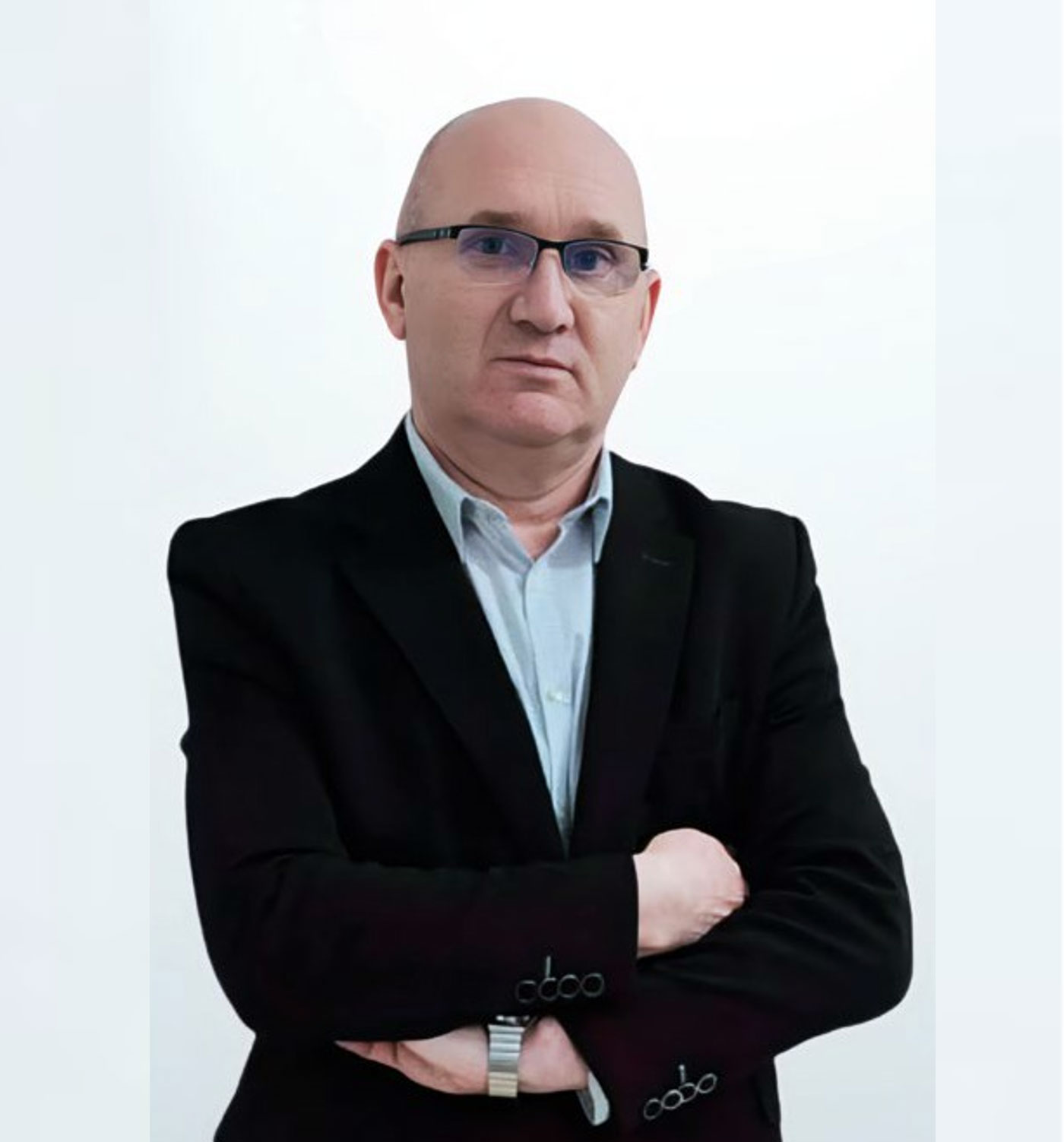
Constantin Poiană,
Manager “Prof. Dr. Eduard Apetrei”
Hospital, Buhuși
Performance does not emerge from a decision. It is built. Real changes in the healthcare system do not usually have a clear starting point. They do not come with spectacular announcements or immediate results. In most cases, they begin discreetly – in small decisions, in daily corrections, in an attempt to make things work better than yesterday.
At the “Prof. Dr. Eduard Apetrei” Hospital in Buhuși, the transformation followed exactly this path. It was not the result of a single initiative, but of a reconstruction process begun in a difficult context, marked by shortages, pressure and distrust.
A realistic starting point
In such a framework, the initial objective was not performance, but stabilization. Creating a functional, predictable system, in which the team could carry out its activity in coherent conditions, was the first step. This stage, although less visible, is essential. Without it, any investment or strategy remains fragile. Investments that change direction
The defining moments of this journey were the modernization of the infrastructure and the provision of state-of-the-art medical equipment and devices – investments of the order of millions of euros, made by both the Buhuși City Hall and Local Council, as well as the hospital. Beyond the financial dimension, the real change was one of paradigm: a firm orientation towards the patient, rapid diagnosis and increased accuracy.
Reducing analysis times and increasing the quality of investigation results have a direct impact on medical decisions. In a system where every minute counts, these advances are not just technical improvements, but differences that concretely influence the clinical evolution of patients.
In addition, these investments facilitated more coherent interdisciplinary collaboration and contributed to a more efficient organization of the medical act, strengthening the hospital’s capacity to respond promptly and integratedly to patients’ needs.
The balance that makes the difference
However, infrastructure, no matter how modern, does not automatically generate results. In healthcare, performance only occurs when there is a balance between resources and medical and support staff.
Equipment without a trained team remains underutilized. Likewise, professionals cannot perform in an environment lacking adequate conditions. In fact, the real functioning of a hospital is built between these two dimensions. This balance is not achieved quickly. It requires time, coherence and a consistent way of working. Human resources: the most difficult reconstruction One of the biggest challenges was related to the team. In a context where migration and demotivation are constant, stability cannot be imposed administratively.
It took time to build a predictable environment in which professionals could trust. Dialogue, involvement and clarity of decisions mattered more than any one-off measure.
In parallel, it was also necessary to regain the trust of patients. Not through promises, but through better organized services and consistency in the medical act.
A different type of leadership
In this context, leadership did not mean spectacular interventions, but constant presence. It was not about speech, but about decision and continuity.
 Understanding the realities on the ground, direct involvement and personal example became working tools. The organizational culture did not change through imposed rules, but through repeated and visible behaviors.
The balance between constraints
Running a hospital constantly involves managing tensions: between the quality of the medical act, the available financial resources and the needs of the team.
There are no perfect solutions. There are only assumed decisions and continuous adjustments. Stability appears over time, from the accumulation of these decisions. Results that are not immediately measurable
Looking at the whole, the transformation cannot be reduced to an investment or a singular moment. It is the result of a cumulative process, in which each stage contributed to a broader change.
From a fragile operation, the hospital has reached a more coherent and predictable level. But perhaps the most relevant indicator is not a statistical one. It is the way patients return with confidence. It is the way the team operates, day in and day out.
An open-ended ending
The Buhuși experience does not offer a universal recipe.
But it shows one essential thing:
Change does not begin with results and does not depend exclusively on resources.
It begins with direction.
And when direction is clear and consistently maintained, results appear – not suddenly, not spectacularly, but solid enough to last.
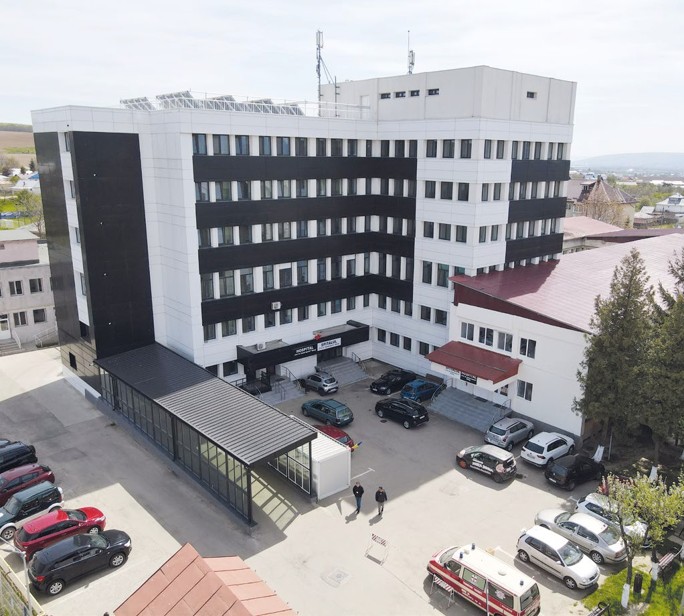
“Prof. Dr. Eduard Apetrei” Hospital, Buhuși
“Prof. Dr. Eduard Apetrei” Hospital in Buhuși is classified by the Romanian Ministry of Health as a Category IV hospital, in accordance with the provisions of Ministerial Order No. 844/2011, and as a Level I competency hospital, pursuant to Ministry of Health Order No. 753/2021. The hospital is accredited by the National Authority for Quality Management in Health Care (ANMCS) under Certificate Series ANMCS No. 2-187 and is certified according to the following standards: SR EN ISO 9001:2015 – Quality Management Systems. Requirements, SR EN ISO 22000:2018 – Food Safety Management Systems. Requirements for Any Organization in the Food Chain, and ISO 45001:2018 – Occupational Health and Safety Management Systems.
The hospital is organized as a general hospital, comprising departments and units capable of providing treatment and care for patients with both acute and chronic conditions, through inpatient and day-hospital services, as well as an integrated outpatient clinic covering a broad range of medical specialties. Its location and accessibility enable it to serve an extensive catchment area, including residents of the town of Buhuși, Bacău County, and neighboring counties.
The hospital has a total of 173 inpatient beds, organized across 18 departments and units.
The hospital structure also includes:
- Emergency Admissions Unit (CPU)
- Closed-Circuit Pharmacy
- RENAR-accredited Medical Analysis Laboratory
- Radiology and Medical Imaging Laboratory
- Rehabilitation, Physical Medicine and Balneology Laboratory
- Pathology Service / Morgue
- Tuberculosis (TB) Dispensary
- Sterilization Unit
- Food Services Department
- Integrated Outpatient Clinic – 24 Medical Specialties
- Surgery Clinic (2 offices)
- Internal Medicine Clinic (3 offices)
- Pediatrics Clinic
- Child Psychiatry Clinic
- Obstetrics and Gynecology Clinic
- Infectious Diseases Clinic
- Psychiatry Clinic
- Physical Therapy and Rehabilitation Unit
- Orthopedics and Traumatology Clinic
- ENT Clinic
- Ophthalmology Clinic (2 offices)
- Cardiology Clinic
- Rheumatology Clinic
- Neurology Clinic
- Dermatology Clinic
- Urology Clinic
- Vascular Surgery Clinic
- Diabetes, Nutrition and Metabolic Diseases Clinic
- Rehabilitation, Physical Medicine and Balneology Clinic
- Functional Investigations Unit
- Gastroenterology Clinic
The above-mentioned structures are equipped with state- of-the-art medical equipment and technology, including advanced CT and MRI systems. The hospital’s staffing structure is complete, employing more than 80 physicians.
The hospital is located 29 kilometers from the city of Bacău and 35 kilometers from the city of Piatra Neamț, in a hilly area, serving a population of over 40,000 residents across more than 50 localities, representing approximately 10.7% of the County’s population.
The hospital provides the following on-call services:
- Medical specialties
- Surgical specialties
- Emergency Admissions Unit
- Intensive Care Unit (ICU)
- Radiology and Medical Imaging (for physicians: on-call from home on Saturdays, Sundays, and public holidays; for nurses: continuous coverage)
- Pediatrics
