
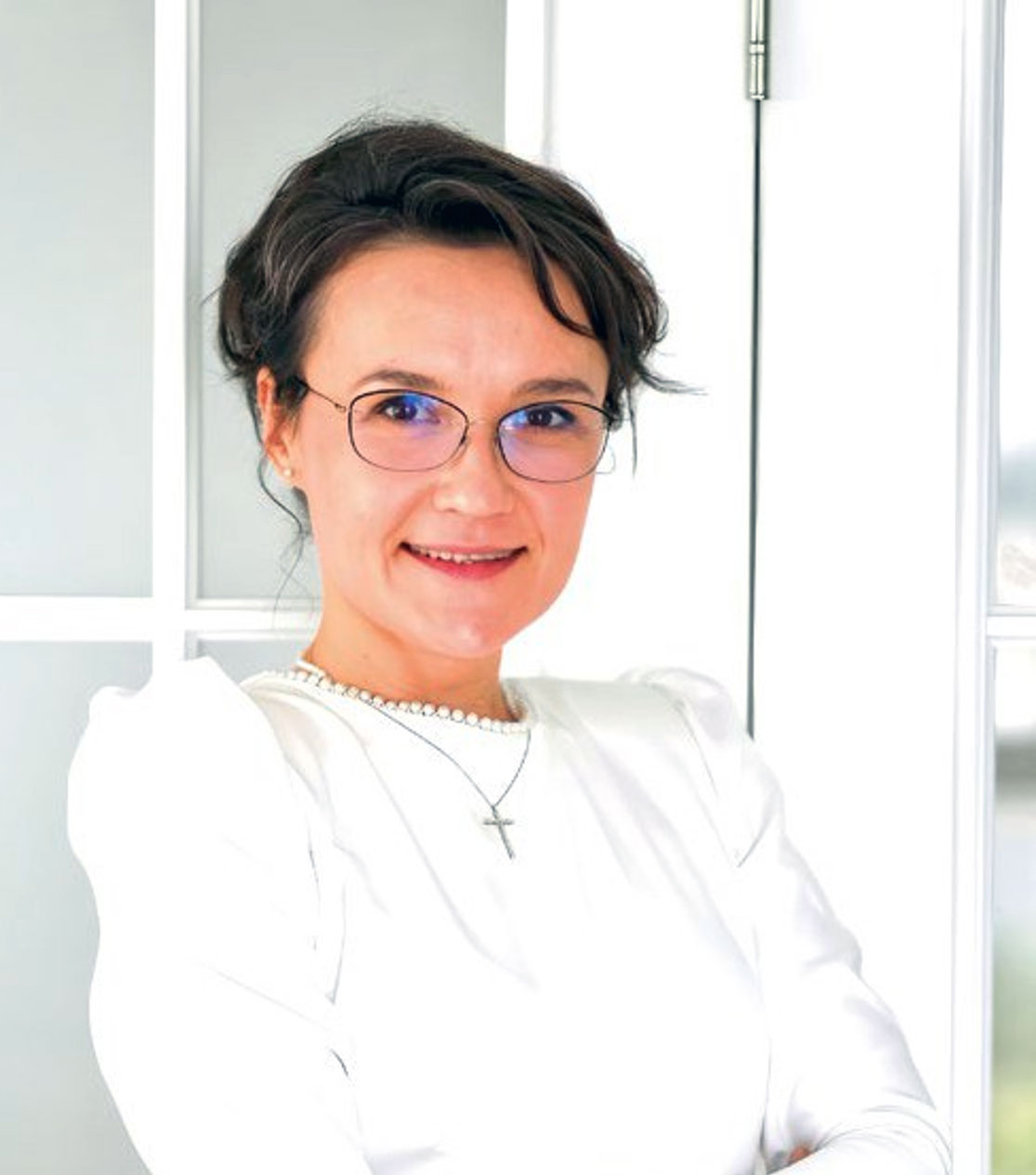
I am a physician and Professor of Infectious Diseases at the Carol Davila University of Medicine and Pharmacy. I have worked for more than 30 years in this continually surprising specialty—infectious diseases—which represents a complex pathology that is far from disappearing; on the contrary, it is constantly evolving. It is a field that has fascinated me since medical school, an extremely relevant specialty when we consider antimicrobial resistance, emerging diseases in the context of global warming and human migration, and re-emerging diseases resulting from declining vaccination coverage. All of these factors make infectious diseases an exceptionally interesting specialty, one in which maintaining an up-to- date level of knowledge regarding the latest local, national, and international developments is essential.
I chose the medical specialties I practice because I firmly believe that true excellence in medicine is not defined solely by treating disease, but above all by the ability to decipher and understand it at its most intricate levels, so that it can be prevented in a personalized manner, taking into account each individual’s molecular and genetic characteristics. Today, as a Senior Consultant in Pathology, a Specialist in Cardiology, an affiliated faculty member of the Department of Morphopathology at the “Carol Davila” University of Medicine and Pharmacy, Director of the ALLY Project at the “Cantacuzino” National Institute for Research and Development in Microbiology and Immunology, collaborator of the Prevent Institute, and graduate of the Postgraduate Healthcare Management Program of the National Institute of Health Services Management under the Romanian Ministry of Health, I continue to believe that progress in medicine is the result of continuous education, scientific research, and interdisciplinary collaboration. The medical niche I have chosen to pursue is the product of a diverse body of knowledge, one intended to provide direction, purpose, and, above all, practical applications capable of delivering the most effective outcomes for patients.
My professional activity has been built around a simple principle: patients should benefit from the best solutions science can offer, and those solutions should be available before disease reaches an advanced stage. This is why I have been drawn both to pathology—the specialty that provides the foundation of modern diagnosis—and to cardiology, a field in which prevention and risk-factor management can dramatically alter a patient’s prognosis.
In recent years, one of the major focuses of my professional work has been oncogenetics and personalized medicine. Out of the desire to transform clinical experience into a project with national impact, I founded the Romanian Lynch Syndrome Society, an organization guided by the motto: “Giving Life More Time.”
This initiative emerged from a reality I frequently encountered in medical practice: patients and families facing a significantly increased cancer risk but lacking access to early diagnosis and standardized care pathways.
My initiative was joined by the Society’s founding members— Lieutenant Colonel Associate Professor Dr. Lucian Eftimie, Senior Consultant Pathologist and Head of the Pathology Department at the University Emergency Hospital of the Romanian Military Medical System; Dr. Adrian Dumitru, Senior Consultant in Pathology and Specialist in Medical Oncology; and Dr. Teodor Constantin.
The entire activity of the Romanian Lynch Syndrome Society has benefited from the scientific support of the distinguished academic communities of the “Carol Davila” University of Medicine and Pharmacy and of medical universities across Romania. Our sustained efforts have also been warmly received and generously supported by professional organizations, public institutions, and the media, to whom we remain deeply grateful for their voluntary support and commitment.
Lynch syndrome is the most common hereditary genetic predisposition to cancer and, at the same time, one of the most underdiagnosed medical conditions. In Romania, where mortality from preventable causes remains among the highest in Europe, I believe that investment in prevention, screening, and medical education must become a strategic national priority.
Since the launch of the Romanian Lynch Syndrome Society, together with my colleagues, we have developed the first introductory guidelines for both physicians and patients, initiated continuing medical education programs, established the National Lynch Syndrome Network, and launched the National Lynch Syndrome Registry Project. One result that confirmed we were moving in the right direction was the approximately 600% increase in the diagnosis rate of Lynch syndrome within a relatively short period of time.
I believe education is one of the most powerful instruments of change. For this reason, I regularly participate in national and international scientific events and actively support the development of training programs for healthcare professionals. The course series “Lynch Syndrome – From Theory to Practice,” alongside masterclasses and national conferences with international participation, are just some of the initiatives through which we strive to bridge the gap between scientific progress and everyday medical practice.
My international professional experiences have also played an important role in my development. Participation in academic and professional missions throughout Asia, alongside the Media Uno media group, provided me with the opportunity to analyze highly effective healthcare systems, leading oncology centers, biobanks, and screening programs that have demonstrated how prevention can save lives while significantly reducing the social and economic costs of disease.
Building upon on the knowledge learning curve and experience accumulated during the establishment of the Romanian Lynch Syndrome Society, in 2024 I launched the ALLY research project within the “Cantacuzino” National Institute for Research and Development in Microbiology and Immunology. Funded by Romania’s Ministry of National Defence, the project aims to identify the optimal algorithm for the early diagnosis of Lynch syndrome within the Romanian population. At present, it is the only molecular testing program in Romania dedicated specifically to this objective.
Today, we receive samples from every region of the country, and by the conclusion of the research project, we hope not only to identify the simplest and most applicable diagnostic tool for Lynch syndrome but also to map its prevalence and distribution.
I believe that the medicine of the future will increasingly become predictive, preventive, and personalized. Beyond diagnoses, treatments, and technologies lies our responsibility to build mechanisms through which patients can be identified early, accurately informed, and integrated into a healthcare system that functions coherently and efficiently.
For me, professional excellence means continuous learning, the ability to transform ideas into concrete projects, and the courage to build where no models yet exist. Whether we are speaking about clinical practice, research, education, or healthcare management, the objective remains the same: to contribute to a healthcare system that is better, more equitable, and more patient-centered.
Ultimately, the most valuable resource we can offer a patient is time. And when prevention, education, and innovation work together, we can truly give life more time.
