
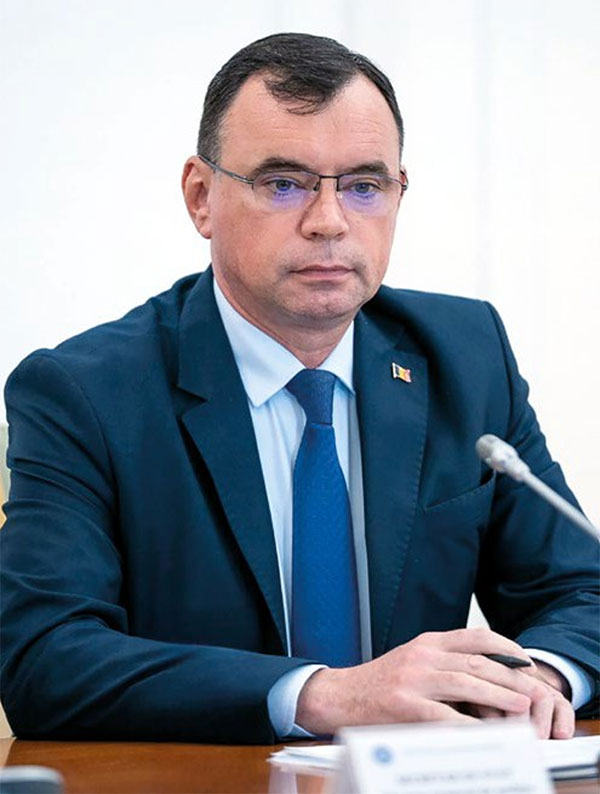
Police Chief-Quaestor Bogdan Despescu,
Secretary of State for Public Order and Safety –
Ministry of Internal Affairs
Public safety and public order are among the fundamental pillars of a modern society’s development. Citizens’ trust in state institutions, the economy’s ability to grow, and social cohesion all depend directly on the existence of a stable and predictable security environment. In a world undergoing rapid transformation, marked by unprecedented technological advancements, regional conflicts, hybrid threats, and complex global challenges, the question is no longer whether public order systems must adapt, but how quickly and effectively they can do so.
Romania enters this new phase from a favorable position. According to assessments and comparative analyses conducted at the European level, our country continues to be perceived as one of the safest in the European Union in terms of street crime and violent criminality. For millions of Romanians, the ability to move freely in public spaces, carry out daily activities, and raise their families in a stable environment is a reality that should not be taken for granted, but rather recognized as the result of the sustained efforts of state institutions and their cooperation with citizens.
These achievements are significant, yet they should not lead to complacency. On the contrary, experience in recent years has shown that threats to public safety are becoming increasingly diverse and more difficult to predict. Organized crime uses advanced technologies and operates across borders. Cyberattacks can disrupt critical infrastructure and essential services. Disinformation campaigns have the capacity to influence public perceptions and social behavior. At the same time, climate change and extreme weather events are generating emergency situations that require increasingly complex resources and response capabilities.
In this context, the future of public safety will largely depend on the ability of institutions to anticipate and prevent risks before they materialize. The traditional model, based solely on reaction and intervention, is no longer sufficient. Modern analytical systems, intelligent use of data, and mechanisms capable of identifying vulnerabilities and threats at an early stage are essential.
Technology is therefore becoming one of the most important tools of modern security. Digitalization, artificial intelligence, database interoperability, and the automation of administrative processes are no longer merely modernization objectives; they are essential components of an effective public order system. The countries investing in these areas today will have institutions that are faster, more efficient, and closer to their citizens tomorrow.
Romania has already taken important steps in this direction. The security of the future will not be built solely through more advanced operational equipment or expanded operational capabilities. It will also be built through digitalization, interoperability, and smart public services. The Ministry of Internal Affairs’ Digital Hub (MAI Hub) represents one of the foundations of this transformation, demonstrating that administrative modernization can deliver tangible and measurable
results for millions of citizens. In the years ahead, the challenge will not simply be to expand electronic services, but to integrate them into a digital ecosystem capable of providing rapid, transparent, and secure solutions both for citizens and for the state’s operational structures.
Digital transformation, however, is not limited to simplifying administrative procedures. It also contributes to greater operational efficiency, reduced response times, and more effective use of public resources. Equally important, digitalization must be accompanied by continuous investment in cybersecurity and data protection to ensure that citizens maintain their trust in public services.
Investment in human resources is just as crucial. No technology can replace the professionalism, experience, and decision-making capabilities of those working in the field of public order and safety. Continuous training, the development of digital skills, and constant adaptation to new operational realities are essential prerequisites for maintaining a high level of institutional performance. The future belongs to organizations that successfully combine technology with human expertise.
European experience demonstrates that safety cannot be achieved solely through institutional measures. The cities and communities regarded as the safest are typically those where a high level of trust exists between citizens and authorities, where continuous dialogue with society is maintained, and where a culture of shared responsibility has been established. Safety is a public good built through cooperation, engagement, and solidarity.
From this perspective, safety education becomes a strategic investment. Citizens’ ability to identify risks, use technology responsibly, counter disinformation, and respond appropriately in emergency situations directly contributes to strengthening societal resilience. An informed community is a safer community.
Looking ahead, Romania has the opportunity to transform its existing advantages into a model of success at the European level. Maintaining a climate of public order and safety, strengthening institutional resilience, accelerating digital transformation, and fostering a relationship of trust with citizens should constitute strategic objectives for the coming decade.
Ultimately, the true measure of success will not be reflected solely in crime statistics or the number of interventions carried out. It will be reflected in citizens’ sense of security, their confidence in state institutions, and Romania’s ability to remain a stable, safe, and resilient country prepared for the challenges of the future.
The future does not belong to those who react most quickly to crises, but to those who are able to anticipate them. Building this capacity for anticipation is one of the most important missions of our time.
