
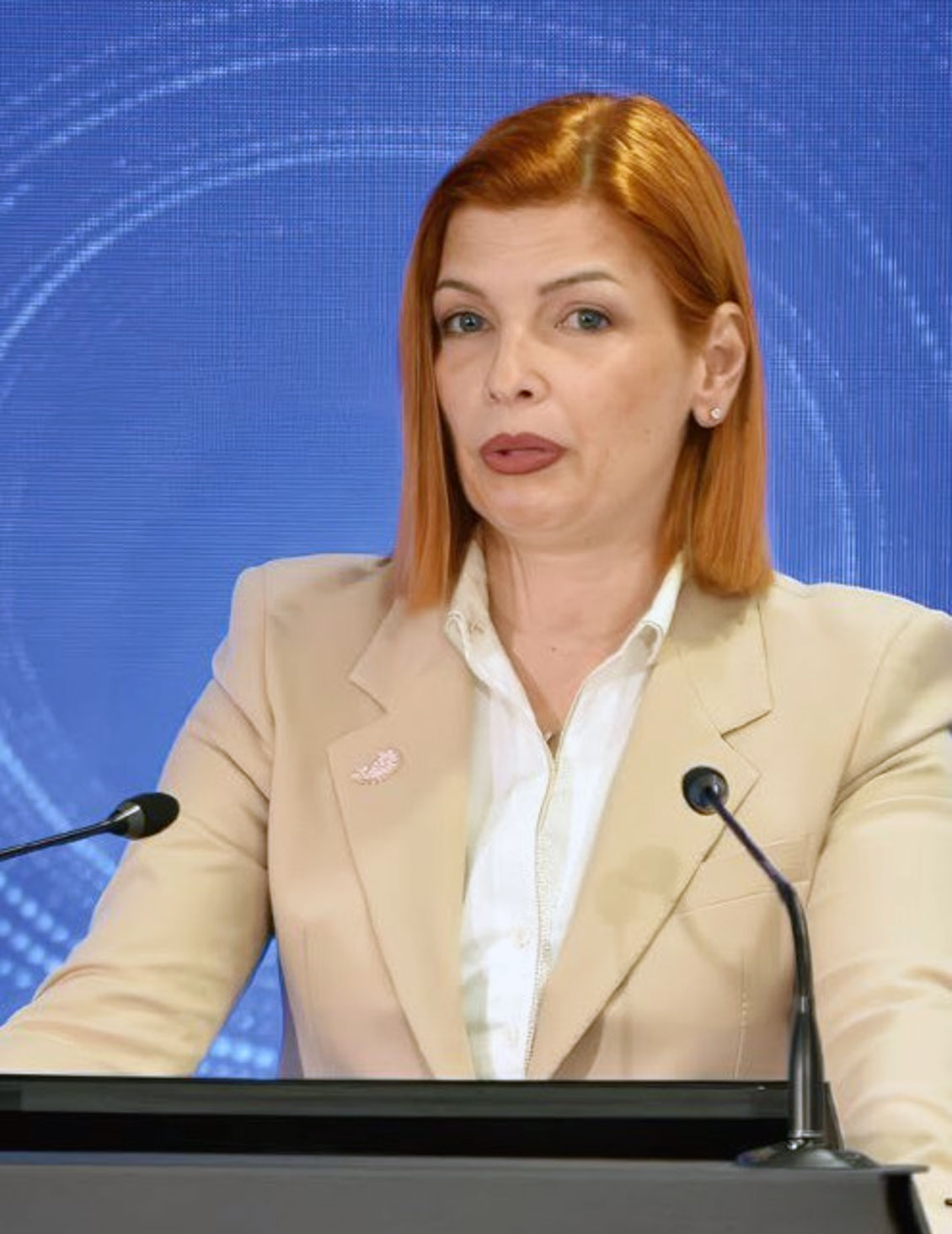
Prof. Dana Stoian, MD, PhD: “The future of
endocrinology means access to advanced
technology and the most accurate diagnosis
possible, as early as possible”
Endocrinology is one of the medical specialties in which technological progress has profoundly transformed the way diseases are diagnosed and monitored. From the development of highly accurate hormonal assays to advanced imaging techniques, technology has become an indispensable tool for the modern endocrinologist.
In recent years, one of the most significant advances in the field has been the development of multiparametric ultrasound, an advanced imaging technique that provides complex information about tissue structure and behavior, contributing to greater diagnostic accuracy while reducing the need for invasive procedures.
For Prof. Dana Stoian, MD, PhD, President of the Endocrinology Commission of the Romanian College of Physicians, access to technology has become a fundamental prerequisite for delivering modern, effective medical care.
“In endocrinology, an accurate diagnosis makes all the difference. Today, technology allows us to obtain information that, only a few years ago, could be acquired only through additional investigations, sometimes invasive or involving radiation exposure. With multimodal ultrasound, we can characterize nodular lesions much more precisely, assess risk more accurately, and make better-informed therapeutic decisions for each patient,” says Prof. Dana Stoian.
From Conventional Ultrasound to Multiparametric Imaging
Ultrasound is one of the most widely used imaging modalities in endocrinology, particularly for the evaluation of thyroid, parathyroid, and other superficial endocrine pathologies.
However, multiparametric ultrasound goes far beyond the limitations of conventional imaging by integrating several technologies into a single real-time examination, complementing the clinical assessment.
In addition to standard B-mode ultrasound imaging, physicians can evaluate tissue vascularization, vascular distribution, intralesional perfusion patterns, and tissue stiffness through elastography. These parameters contribute significantly to differentiating benign lesions from those with malignant potential.
This comprehensive approach provides a much deeper understanding of the pathology under investigation and substantially improves diagnostic confidence.
“Multiparametric ultrasound is not simply about obtaining a better image. It is about integrating multiple layers of information into a single examination, allowing us to better understand the biological behavior of a lesion. Essentially, we are talking about a complex assessment that brings the physician closer to a precision diagnosis,” explains Prof. Dana Stoian.
Fewer Invasive Procedures, Greater Patient Safety
In thyroid pathology, where nodules are extremely common in the general population, accurately distinguishing high- risk lesions from those without oncological significance remains a constant challenge.
Multiparametric ultrasound contributes to a more precise selection of patients who truly require fine-needle aspiration biopsy while helping to avoid unnecessary investigations when they are not clinically indicated.
“Our goal is not simply to diagnose more lesions, but to diagnose them better. Thanks to modern technologies, we can identify the patients who genuinely need further investigations and spare others from unnecessary procedures and anxiety. This is one of the major benefits of modern medicine,” emphasizes Prof. Dana Stoian.
Technology and Personalized Medicine
As healthcare continues to move toward increasingly personalized models of care, the role of technology becomes ever more important.
The integration of clinical, biological, and imaging data allows physicians to develop individualized therapeutic strategies tailored to each patient. Endocrinology is among the specialties at the forefront of this transformation.
For patients, the benefits are clear: faster diagnosis, more personalized treatment, and more efficient monitoring. For physicians, technology provides additional tools that enhance clinical decision-making and support evidence- based medical practice.
“The future of endocrinology is closely linked to technological development. We are talking about artificial intelligence, the integration of imaging and biological data, and algorithms capable of helping us identify risks and personalize medical management. However, regardless of how advanced technology becomes, it remains a tool in the hands of the physician. Medical expertise and the doctor–patient relationship will continue to be essential,” says Prof. Dana Stoian.
Access to Technology: An Investment in Health
Experts emphasize that the advancement of modern medicine depends not only on the availability of technology but also on equitable access to it.
Investments in state-of-the-art equipment, continuous professional training, and the integration of innovative diagnostic methods into daily clinical practice are essential steps toward improving the quality of healthcare delivery.
In endocrinology, multiparametric ultrasound is already regarded as one of the technologies redefining the standards of patient evaluation and monitoring, contributing to the development of a more precise, efficient, and patient-centered medical practice.
“Access to technology means access to the opportunity for a correct diagnosis and high-quality medical care. In endocrinology, multiparametric ultrasound represents one of the most important developments of recent years, and I believe it will continue to transform the way we evaluate and manage endocrine diseases. It is a clear example of how innovation can be translated into tangible benefits for patients,” concludes Prof. Dana Stoian.
