
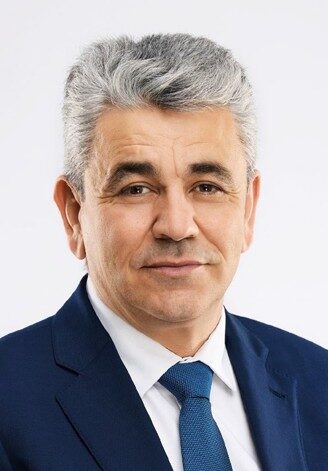
An opinion editorial by Gabriel Dină,
Country Lead Romania & Bulgaria, Pfizer
There is a question that has defined my career — and one that I believe will define the next decade for Central and Eastern Europe: What happens when a society stops seeing health as a cost and starts seeing it as its greatest investment?
The answer, I am convinced, is transformative. Not just for patients, but for economies, for communities, and for the kind of future we choose to build.
The courage to see what the numbers are telling us
Leadership begins with honesty. And the honest truth is that Romania has been underinvesting in the health of its people for far too long.
Romania’s health spending is the lowest in the European Union — less than half the EU average per capita, and the share of government spending allocated to health has actually fallen in recent years. Only 1% of health spending goes to prevention — a third of the OECD average.
The consequences are measured in human lives. Life expectancy is 5 years below the EU average. Treatable mortality — deaths that could be avoided through timely healthcare — is the highest in the entire EU. Put simply: one in two deaths in Romania is either preventable or treatable, compared to one in three across the EU.
Cardiovascular diseases account for 56% of all deaths. Cancer screening rates are a fraction of EU averages. Measles vaccination among children under one is the lowest in the EU, and Romania accounted for two-thirds of all measles cases reported across the bloc in the past year. Meanwhile, only 30% of innovative medicines authorised in Europe actually reach Romanian patients — and those that do arrive after an average wait of over two and a half years.
These are not statistics to be managed. They are a call to action.
A system that needs reimagining
Romania’s health system remains deeply hospital-centric — with inpatient care absorbing the second-highest share of spending in the EU, while primary care and prevention are starved of resources. Out-of-pocket payments are well above the EU average, with the burden falling disproportionately on the most vulnerable. Almost 60% of doctors under 35 still intend to emigrate. And an estimated 20% of health spending is considered wasteful.
This is not a system that needs more of the same. It is a system that needs vision.

Rewriting the narrative: health is prosperity The McKinsey Global Institute’s Prioritizing Health: A Prescription for Prosperity put it in terms no policymaker can ignore: the cost of ill health exceeds $12 trillion annually — roughly 15% of global real GDP. Over 70% of the gains from reducing the disease burden could come from prevention alone.
For Central and Eastern Europe, the stakes are existential. The region’s working-age population is projected to shrink by 20% by 2050. Romania’s elderly population share will rise from one in five to nearly one in three. Health investment can return up to four times its cost, create jobs, and support long-term growth.
The question is no longer can we afford to invest in health?
The question is can we afford not to?
What 30 years in this industry have taught me I have spent over two decades in pharmaceutical — from clinical practice to corporate affairs to leading Pfizer’s operations across Romania and Bulgaria. If there is one thing this journey has taught me, it is this: innovation without access is just a promise. Access without systems is just a wish. But when science, policy, and political will converge — lives change.
At Pfizer Romania, our more than 270 colleagues — including teams within two international hubs — are proof that the pharmaceutical sector can be a pillar of a knowledge-based economy: generating high-quality employment, attracting foreign direct investment, and building expertise that serves patients far beyond our borders.
The COVID-19 pandemic showed what becomes possible when industry, regulators, and governments align behind a common mission. The lesson we must not forget: the infrastructure that saved millions of lives must not be dismantled in peacetime. It must be the foundation for everything we do next.
Five imperatives for the leaders of tomorrow If I could put one message in front of every policymaker in our region, it would be this: the choices you make today will echo for a generation.
Reframe health as national strategy. Move from volume- based budgeting to value-based models — managed entry agreements, outcomes-based contracting, and financing that captures the full societal return of health investment.
Tear down the walls between innovation and patients. When only a third of innovative therapies are available and the wait stretches beyond 900 days, geography becomes destiny. Modernising health technology assessment and creating fast-track pathways for high unmet needs are moral imperatives.
Put prevention at the heart of the system. Vaccination, screening, and early intervention deliver the highest return any health system can achieve. This is not just a clinical priority — it is the smartest investment a country can make in its own future.
Build the digital backbone. Integrated data systems, patient registries, and real-world evidence are the governance tools of the 21st century. The European Health Data Space offers the framework — now we must make it real.

Nurture the innovation ecosystem. Clinical trials create jobs and accelerate access. Investment in research, digital platforms, and regulatory excellence creates an environment where breakthrough science can flourish — and where the next generation of talent chooses to stay and build, rather than leave.
A moment that demands vision
Romania stands at a crossroads. Demographic decline, workforce shortages, and rising chronic disease burdens will test our systems and our resolve. The temptation will be to manage the decline — to cut, to delay, to contain.
I believe we can do better. I believe we must. The pharmaceutical industry is ready to be a partner in this transformation — bringing science, investment, and an unwavering commitment to patients. But partnership requires reciprocity: a regulatory environment that rewards innovation, pricing frameworks that recognise long-term value, and the political courage to treat health not as an expense to be cut, but as the foundation upon which prosperity and resilience are built.
The future of pharmaceutical is not about molecules and margins. It is about unlocking human potential — one breakthrough, one patient, one bold decision at a time.
And that future starts now.
Gabriel Dină is Country Lead Romania & Bulgaria at Pfizer, with over 23 years of experience in the pharmaceutical industry. He holds an M.D. from Timișoara Medical University and has held senior leadership positions across Central and Eastern Europe.
