

Prof. Dr. Diana Păun, Senior consultant in endocrinology, professor at the “Carol Davila” University of
Medicine and Pharmacy, and Head of Endocrinology Department at the University Emergency Hospital Bucharest
Iodine is the essential substrate for the biosynthesis of thyroid hormones, which play a decisive role in the growth and development of numerous organs— most notably the brain—from the earliest stages of differentiation. Consequently, iodine deficiency and/or thyroid hormone deficiency during intrauterine life can lead to irreversible alterations in brain development.
Brain damage and irreversible intellectual disability are the most significant disorders induced by endemic iodine deficiency. Endemic cretinism manifests in two forms: the neurological form, characterized by neuromotor deficits, strabismus, deaf-mutism, and spastic diplegia; and the myxedematous form, characterized by severe hypothyroidism, short stature, and marked delays in skeletal and pubertal maturation.
Both endemic cretinism and impaired neurodevelopment in populations without overt cretinism are primarily caused by low circulating maternal thyroxine (T4) levels during pregnancy, rather than by alterations in triiodothyronine (T3) or thyroid-stimulating hormone (TSH) levels. In humans, the prevalence of maternal hypothyroxinemia during the first trimester exceeds 50% in regions with severe iodine deficiency and reaches approximately 30% in areas with moderate iodine deficiency.
The accepted mechanism through which iodine deficiency affects fetal brain development is the hypothyroidism induced in both the mother and the fetus. This condition impairs the development of fetal brain structures that depend on T3 generated locally from T4 within the brain under the action of type II iodothyronine deiodinase.
Mild to moderate iodine deficiency remains widespread across Europe among pregnant and breastfeeding women and may adversely affect children’s brain development, neurocognitive function, and intelligence quotient (IQ). Studies conducted in regions with mild to moderate iodine deficiency have documented psycho-neurological and cognitive impairments in both children and adults, including lower IQ scores (by approximately 5–10 points), delayed psychomotor and mental development, and a higher incidence of attention deficits and hyperactivity disorders.
Furthermore, the physiological changes that occur during pregnancy increase iodine requirements by approximately 50%, while lactation by 100% iodine requirements compared with those of non-pregnant women.
The risks associated with iodine deficiency during pregnancy vary according to the severity of the deficiency. In regions with moderate to severe iodine deficiency, consequences may include miscarriage, preterm birth, congenital abnormalities, increased perinatal mortality, and endemic cretinism in children. In areas with mild to moderate iodine deficiency, children may experience less severe but still significant neurodevelopmental impairments, including IQ scores reduced by 5–10 points, delayed or diminished motor skills, reduced attention, perception, and learning capacities, and a higher prevalence of attention-deficit/hyperactivity disorder (ADHD).
Iodine supplementation in pregnant women living in regions with severe iodine deficiency significantly reduces the incidence of cretinism when administered before conception or during the first two trimesters of pregnancy. Supplementation initiated during the third trimester or after delivery does not confer the same benefit. This finding suggests that the first two trimesters represent a critical period for fetal brain development, during which iodine and thyroid hormone deficiencies exert their most profound effects.
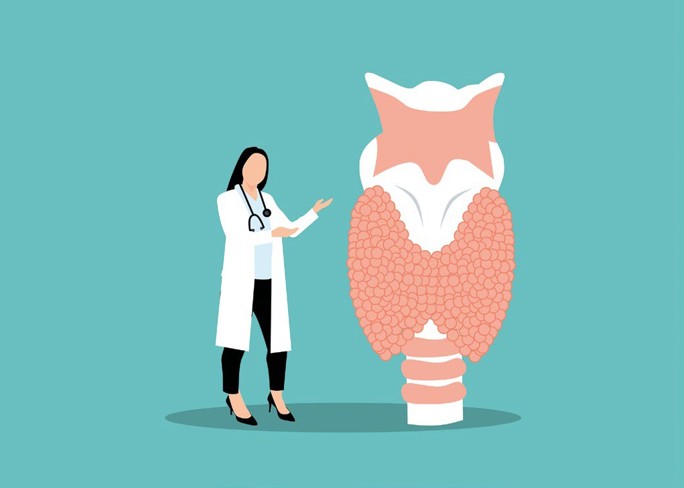
The prevention of endemic goiter and iodine-deficiency- related intellectual disability through dietary iodine supplementation has been universally accepted since the beginning of the twentieth century and remains the principal strategy for the eradication of endemic goiter. In Romania, salt iodization as a preventive measure against endemic goiter was officially adopted in 1954 following the recommendation of the C.I. Parhon Institute of Endocrinology.
Because certain population groups require higher daily iodine intake, the primary targets for iodine prophylaxis and for assessing its effectiveness are pregnant and breastfeeding women, newborns, and young children.
In conclusion, the adverse effects of iodine deficiency on fetal brain development during pregnancy are largely attributable to maternal hypothyroidism and the consequent reduction in transplacental transfer of thyroxine (T4). For this reason, iodine supplementation is now widely recommended for pregnant women, with a daily intake of approximately 250 μg of iodine before conception, throughout pregnancy, and during lactation.
