
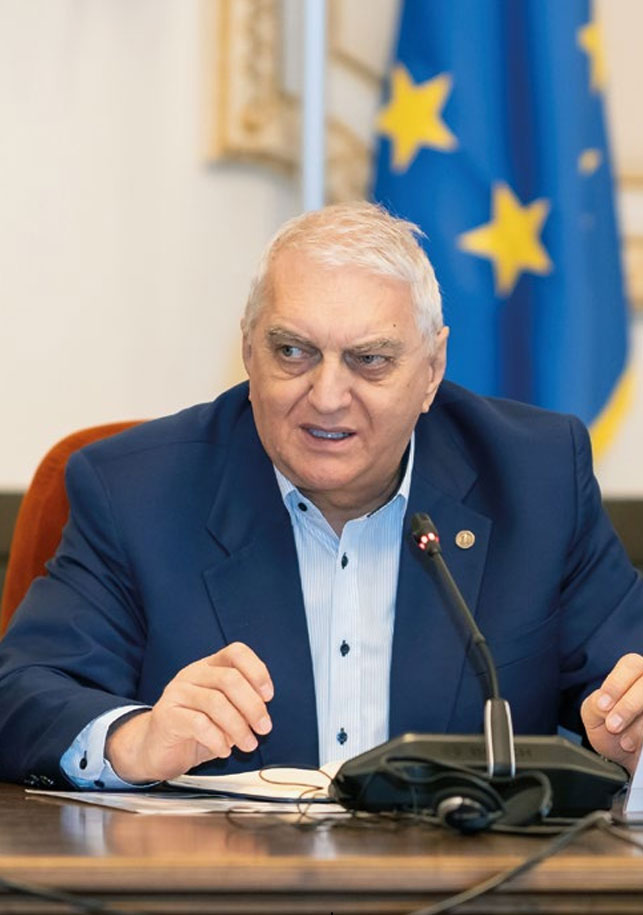
Eng. Valentin Silivestru, PhD
SCIENTIFIC DIRECTOR
Research and Development of Turbomachinery
Components and Aerospace Propulsion
Eng. Valentin Silivestru, President and General Director of the National Research and Development Institute for Gas Turbines (COMOTI) until July 2026, is one of the figures who has had a defining impact on the evolution of Romanian research over the past decades. A graduate of the Faculty of Aerospace Engineering at the Polytechnic University of Bucharest and holder of a PhD in Aerospace Engineering awarded “Cum Laude”, he has successfully combined technical expertise with a modern managerial vision focused on development, innovation, and competitiveness.
By applying scientific management principles and capitalizing on the experience gained through specialized training programs in the United Kingdom, Valentin Silivestru has consistently pursued the modernization of infrastructure and the development of human capital. Laboratories dedicated to the testing of gas turbines, compressors, and advanced materials have been established and upgraded, while modern additive manufacturing and 3D-printing technologies have been introduced.
He has actively supported the continuous professional development of researchers and engineers while simultaneously attracting young graduates, helping build a team capable of addressing today’s technological challenges. This strategy has enabled the institute to expand its research portfolio from aviation engines and space applications to energy technologies and environmental protection solutions.
His involvement in coordinating national and European projects has strengthened COMOTI’s presence within international research networks. At the same time, his scientific activity is reflected in numerous published papers, books, and patented inventions, as well as in the recognition he has received from prestigious professional organizations in Romania and abroad.
Through professionalism, strategic vision, and the ability to transform research into a driver of development, Valentin Silivestru has made a decisive contribution to enhancing COMOTI’s reputation and standing. The National Order “Faithful Service” in the rank of Knight, awarded by the
President of Romania in 2023, stands as recognition of a career dedicated to excellence, innovation, and the training of future generations of specialists.
Under his leadership, the National Research and Development Institute for Gas Turbines – COMOTI has emerged as one of the leading promoters of technological innovation within Romania’s energy sector.
Initially recognized for its expertise in aeronautical gas turbines, COMOTI has, since the 1990s, built an impressive portfolio of energy solutions that today contribute significantly to the efficiency and sustainability of Romania’s national energy system.
The expertise accumulated in the design and development of high-speed turbomachinery enabled the institute to successfully transfer knowledge from the aerospace sector into the energy industry.
Among its first major achievements were the development and delivery of the GTC1000 Turbo-Compressor Unit for the oil fields at Țicleni and the production of Romania’s first Centrifugal Air Compressor designed for industrial applications.
A landmark project was implemented at Suplacu de Barcău, where ten centrifugal compressors developed by COMOTI were deployed to provide the airflow required for underground combustion processes in asphaltic crude oil reservoirs, contributing to enhanced resource recovery rates.
At the same site, in collaboration with industrial partners, COMOTI participated in the development of an industrial cogeneration plant equipped with two turbogenerator lines based on Pratt & Whitney Canada engines, subsequently becoming an official packager for the Canadian company. One of the institute’s strongest areas of development is represented by natural gas compression equipment.
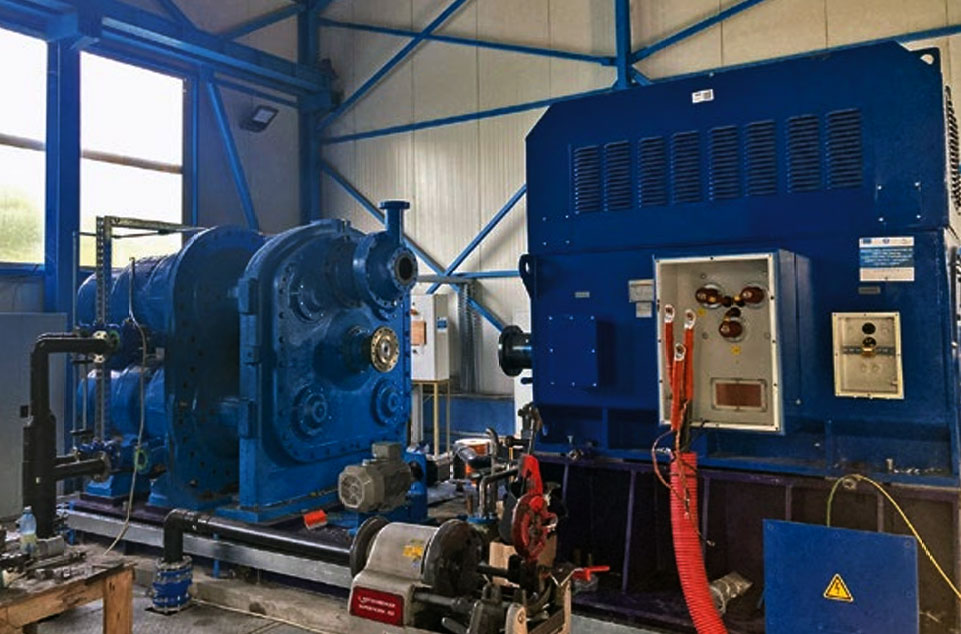
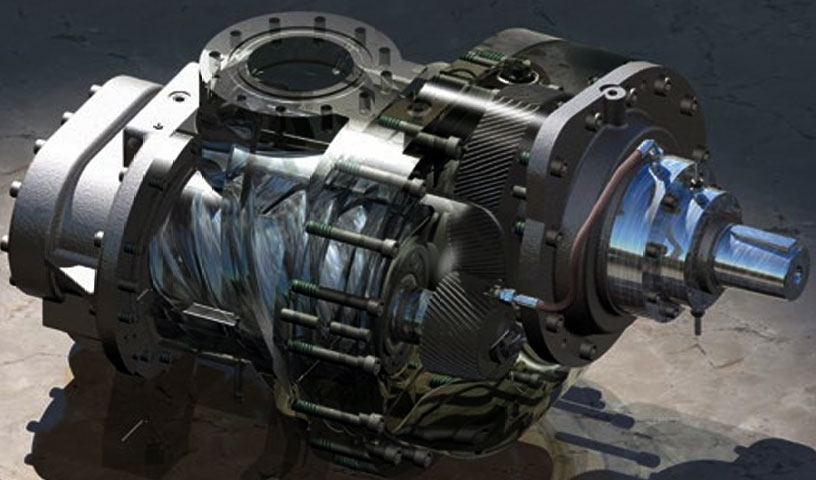
Since 1998, COMOTI has manufactured and delivered Natural Gas Screw Compression Units (ECS), utilized by OMV Petrom and numerous clients both in Romania and internationally.
To date, more than 150 such installations have been delivered, with the institute providing comprehensive maintenance and technical support services throughout their operational lifespan. At the same time, screw compression units developed in Bucharest are exported to the United States, Canada, and numerous European Union member states.
This commercial success confirms the international competitiveness of technologies developed by Romanian researchers and demonstrates the institute’s ability to transform applied research into high-value industrial products.
ProCAES – Romania’s Answer to the Energy Storage Challenge
As the share of renewable energy sources continues to increase, one of the greatest challenges facing modern energy systems is energy storage.
To address this need, COMOTI is developing ProCAES, an innovative solution based on Compressed Air Energy Storage (CAES) technology.
The concept aims to store surplus energy generated during periods of low demand and make it available during peak consumption periods. When electricity is abundant and inexpensive, compressors are used to compress air and store it in specialized reservoirs, depleted gas fields, or abandoned mining galleries.
The innovative element of COMOTI’s solution lies in the integration of highly efficient compression and expansion equipment together with advanced systems for recovering and reusing the heat generated during the process.
Through this approach, ProCAES has the potential to become an important component of future smart energy systems, contributing to the integration of renewable energy sources and increasing the flexibility of Romania’s National Energy System.
Technologies for the Decarbonization of Maritime Transport
Another major research direction focuses on reducing emissions generated by maritime and inland waterway transport.
In collaboration with the Polytechnic University of Bucharest and international industrial partners, COMOTI is developing solutions for converting existing diesel engines to operate using ammonia, one of the fuels considered highly promising for a low-carbon economy.
Tests conducted on the institute’s facilities have demonstrated the possibility of reducing diesel consumption by between 30% and 50%, while under certain technical conditions the substitution rate can reach as high as 90%. Ammonia’s key advantage lies in the fact that the infrastructure required for its transportation and storage already exists, as well as in the possibility of producing it from renewable energy sources.
By utilizing Diesel–Ammonia or Compressed Natural Gas–Ammonia fuel blends, the maritime industry can significantly reduce CO2 emissions without the need to replace existing fleets entirely.
