
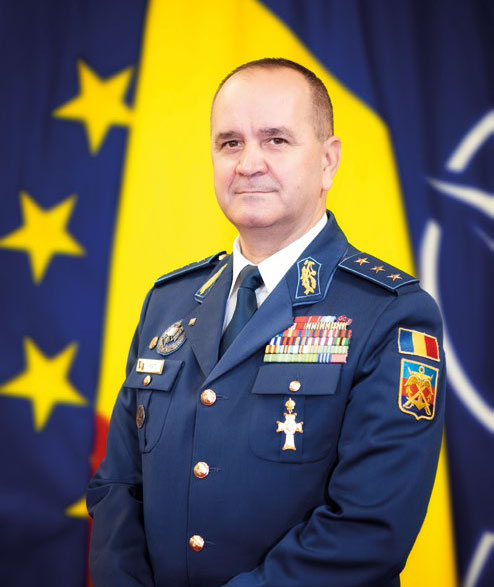
Lieutenant general (ret)
Corneliu Postu President of the National Association of the Cult of Heroes „Queen Maria”
Each of us often passes by war memorials on our journeys, some more impressive, others more modest, but how many times have we asked ourselves how much we, those who pass so quickly through the modern world, owe to the heroes of the nation we come from, to whom all of these are dedicated?
In a humanity with its eyes lost in its mobile phone, which often does not even realize the danger of the banal crossing of a street, it seems risky to ask the younger generation to look ahead to the dangers that surround us as a country and as a people, with a self-awareness that is still functional. And yet, we are obliged to do it. At least we, the volunteers of the National Association of the Cult of Heroes „Queen Maria”, who are not as many as the size of the country and the size of the sacrifice for the country would require, believe with conviction in this necessity.
Our conviction comes primarily from the fact that when we say heroes, we think first of those who left home – our fathers, grandfathers, great-grandfathers or grandfathers of our great-grandfathers, to defend their country and never managed to return. They are the ones who lost their lives and often, along with their young bodies, lost their names. We think of them with respect, nostalgia, understanding and gratitude, but unfortunately, we do it quite rarely and sometimes only on holidays. We usually leave it to the priests to pray for them and for the Christian army of the country, gradually and surely forgetting that the defense of the country, of the ancestral estate, has always been sacred and obligatory for all citizens.
We also think of the great rulers of the Romanian Principalities who fought throughout history for independence, without being able to obtain it only temporarily, and for the preservation of the Christian faith, which was and still is today one of the most important binders of national unity. They, the rulers, understood that the idea of country, of ancestral hearth, must descend from the level of the abstract to the concreteness of private property, of the estate, whose sacredness was always cultivated. Those properties preserved the sacredness of the land and the moral obligation to defend it to the point of the supreme sacrifice, and I must mention that this is not something that happened only in our country.
This is how going to war was a ritual integrated into the village tradition, which our writers have rendered very expressively in their works about the war or in their own memories of those periods. One of these memories remained famous in which a poor man from the village of Crevedia, a nobody who worked for others by the day, went to the mother of the future writer “to ask her for a shirt of her husband’s, if not new, at least unbroken and clean, because he is also going to war and cannot go undressed”, the meaning being that the men’s going to war was a sacred duty equal to accepting self-sacrifice, and the one destined for sacrifice for the country and nation must be clean and fresh both inside and out.
We also hold this belief because tradition tells us that Stephen the Great and Saint, whom the Pope of Rome called „the athlete of Christianity”, built about as many churches and monasteries as he fought with the Turks, Tatars, Poles or Hungarians. And it is not important who he fought against, because that was how the times were then, but the fact that these churches were and remain, in fact, also places of worship dedicated to the defenders of the country, in which, as Christians, we pray every Sunday but very rarely for the heroes to whom that church may have been dedicated.
We believe in our motto „The nation is eternal through the cult of heroes” and because this country of ours was placed like a fountain at a crossroads of „worlds” and each of the surrounding empires fought with it – but also against each other – to control it and squeeze its riches, and the fact that we are still a nation living in a free, democratic and independent country is primarily due to the sacrifice of our heroes.
We must be fair and say that this cult of heroes has not always existed in the form we understand it now. It sprouted in our country after the War of Independence or the Russo-Turkish War, as it is known in universal history. Then, several war memorials were erected, and lists of local heroes were placed in the church, at the town hall and at the village school, framed in the oak leaves of the victory that brought us independence and the steel crown of royalty.
Cult of Heroes truly appeared in 1919, out of the need of the descendants to collect the bones of the soldiers from the forests and hills, from the plains, from the furrows drawn by oxen, and to place them under the crosses of gratitude and immortal remembrance of their deeds that made Greater Romania.
Honoring the heroes was a spiritual movement, which required expenses, in which local administrations, war veterans, their widows, businessmen were involved and not infrequently public collections were also used. The achievements of that time and those that followed are also ours, the volunteers called to protect them, to care for them, to include them in the educational circuit and not to leave them prey to ignorance due primarily to lack of education, bad faith, lack of respect – often due to stupidity and corruption, their transformation into businesses – real estate or of any other nature or even the barbarity of some. But also, part of history is the fact that the National Settlement „Queen Maria” for the Cult of Heroes was abolished in 1948, along with the expulsion of the Christian faith from the army. It was a tribute that the country paid to its „liberators”, who „forgot” their troops and advisors here. There was a time when the First World War was considered an imperialist one, waged by Romania against the USSR and Ukraine, but this was because Bessarabia and Bukovina united in 1918 with the Motherland.
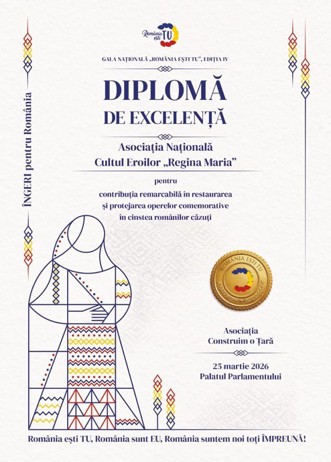
All those who fell in World War II, on the Eastern Front, were considered traitors and ignored by the official collective memory. Only widows and war orphans commemorated them privately and secretly. Their names had no place on monuments, because the great friend from the East was diplomatically upset. The situation is not better today either, because more recently others are upset, who impose rules on us, some with arguments, others just because they want to. Coming back, this is how the great commanders, the elite of the Romanian army, made up of generals and colonels, ended up in communist prisons. Those who did not die there returned to die in the basements of their own homes, without pensions or income.
We thought that after 1990 we would be free to honor our heroes as they should be. All of them! And those who fell on the battlefields, and those who returned home to rebuild the country, and those sentenced to prison, or taken prisoner! But things did not happen that way because ignorance and an incomprehensible policy against national identity, so easily rendered obsolete in our country, although in others whom we admire or look at with respect it constitutes a value that is not discounted, sometimes in plain sight, sometimes masked under various forms, have led to the situation in which today, in many cases, all gratitude and piety are reduced to formalism.
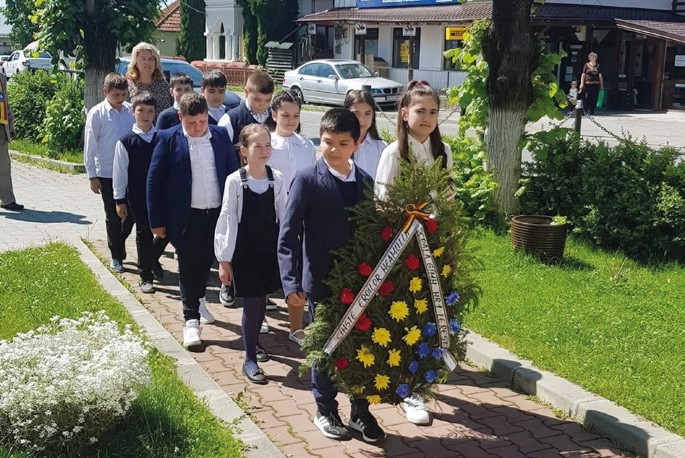
Unfortunately, we find that Heroes’ Day and other days related to the army and the nation itself are often held in a pronounced „anonymity”. We rarely sees students who understand anything about the heroism of this nation, and also the population from the communities. The officials lay some wreaths, possibly a parade and that’s it! Those who pass by on the street often do not even know why we have gathered. We like to be applauded but we completely forget that first we should teach them why to applaud us. But it is not surprising, because it is not the only area where we have forgotten to manifest our honor and dignity, for reasons that are sometimes almost impossible to understand.
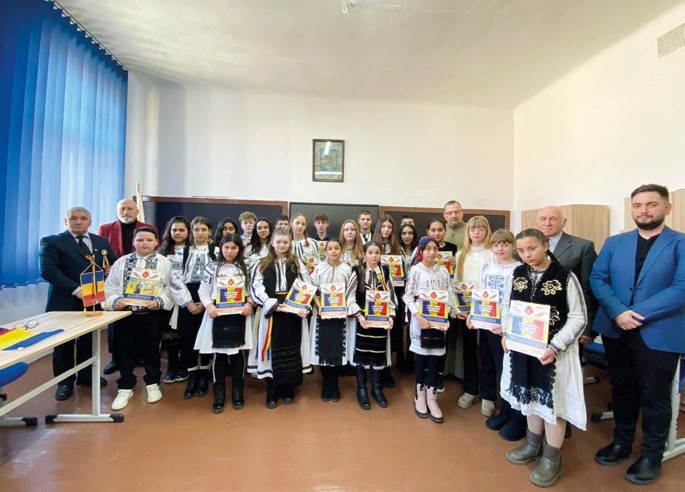
I am convinced that the laws have not always been fair or perfect, which is sometimes understandable, but it is sad to note that due to circumstances created by a lack of education, including politics, the National Association for the Cult of Heroes „Queen Maria” no longer has the official right to be included in the ceremonial laying of wreaths. And it is not just the case with our association. We do not know if this is due to the fact that the „officials” have no time to waste or to a lack of respect for those who nevertheless carry out this duty of honor voluntarily, without affecting the state budget, but it is certain that this does not help, on the contrary, it can only lead to the disappearance of that haze of patriotic education, I repeat, which we admire so much in others, but which bothers us in ours.
It seems that not even the wars that are currently underway in the world, some even very close to us, can reduce the distance from our patriotic feelings that seem far away or perhaps sleep in the depths of our ignorance, as if the statue of the Lion from Cotroceni had erased its inscription: „Tell future generations that we made the
supreme sacrifice on the battlefield for the unification of the nation.”
We are, of course, pro-European, which is very good and desirable to keep, especially since, since we have existed as a nation, geographically and from whatever perspective we look at it, we have been in Europe, although it seems that some have only just found out about this, but I don’t think there would be anything wrong if, in addition to this, we were also pro-Romanian and educated our future generations more seriously and well in the spirit of respecting the centuries-old values of our nation.
I say this because it seems increasingly likely that we risk, I don’t know if unconsciously or intentionally, as inhabitants of Romania, becoming more of a population instead of a nation or people, even though the European Union is a union of European nations, not to mention that the most well-known institution on the planet, the United Nations, has in its title the notion of nation, not countries, not populations or … continents.
In this context, I can’t help but think that I often hear that we all want a country „like others”, forgetting that they have worked hard to be seen that way and that, although we affirm this, we most easily copy the negative things from them, not the values that make us want to be like them. And if we still have a history of over 2000 years, why wouldn’t we want to be seen that way, with respect? After all, this would also be proof of the Romanian nation’s societal resilience – something that has proven to be extraordinarily important, especially in difficult situations for the nation.
Where to start? Maybe even respect for those who left us this country so beautiful and rich in resources, with beautiful people and so capable when they want to, respect for the heroes next to us, who make us proud when we want to show that we are also „someone”, but whom we treat with so much indifference very often, could be a starting point. I know it seems hard, especially since this is done through education, which we very often send to the corner somewhere, but which we brag about, although we have lost an unacceptable amount of it, when we want to be
respected. It is an attitude that I consider hypocritical, but it seems that this is what is sought more in our society now, than quality and real values. And this will only make us, those who will no longer exist in decades, be forgotten, or treated with indifference by those who will come after us – regardless of whether or not we were “heroes” of our times.
In the end, I can state, without fear of being wrong, that the answer to the initial question „how much do we, those who pass so hurriedly through the modern world, owe to the heroes of the nation we come from, to whom all the commemorative works we pass by, sometimes daily, are dedicated?” is „More than we imagine we know and more than we have done by erecting crosses and monuments, by arranging cemeteries for heroes or isolated graves.”
We look forward to seeing you on our website, www. cultuleroilor.ro, Facebook or Instagram page, or at our headquarters, and if you resonate with us, why not join our membership so that together we can take this value further, because we think we can be a better and more important nation within an European and world context.
