
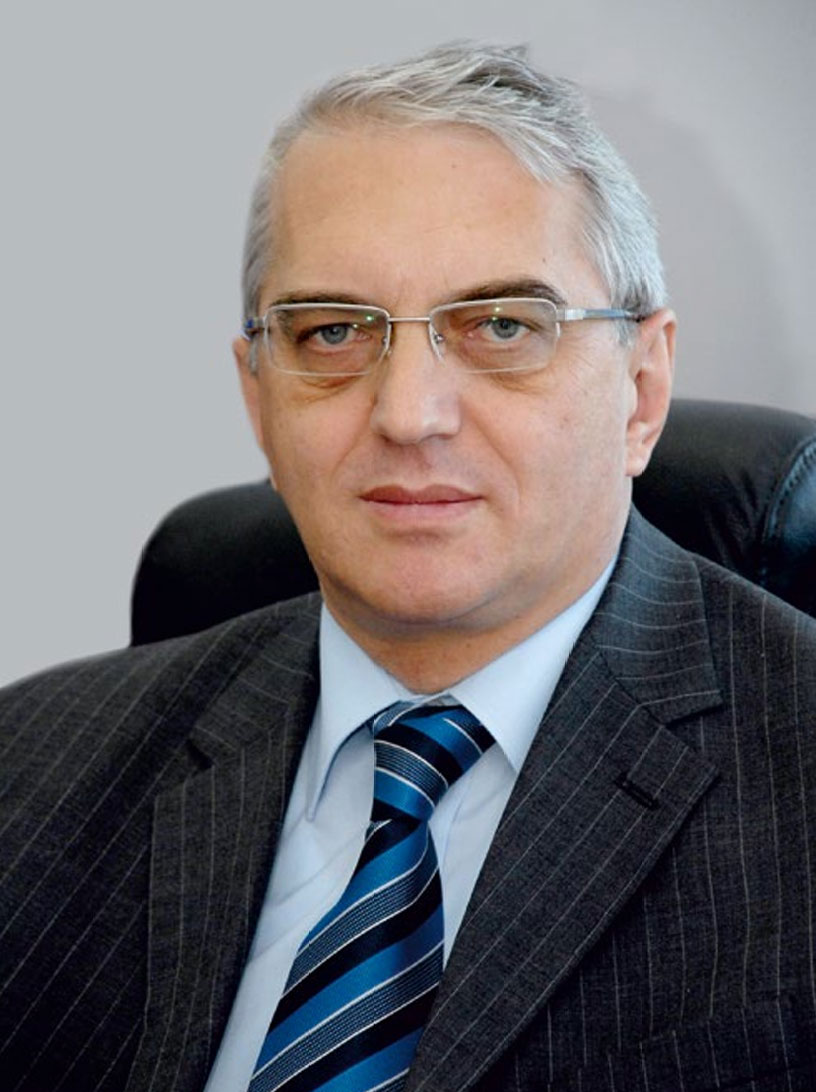
Eng. Valentin Silivestru, PhD, SCIENTIFIC DIRECTOR
Research and Development of Turbomachinery
Components and Aerospace Propulsion
In a geopolitical environment defined by technological competition, rapid shifts in the security landscape, and the need to strengthen strategic industrial capabilities, the National Research and Development Institute for Gas Turbines – COMOTI stands as one of the most significant examples of national infrastructure capable of generating technologies with a direct impact on Romania’s security.
Operating under the coordination of the National Authority for Research and drawing on more than four decades of expertise in turbomachinery and propulsion systems, COMOTI, under the leadership of Dr. Eng. Valentin SILIVESTRU, President and General Director, is today the only organization in Romania that integrates research, design, development, testing, and technology transfer for gas turbines and complex aerospace, naval, and space propulsion systems.
Dr. Eng. Valentin SILIVESTRU has held the rank of Senior Scientific Researcher Grade I since 1994 and has served as an Associate Professor at the National University of Science and Technology POLITEHNICA Bucharest, Faculty of Aerospace Engineering, since 1999.
By applying the principles of scientific management specific to research, development, and innovation activities—combined with a visionary, determined, and courageous approach grounded in extensive professional experience—he has strengthened both the institute’s specialized research infrastructure and its human capital of researchers, engineers, and technicians. This has been achieved through the continuous promotion of professional development and training programs, alongside the recruitment and integration of young graduates from specialized technical universities.
Under his leadership, COMOTI has accelerated the development of its core research areas, including aviation gas turbines, space technologies and components, military and industrial turbine applications, increased efficiency in electricity and thermal energy production, the rational and efficient use of natural resources, as well as the implementation of clean technologies and environmental protection equipment.
Beyond its traditional role in the aerospace sector, the institute has significantly expanded its activities in recent years into areas considered essential for national security: autonomous unmanned systems, space technologies, military naval propulsion, environmental monitoring, and critical infrastructure protection.
One of COMOTI’s most dynamic fields of development is the UAV (Unmanned Aerial Vehicle) industry. In recent years, the institute has assumed an active role in developing unmanned aerial platforms capable of addressing both civilian needs and applications relevant to security and defense.
As part of the European project DREAM – Danube River Environmental Assessment and Monitoring, implemented together with partners from Romania and Bulgaria, COMOTI is developing two multi-role UAV platforms.
The first of these, DRADAR, is designed for surveillance and mapping missions and has significant applications in border security, emergency response management, and the monitoring of critical infrastructure.
Another strategic pillar of COMOTI’s activity is its participation in programs conducted by the European Space Agency (ESA). Following Romania’s accession to ESA, the institute established two departments dedicated exclusively to the space industry.
A flagship initiative is LOADER, developed within ESA’s Argonaut lunar program. Together with its partner Initium Space, COMOTI is developing a robotic crane designed to handle equipment on the surface of the Moon. The system will enable the unloading of cargo and infrastructure required for future exploration missions.
The strategic significance of this project is remarkable: COMOTI is the only European organization involved in developing such a critical piece of equipment, which could become an integral component of future lunar missions. Participation in programs of this caliber positions Romania within a highly advanced technological segment with strategic relevance for both European security and technological autonomy.
In the defense sector, COMOTI has demonstrated its ability to transform research into operational products.
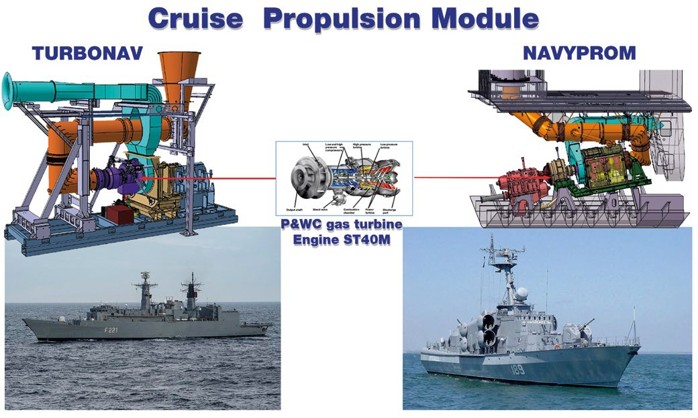
The TURBONAV project focused on the development and testing of a modernized naval gas turbine engine designed for operation in a marine environment. The outcome was the creation of a new naval propulsion system that enabled the re-engining of the Type 22R frigates currently serving in the Romanian Naval Forces.
The technologies developed through this project have increased energy efficiency by more than 15%, reduced specific fuel consumption, and lowered operational costs.
Building on this achievement, the NAVYPROM project was launched with the objective of modernizing the propulsion systems of missile-carrying naval vessels. By integrating advanced technologies and developing solutions tailored to current operational requirements, the project contributes directly to strengthening Romania’s naval capabilities.

A major strategic advantage lies in the fact that maintenance and technical support for these systems are provided domestically throughout their entire operational lifecycle. In a complex regional environment, this technological autonomy reduces external dependencies and enhances the resilience of national defense infrastructure.
COMOTI’s experience demonstrates that modern security can no longer be separated from technology, innovation, and national industrial capability. Autonomous drones, space systems, military naval propulsion, monitoring technologies, and intelligent energy infrastructures are all part of the same strategic architecture.
Through its participation in leading European and international programs and through the development of proprietary solutions with direct applications in defense and security, COMOTI contributes to strengthening Romania’s position as a provider of advanced technology and as a trusted partner within the European security ecosystem.
