

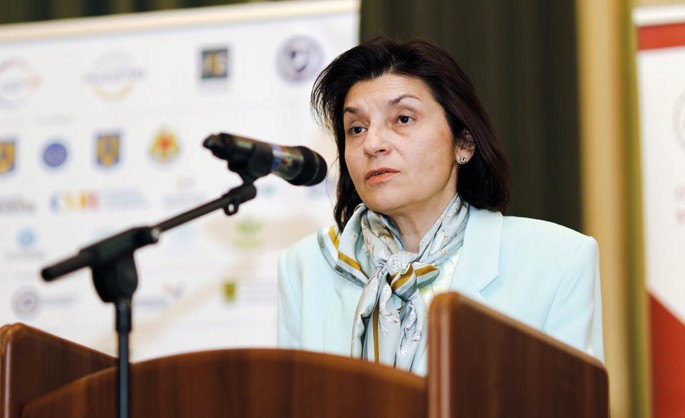
Prof. Dr. Anca Coliță,
Manager, Fundeni Clinical Institute
Advances in oncology and hemato-oncology over recent years have fundamentally changed the outcome for patients diagnosed with cancer. Targeted therapies, immunotherapy, stem cell transplantation, and organ transplantation have significantly increased survival rates and transformed many conditions once considered incurable into diseases that can be controlled over the long term.
Access to innovative treatments is supported by molecular diagnostics and personalized medicine, which require the development of healthcare systems capable of managing one of the greatest challenges of modern medicine: healthcare-associated infections in immunocompromised patients.
According to Dr. Anca Coliță, the greater the survival chances of our patients, the greater the number of infections we will encounter in this patient population.
From this perspective, infection control is not merely a matter of medical safety but an essential component of the success of modern cancer treatment.
Prof. Dr. Anca Coliță, Manager of the Fundeni Clinical Institute, emphasizes that the success of modern therapies also brings an inevitable consequence. As medicine succeeds in prolonging the lives of patients with severe oncological and hematological diseases, the number of individuals living with profoundly weakened immune systems also increases. New chemotherapy and immunotherapy regimens, hematopoietic stem cell transplantation, solid organ transplantation, and treatments used for autoimmune diseases all increase susceptibility to infections.
Immunocompromised patients are significantly more vulnerable not only to community-acquired bacterial and viral infections, which tend to progress much more severely than in individuals with normal immune function, but also to rare opportunistic infections.
In Prof. Dr. Anca Coliță’s view, addressing this challenge requires an integrated approach that extends beyond the scope of any individual physician’s intervention.
A first priority is strengthening the medical infrastructure dedicated to high-risk patients. If Romania aims to develop oncology and hematology services at European standards, public hospitals must benefit from conditions comparable to those available in leading Western medical centers.
Specifically, investments are needed in single-patient rooms equipped with private bathrooms and strict isolation facilities. These environments allow the safe administration of highly immunosuppressive therapies and significantly reduce the risk of infection transmission between patients.
Such investments must include not only the construction and equipment of these facilities but also the funding required for the continuous maintenance of ventilation, filtration, and decontamination systems.
A second essential area of action is the development of diagnostic and monitoring capacity. Immunocompromised patients require continuous access to advanced laboratories capable of operating 24 hours a day and utilizing modern methods for the rapid identification of infectious agents. For these patients, the time required to establish a diagnosis can make the difference between controlling an infection and developing severe complications.
At the same time, healthcare-associated infection surveillance services must be strengthened, particularly in hospitals treating complex cases. Continuous infection monitoring, rapid identification of risk sources, and implementation of corrective measures must become central components of hospital management.
Prevention remains the most effective weapon. For many categories of patients, prophylactic protocols already exist to reduce the risk of severe infections. In patients at very high risk of infection — particularly those receiving CAR-T cell therapies or antibody-based treatments that result in profound hypogammaglobulinemia — immunoglobulin replacement therapy represents an essential prophylactic measure to restore humoral immune defenses and reduce the burden of severe bacterial infections. In addition, compliance with hygiene protocols must remain a constant concern for healthcare professionals, patients, and family members alike.
Furthermore, whenever a bacterial infection is suspected, treatment must be initiated promptly through the empirical administration of broad-spectrum antibiotics, followed by therapeutic adjustment based on microbiological findings. This intervention model requires experienced medical teams and laboratories capable of delivering results as quickly as possible.
Another issue highlighted by the Manager of the Fundeni Clinical Institute is the shortage of specialists in epidemiology and infection control. Recruiting and training professionals in this field must become a strategic priority. According to Prof. Dr. Anca Coliță, access to precision medicine does not simply mean the availability of innovative drugs and molecular tests that allow treatment personalization.
These represent only part of the equation. Therefore, for the benefits of modern therapies to translate into long-term survival rates, the healthcare system must simultaneously invest in infrastructure, advanced laboratories, infection monitoring, education, and specialized human resources.
Without such investments, medical performance risks being limited by factors unrelated to physicians’ expertise or the effectiveness of available treatments, but rather by the healthcare system’s ability to provide a safe environment for its most vulnerable patients.
