
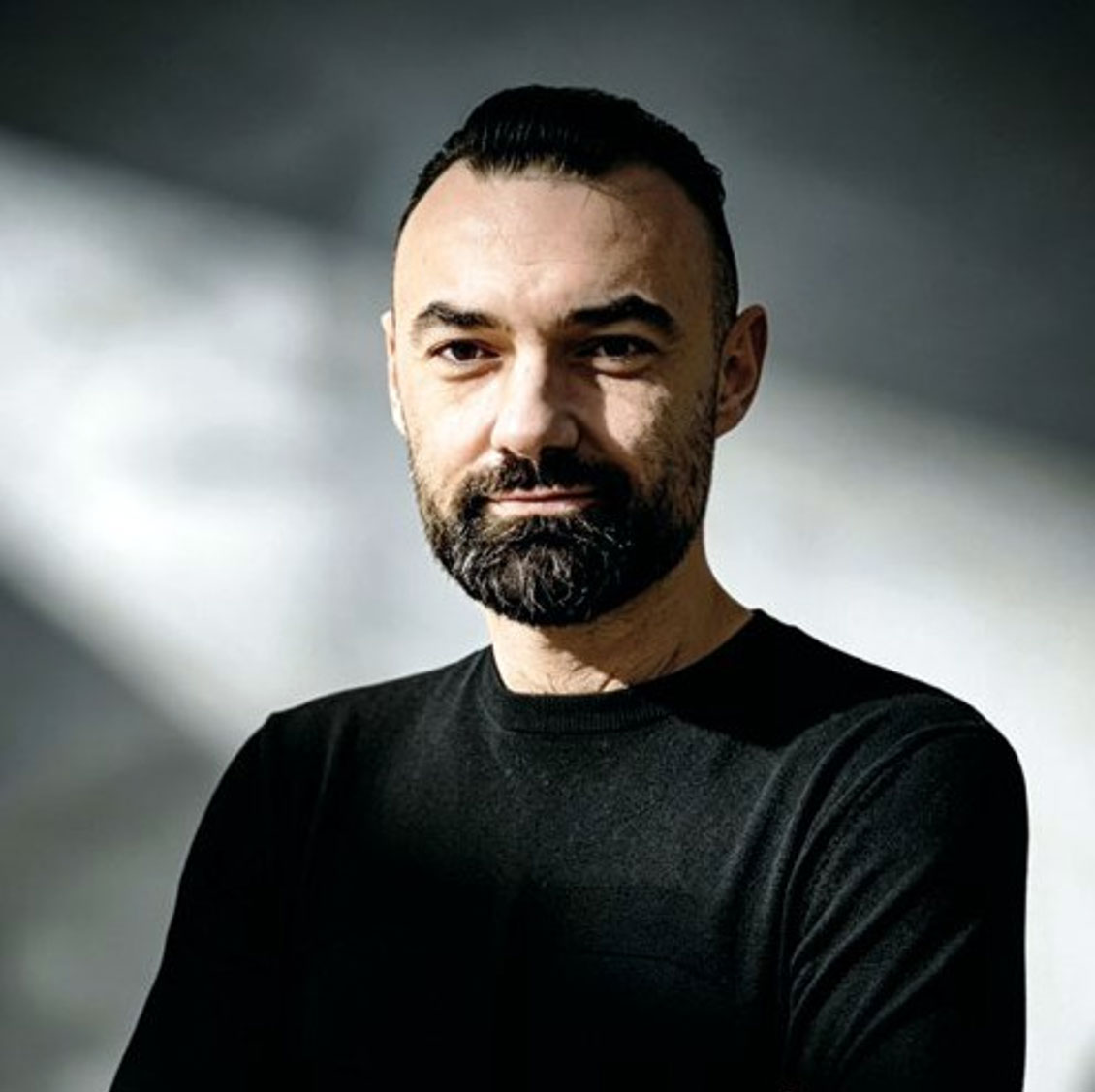
In every major hospital there are physicians whose professional profile begins to overlap with the profile of the institution itself. In the case of the Foișor Clinical Hospital of Orthopedics, Traumatology and Osteoarticular TB, Dr. Șerban Dragosloveanu can be understood in precisely this way: not only as an orthopedic surgeon, but as a figure through whom one can understand the hospital’s present direction. He is a university assistant at Carol Davila University of Medicine and Pharmacy, a primary physician in orthopedics and traumatology, and the hospital’s manager, with clinical interests in robotic surgery, 3D-printing in medicine, and the integration of artificial intelligence into clinical workflows. This brief portrait is already telling, as it highlights the three dimensions that increasingly define modern orthopedic leadership: operative expertise, academic affiliation, and institutional responsibility.
His trajectory coincides with a period in which Foișor Hospital has sought not only to preserve its historical reputation, but to redefine itself in more visible, technologically ambitious terms. His managerial continuity since late 2022 underlines that his role has not been peripheral, but embedded in the hospital’s recent administrative and professional evolution. In a healthcare environment where many surgeons remain identified strictly with the operating theatre, his public positioning suggests something broader: the surgeon as an organizer, spokesperson, and participant in institutional transformation.
This broader role has also received significant external recognition. The Surgical Review Corporation (SRC) accredited Dr. Dragosloveanu as a Master Surgeon in Orthopedic Surgery, only weeks after the same organization listed Foișor Hospital as an SRC-accredited Center of Excellence in Orthopedic Surgery. Read together, these two distinctions, one for the institution, one for its manager, suggest a tight alignment between individual surgical performance and the clinical standards the hospital now aims to uphold.
That alignment is reinforced by his professional leadership beyond the hospital. Dr. Dragosloveanu serves as President of the Romanian Society of Orthopedics and Traumatology (SOROT) for the 2025–2027 term, and is active in the National Commission of Orthopedics and Traumatology of the Ministry of Health. In his role as SOROT President he is responsible for shaping the community’s scientific direction, organizing the National Congress, and maintaining the society’s dialogue with European and international bodies. His role as a scientific ambassador for leading international orthopedic journals extends this influence into the editorial and research domains of the field. Taken together, these positions place him at a level where individual clinical excellence begins to shape the standards of the speciality as a whole.
Foișor Hospital is currently undergoing a phase of active modernization, supported by a PNRR-funded integrated digital platform designed to upgrade communications infrastructure, optimize clinical and non-clinical management, and improve interoperability. In parallel, the modernization of the National Endoprosthesis Registry
(RNE) and the reinforcement of cybersecurity speak to a less visible but equally decisive dimension of hospital identity: consistency, robustness, and the ability to protect clinical data as a core clinical asset. In contemporary medicine, digital maturity is no longer an accessory to care — it is embedded in the architecture of efficiency, traceability, coordination, and patient safety. In this context a manager-surgeon such as Dr. Dragosloveanu becomes especially important as he stands precisely at the point where clinical needs and administrative vision must converge.
The most visible expression of this agenda is the rise of robotic and AI-supported surgery at Foișor Hospital. The hospital performed the first robot-assisted knee arthroplasties in its clinic, and subsequently bilateral robotic hip arthroplasty procedures, covered by national television, have become a public marker of what contemporary Romanian orthopedics can deliver in a public hospital. The significance of this step is not merely symbolic. A bilateral robotic hip replacement performed under a single anesthesia spares the patient a second hospitalization and a second recovery. In practice, this translates into earlier mobilization, a shorter overall rehabilitation arc, and a reduced cumulative surgical burden, particulary for elderly patients with symmetrically deteriorated joints. Delivering such a procedure safely requires precise preoperative planning, intraoperative tracking, and a surgical team trained to work within the constraints of robotic assistance. For this reason, the learning curve associated with the technique, studied and published by the Foișor Hospital team itself, is as important as the technology. In parallel, internal initiatives focused on AI-supported clinical workflows, from imaging interpretation to operative planning and patient flow, alongside the planned adoption of advanced sterilization systems complete the picture. Together, these developments point to an institution that understands orthopedic excellence not merely as the product of skilled surgery, but as a well-organized ecosystem surrounding it: one in which planning, imaging, robotics, data, and sterilization reinforce one another rather than functioning as isolated domains of competence.
Traditionally, prestige in orthopedics was associated primarily with case volume, operative courage, and technical reputation. These qualities remained important, but they are no longer sufficient on their own. The contemporary orthopedic leader must also navigate accreditation, institutional communication, digital transformation, team coordination, and the growing public expectations surrounding advanced technologies such as robotic surgery and AI-supported care. For that reason, Dr. Șerban Dragosloveanu may be described less as the subject of a conventional laudatory profile, and more as a representative figure of the current stage of Romanian orthopedic medicine, standing at the intersection of surgery, technology, institutional responsibility, and public credibility. Through recent accreditation, digital investment, AI-oriented initiatives and visible robotic procedures, Foișor Hospital, appears to be redefining, what a modern orthopedic center in Romania can look like.
