
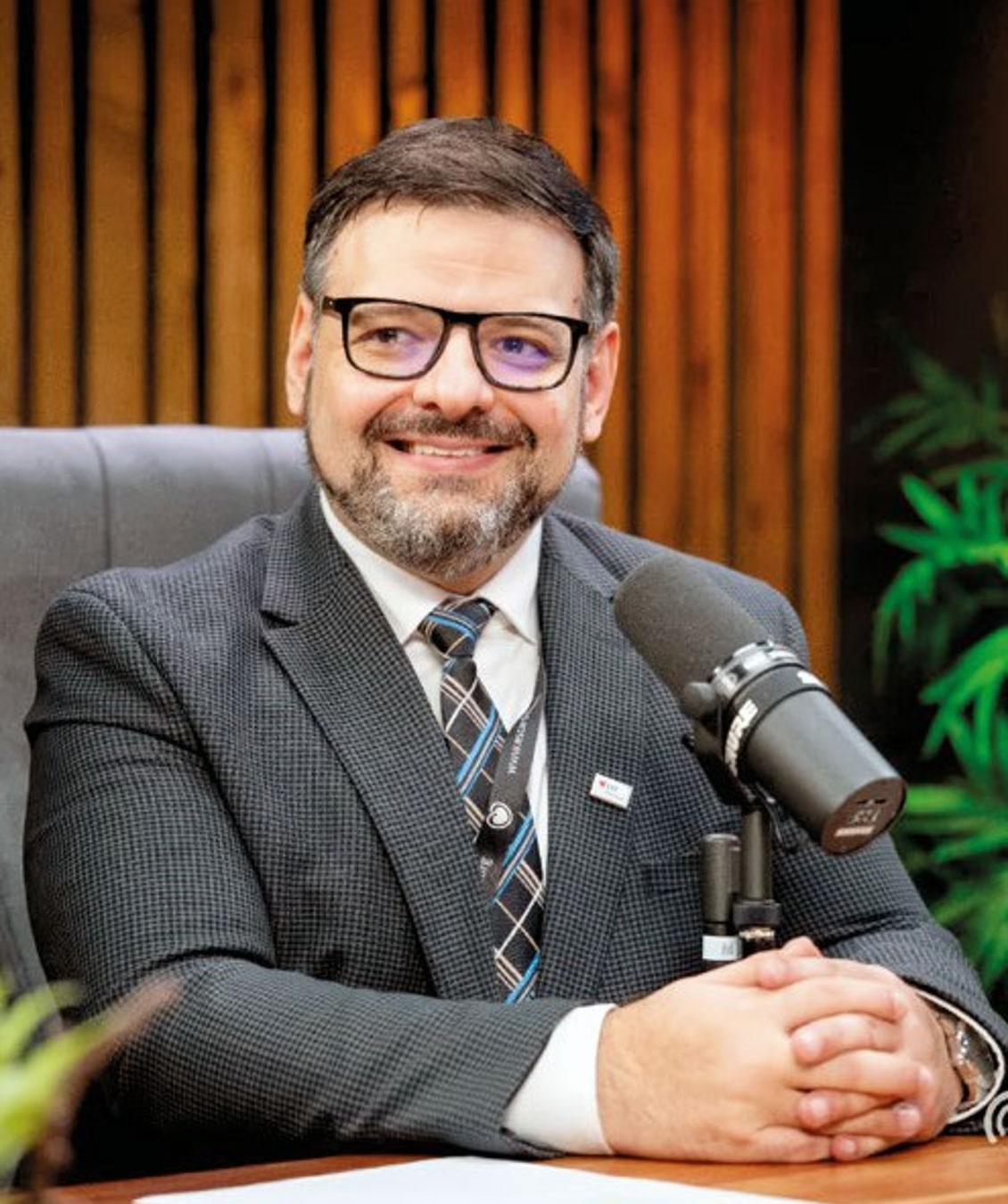
Dr.Silviu Ionel Dumitrescu is a consultant cardiologist and Head of Clinical Cardiology Department I at the “Dr. Carol Davila” Central Military Emergency University Hospital in Bucharest, residency program coordinator and senior lecturer at the Faculty of Medicine, “Titu Maiorescu” University, Vice President of the Romanian Society of Hypertension and member of the Cardiology Commission of the Ministry of Health. In this threefold role – clinician, professor, and public health strategist – he builds bridges between value-based, humanistic medicine and the new frontiers of medical technology.
Trained in the school of major Romanian clinicians, he regards Academician Prof. Victor Voicu as his “academic pater” and Prof. Ion Țintoiu as his “professional pater”. At the same time, he traces his roots to the example of professors who have passed away – Prof. Ioan Alexandru and Prof. Marius Vintilă – and to his training alongside numerous exceptional physicians with whom he worked and learned day by day during his residency. For him, professional performance is not a solitary act, but the result of teamwork and of a “genealogy” of role models, gestures, clinical conversations, and nights on call turned into life lessons:
“Everything I am today as a physician I owe, to a great extent, to the people who shaped me. I carry with deep gratitude the memory of Professors Ioan Alexandru and Marius Vintilă, who have passed into eternity but remain present in the way I think through a case, listen to a patient, or make a difficult decision. At the same time, I am honoured to continue working together with and learning from Prof. Ion Țintoiu and Academician Prof. Victor Voicu, my role models of thoroughness, intellectual elegance, and dignity in our profession. Alongside them stand all the physicians with whom I have worked, and continue to work, in the wards, on call, and in conference rooms – colleagues from whom I have ‘stolen the craft’, who have challenged me, corrected me, and helped me grow. Without them, nothing I do today would have been possible.”
At the clinical level, he leads one of the most complex cardiology departments in Romania, within an integrated structure (the Cardiovascular Diseases Center of the “Carol Davila” Central Military Emergency University Hospital) comprising clinical cardiology, a cardiac intensive care unit, laboratories for non-invasive testing, angiography, electrophysiology, device implantation, cardiovascular surgery, and a dedicated ICU – a genuine “ecosystem of the heart” for cases with complex cardiovascular pathology. He initiated the introduction, as a national first, of non-invasive myocardial revascularization by extracorporeal shock waves in patients with advanced coronary artery disease who have no other therapeutic options, and he coordinates a program for automated assessment of atherosclerotic plaques using artificial intelligence algorithms, thus placing Romanian cardiology in direct dialogue with the medicine of the future.
For Dr. Dumitrescu, however, technology – from innovative procedures and advanced imaging to AI-based applications – is not an end in itself, but a tool governed by a profoundly humanistic profession. He maintains that the real challenge of the twenty-first century is not merely the development of technology, but its “governance” through values: responsibility, clinical discernment, empathy, and respect for the person. In his view, the physician is called to be “the human guardian of a technological empire”, turning data and algorithms into decisions that have meaning for people, not just for systems.
A central component of his work is the training of the younger generation of cardiologists. As a professor and residency coordinator, he insists that young physicians must understand that the future of medicine is built today, in the ward, in the consulting room, and in the laboratory, through the way they learn to think, to communicate with patients, and to use technology. He emphasizes that artificial intelligence applications can become an enormous beneficial force only if they are designed, validated, and used within a solid ethical framework, with the physician at the center and not at the margins of the decision-making process. In this respect, he regards the proper development of AI in medicine as one of the major challenges of his generation and of those to come:
“AI‑based applications are probably one of the greatest challenges of contemporary medicine. They can massively amplify our ability to diagnose early, to estimate risks, and to personalize treatments. At the same time, if they are not developed and used within a robust ethical framework, with clear rules for validation, transparency, and medical oversight, they can generate errors, inequities, or opaque decisions. This is why I believe that the great mission of my generation – and of those who will follow – is to shape this technology so that the physician remains at the center of the decision‑making process, as the guarantor of human values and of the very meaning of medical practice. I am convinced that true performance in the medicine of the future will not mean merely having increasingly sophisticated algorithms, but forming physicians who are able to use them wisely. If we succeed in combining the rigor of science, the power of technology, and the depth of medical humanism, then we will be able to look to the future with confidence, knowing that we are working not only with data but – above all – with human destinies.”
On a personal level, he often expresses his gratitude to his parents, whom he describes as his first and most enduring models of honour, loyalty, hard work, and a life lived with purpose, as well as to his family, which has accepted that a large part of his life unfolds in the hospital, in the clinic, in lecture halls, and at conferences. For him, medicine is not just a career but a way of being, and every patient, every student, and every colleague contributes to defining a professional destiny in which technology is guided by conscience and progress is measured in years of life gained and in the trust of people:
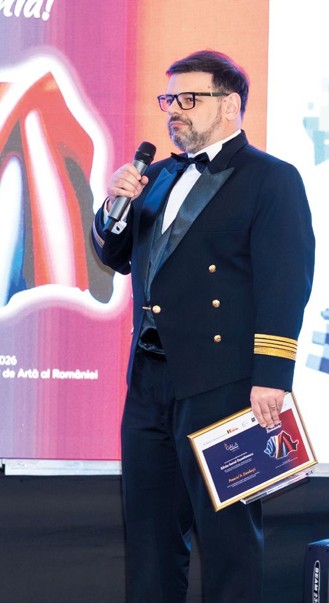
“My parents and my family are the foundation of my human and professional journey, in which I believe I have managed to carry forward at least part of their values. From them I learned, not from words but from daily example, what honor, loyalty, respect, hard work, and a life lived with meaning truly are. The fact that my family has accepted that much of my existence unfolds in the hospital, in the clinic, in lecture halls, and at conferences is, for me, one of the deepest forms of love and support. To them I truly owe everything.”
