
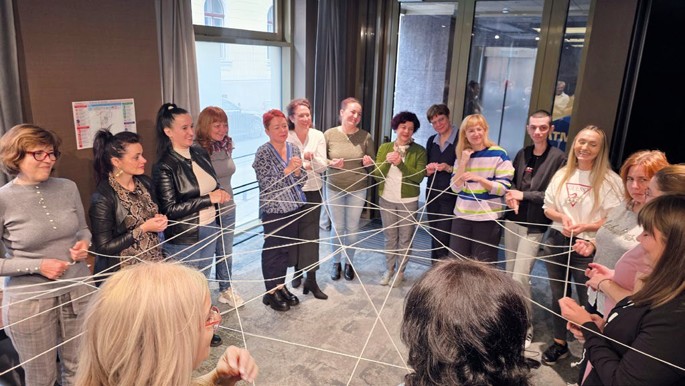
Within the healthcare system, there are professions that attract considerable attention and professions without which nothing would function, yet which often remain in the background. Nurses and midwives belong to the latter category. They are the people who remain by the patient’s side after the physician’s visit has ended, those who notice the small yet decisive changes, those who administer treatments, monitor progress, reassure, explain, support and, every day, carry a significant share of the burden of the healthcare system. In Romania, this profession has a defining characteristic that says much about its nature: it is overwhelmingly a profession practiced by women.
Statistical data show that women account for more than 90% of the nursing workforce. Behind these figures lies a reality far more complex than a simple gender distribution. There are tens of thousands of women working night shifts, serving in demanding hospital wards, maternity units, outpatient clinics, emergency care centers, oncology departments, intensive care units and palliative care services. These are women who combine the rigor of medical practice with empathy and patient care, while continuing to provide support and stability for their families at home.
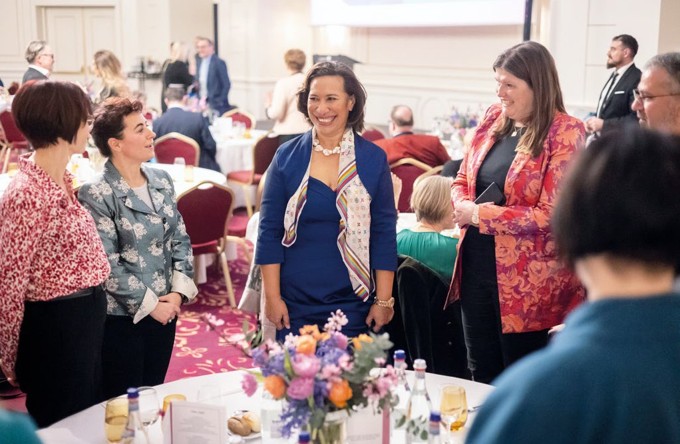
For this reason, when speaking about the Order of General Nurses, Midwives and Nurses of Romania (OAMGMAMR), one is not merely referring to a professional organization. One is speaking about the institution that provides coherence, unified representation and continuity to one of the largest and most important professional communities within the Romanian healthcare system. It is a community that rarely occupies the center of public debate, yet without which healthcare services could not function for even a single day.
To those outside the healthcare sector, a professional order may appear to be primarily a bureaucratic structure associated with authorizations, professional stamps, certificates and procedures. In reality, the stakes are much higher. Behind these mechanisms lies the safety and quality of medical care itself. OAMGMAMR oversees professions that stand on the front line of the relationship between patients and the healthcare system. Nurses are often the first to notice a change in a patient’s condition. They monitor clinical signs, administer treatments, oversee patient monitoring and provide day-to-day care. Likewise, midwives accompany women through some of the most important moments of their lives, with all the medical and emotional responsibility that childbirth entails.
From this perspective, OAMGMAMR represents an essential human infrastructure of public health. Its importance becomes even more evident when viewed within the
broader context of healthcare human resources. Over the past three decades, Romania has increased the number of nurses with higher education qualifications. Viewed from the outside, the figures appear encouraging. Yet the performance of the healthcare system cannot be assessed through statistics alone. It must also be measured by how these professionals are distributed across the country, how many choose to remain in Romania, which specialties they pursue, the conditions in which they work, and the extent to which they are able to sustain the daily demands placed upon hospitals and other healthcare facilities.
This brings us to one of the defining realities of Romanian healthcare today: pressure on human resources. It is not enough to have professionals on paper. What matters is whether they are where they are needed, whether they remain in the profession, whether they can sustain the pace of demanding work, and whether the system is capable of retaining them. In the case of nurses and midwives, this discussion is particularly important because these professions are overwhelmingly female. This introduces additional considerations related to work-life balance, maternity leave, burnout, availability for shift work, on-call duties and highly demanding specialties.
These issues should be approached not ideologically, but realistically. The fact that a profession is predominantly female is not a problem in itself. On the contrary, it reflects the natural evolution of society and women’s access to professions involving a high degree of responsibility. For the healthcare system, however, it means that workforce policies, work organization and retention mechanisms must be designed with this reality in mind. This is where the role of a professional order becomes more important than it may initially appear.
OAMGMAMR is not only responsible for maintaining membership records and regulating professional practice. It also bears the responsibility of safeguarding professional standards, supporting the continuous development of competencies and representing the interests of a vast professional category that often operates under significant pressure. The subjects addressed by the Order encompass ethics, education and training, professional status, mobility, patient safety and, increasingly, the occupational health and well-being of those working within the healthcare system.
One of the most important dimensions of its activity is continued medical education. In healthcare, routine can be dangerous, and keeping knowledge up to date is not a luxury but an obligation. Procedures evolve, technology advances, protocols are updated, and nurses must remain permanently connected to these developments. Through its local branches, OAMGMAMR supports training programs, courses, conferences and professional examinations that reinforce a fundamental principle: nursing is not a static profession, but one that requires continuous learning and constant adaptation.
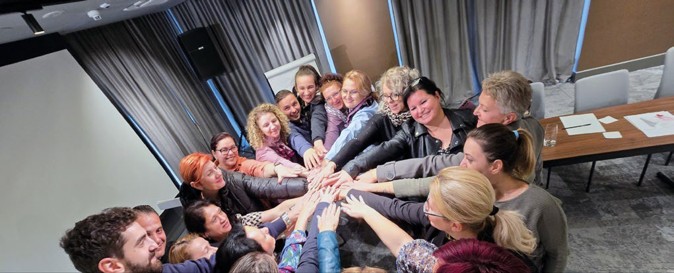
At the same time, the Order fulfills another role that is less visible but equally important: providing coherence to a profession which, due to its scale, sometimes risks being viewed merely through statistics. Behind every number stands a person working with suffering, vulnerability, urgency, patients’ fears and their own limitations. There are nurses who commute for hours to reach their workplace, who finish a shift only to return to family responsibilities, and who work in departments where staff shortages make every shift more demanding than it should be. There are midwives who witness the beginning of life and nurses who remain beside patients during their most difficult moments. Viewed from this perspective, the role of OAMGMAMR becomes that of supporting, organizing and representing an essential professional community whose work brings continuity, safety and humanity to healthcare.
In recent years, this mission has become even more important. The healthcare system has faced a pandemic, staffing shortages, financial pressures and an increasingly profound level of professional exhaustion. During that period, the role of nurses and midwives became impossible to ignore. They were present in COVID-19 wards, intensive care units, triage centers, laboratories, vaccination centers and in the care of patients requiring continuous monitoring. For many of them, those years meant not only excessive workloads but also a direct confrontation with exhaustion, fear and uncertainty. Beyond all reports and statistics, the pandemic demonstrated how fragile a healthcare system can become when the people who sustain it every day reach the limits of their endurance.
For this reason, discussions about the future of the profession can no longer be conducted solely in administrative terms. It is not enough to talk about how many nurses exist; it is equally important to consider how they are retained, how they are trained, how they are supported and how their role is recognized. Romania needs policies that reduce disparities between urban and rural areas, make underserved regions more attractive, provide greater professional stability and take into account the reality of a profession in which women constitute the overwhelming majority. Without such measures, even the most encouraging statistics may conceal significant vulnerabilities.
Perhaps nowhere is the role of OAMGMAMR more evident than here. Its importance lies not merely in authorizations, examinations or professional formalities, but in its ability to represent a profession without which the healthcare system could not function. In cooperation with the other institutions of the healthcare sector, the Order can contribute to creating a more stable framework for an essential profession and can bring into the public sphere the issues that truly matter to this community: education and training, professional status, workplace safety, work-life balance and the need for recognition.
Ultimately, this is where the true significance of the Order’s work should be sought. OAMGMAMR is the organization that provides coherence, standards and a voice to the profession and, perhaps most importantly, ensures its rightful place at the center of the discussion about the future of healthcare in Romania.
