
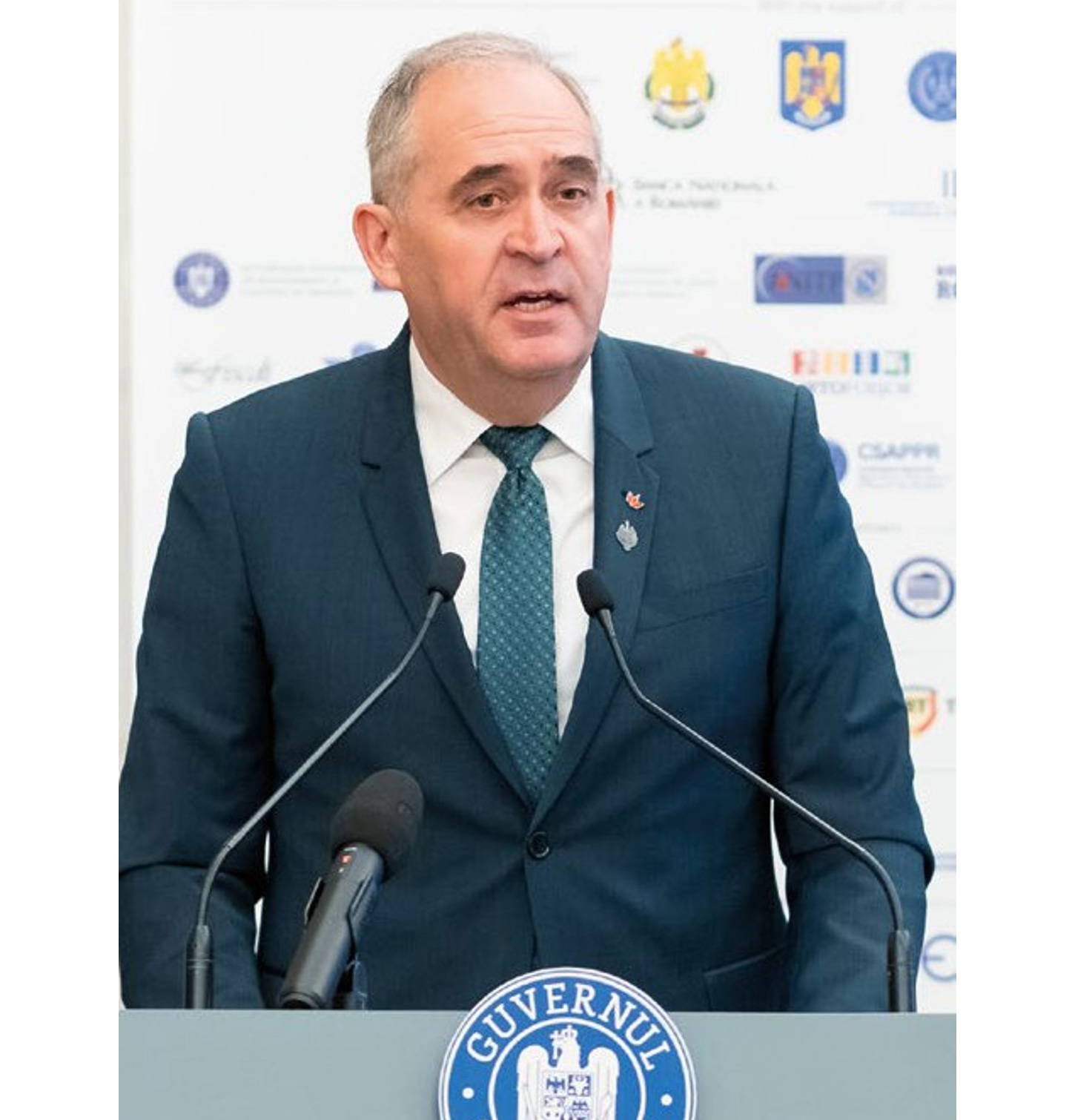
Bende Sándor
Member of Parliament,
Chairman of the Committee for
Industries and Services,
Chamber of Deputies
With more than 35 years of political experience, Bende Sándor is currently serving his third parliamentary term (2024–present, 2020–2024, 2016–2020) as a representative of the Democratic Alliance of Hungarians in Romania (UDMR), proudly representing the citizens of Harghita County in the Chamber of Deputies.
Since 2020, he has served as Chairman of the Committee for Industries and Services in the Chamber of Deputies, after having held the position of Vice-Chairman of the same parliamentary committee during the previous legislative term.
He has always understood that political representation requires involvement and responsibility, placing citizens and their needs at the center of his activity. For this reason, concrete results have defined his work, both during his time as a UDMR County Councilor (2004– 2016) and throughout his parliamentary mandates. He has consistently been guided by principles and values aimed at strengthening communities, bringing people together, and encouraging civic engagement for local development and the improvement of quality of life in all administrative-territorial units, regardless of their size.
His parliamentary mandate has provided further proof that only seriousness and sustained effort can earn the trust of a community. Every vote received throughout his three terms as a Member of Parliament has carried increasingly greater responsibilities. Rather than discouraging him, this reality has motivated him to approach every challenge with openness and determination, continuing his work even when solutions seemed difficult to find. The trust placed in him has served as a constant source of motivation and has reinforced his belief that meaningful achievements are accomplished for people and together with them. He has built teams, encouraged constructive dialogue, and maintained close relationships with local elected officials throughout the region he represents.
He firmly believes that, depending on the area of responsibility, decisions should be made at the level closest possible to citizens. Consequently, he has consistently encouraged proactive attitudes and participatory problem-solving. He has brought specific regional concerns and concrete issues to the national legislature in Bucharest and has sought, whenever possible, not to disappoint those he represents. Realistic in his approach, he recognizes that results have not always met expectations; however, he has remained convinced that the efforts invested have consistently moved toward the best possible solutions and served the interests of citizens.
The energy sector has defined his entire professional career, both through his practical experience during the years he worked at Electrica Distribuție and later through his decision-making role within the Chamber of Deputies. Throughout his three parliamentary mandates, he has been a member of the Committee for Industries and Services and, during the 2020–2024 legislature, also served on the Parliamentary Inquiry Committee established to determine the causes of the substantial increases in natural gas and electricity prices.
Through his prompt interventions whenever disruptions occurred within the system, he came to understand that access to energy is critical to everyday life and that electricity and natural gas are not luxuries, but rather engines of development, economic growth, and ultimately improved quality of life.
He approaches these matters with balance and realism, fully aware that clean technologies require substantial investments—investments that are essential not only for the national energy system but also for the sustainable operation of industries. In this regard, he has consistently emphasized the need for a pragmatic approach to the industrial modernization of Romania within the broader context of the transition to clean energy. The objective remains the development of industries that generate added value for the national economy while minimizing environmental impact as much as possible. Romania must therefore act swiftly to transform its comparative advantages in certain sectors into catalysts for sustainable development.
Within the equation of energy transition, reindustrialization, and competitiveness, affordable and clean energy continues to play a decisive role. Industrial transformation is closely linked to the implementation of new technologies, infrastructure modernization, and, inevitably, investment. He advocates for an integrated energy infrastructure, stability and security of supply, the expansion and efficient operation of networks, and their adaptation to current technological trends.
He believes that, in the current security environment— marked by conflicts that have reshaped strategies and redrawn energy maps—any hesitation or delay in making decisions that lead to energy independence and security carries enormous economic and social costs. From this perspective, he has consistently treated energy as a matter of strategic importance and national security.
Caught between its decarbonization commitments and the imperative of ensuring its own energy independence, Romania must act intelligently and capitalize on the opportunities of the moment. This is where national energy policies become essential, complementing the country’s existing strengths, including its diversified and balanced energy mix and its favorable geographical position.
He is convinced that Romania has the potential to become a regional energy hub and, consequently, achieve significant economic growth if it pursues several key objectives: maximizing the value of its natural gas resources and the transitional period during which these resources serve both as fuel and as industrial feedstock; accelerating the completion of the two new nuclear reactors and the implementation of Small Modular Reactor (SMR) technologies; stimulating investment in transmission and distribution networks; integrating renewable energy sources through expanded energy storage capacities capable of storing surplus wind and solar energy for use during periods of higher demand and lower production; and placing greater emphasis on research, innovation, and specialist training. In short, Romania must act smartly—remaining connected to the dynamics of the present while already taking steps toward the future.
He has consistently promoted the vision of a strong energy-powered Romania, built using the tools of tomorrow, and has repeatedly emphasized the importance of maintaining political commitment to secure, competitively priced, and as environmentally sustainable an energy system as possible.
Trained in the field of energy, Bende Sándor has remained firmly connected to everyday realities. It is a field that has brought him great professional satisfaction, but one that has also demanded hard work and dedication. He remains devoted to it because he understands it down to the smallest detail. He is one of those whose own energy has been dedicated to energy itself.
