
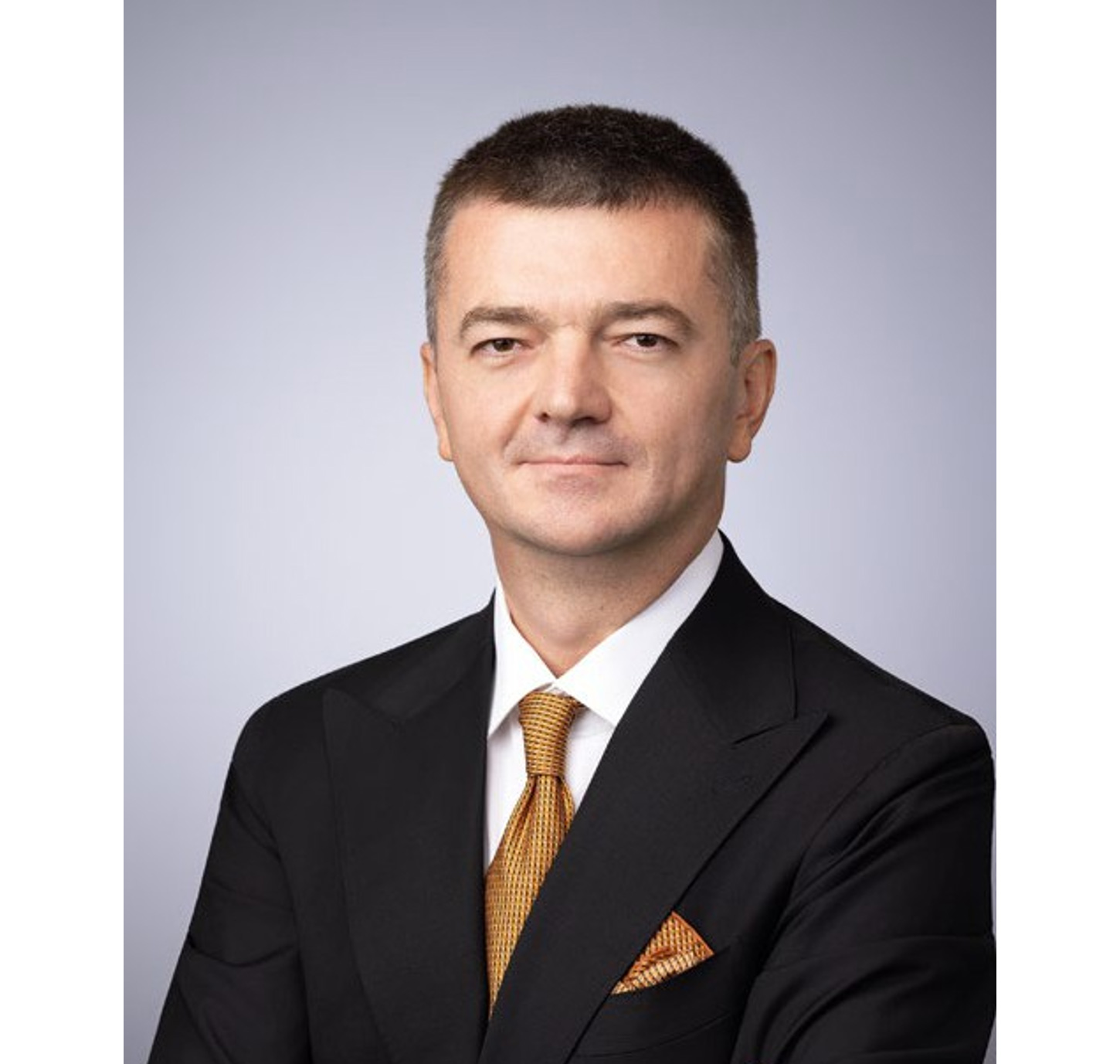
Septimiu Costea,
CEO, Nova Power & Gas
A professional who rose from his first energy-in- frastructure project to a position managing one of Romania’s most dynamic energy companies. In a market shaped by years of crises and volatile prices, the cost of delay has never been higher, and speed has become a strategic advantage.
Few things tell the story of a growing economy more clearly than the energy that powers it. A secure, stable energy supply is one of the fundamental conditions for competitiveness today: it determines where factories are built, where investors choose to locate, and how quickly an entire region can prosper. In a rapidly modernizing market, the advantage increasingly lies with the player who can build new generation and storage capacity quickly, exactly where the economy needs it.
This is precisely the field in which Nova Power & Gas operates. And it is no coincidence that, since September 2025, the company has been led by an engineer who knows from personal experience how long an energy project really takes, from the first sketch to the moment it is energized.
From the Construction Site to the Top of the Company
Septimiu Costea joined the E-INFRA Group in 2008 as a young graduate of the Faculty of Electrical Engineering, specializing in Industrial Energy, at the Technical University of Cluj-Napoca. He started as an electrical engineer at Electrogrup, which, like Nova Power & Gas, is part of the E-INFRA Group. Over the following years he coordinated the design, construction and commissioning of a range of electrical-infrastructure projects: networks, plants and installations.
It is the kind of career that builds a practical instinct for execution and problem-solving, an understanding not only of what needs to be built, but of how long it really takes, where the bottlenecks appear, and how a plan turns into a kilowatt delivered to the grid. That instinct is precisely what now gives the company its competitive edge.
In 2022, Costea moved to Nova Power & Gas as Technical Director, in charge of new investment projects in renewable energy, gas-fired plants and gas networks while operating existing installations. Since September 2025 he has been CEO, leading both the technical and investment
functions-the two engines that define the company. The appointment reflects Nova’s philosophy: at a moment when the company is undertaking its largest investment programme to date, it chose to place an engineer, not an economist, at the helm.
A Company That Covers the Entire Chain
Nova Power & Gas, part of the E-INFRA Group, is a Romanian-owned business founded in Cluj almost 20 years ago. It has grown steadily from a regional supplier into a player active across the entire energy chain: generation, supply, storage and major infrastructure investment. The scale shows in the figures. The company generates more than 760 GWh a year-over 550 GWh of it from renewable sources-and reports annual revenues approaching RON 3 billion, consistently ranking among the lowest-priced suppliers in ANRE’s price comparator. It is the national leader in storage: at Florești it has commissioned the largest battery facility in Romania, of 200MW/400MWh, and it aims to reach roughly 1,000 MWh of storage capacity this year.
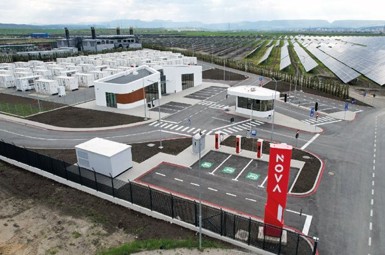
Behind this growth lies an ambitious investment strategy: more than €500 million invested over the past five years in generation and storage capacity; around €250 million budgeted for 2026; and over €650 million planned for 2027–2029. Through investments that have exceeded €500 million in recent years, we want to support this economy and deliver flexible, secure energy precisely when demand peaks.
— Septimiu Costea, CEO, Nova Power & Gas
The Flagship Project in Câmpia Turzii
If there is one place where the company’s strategy is taking physical shape, it is Câmpia Turzii. With Nova’s investment, this former industrial centre is being transformed into what the company expects to become Romania’s most advanced energy hub.
The centrepiece is a 160 MW combined-cycle power plant, designed to complement the existing complex
and scheduled to begin partial operation by the end of 2026. The project is developed by Nova Power & Gas and executed by Electrogrup as EPC partner and contractor, the very company where Costea began his career nearly two decades ago. The circle closes almost symbolically: the engineer who once brought projects online at Electrogrup now oversees, from the top, the most ambitious project Electrogrup has ever built for Nova Power & Gas.
The Integrated Energy Hub Model
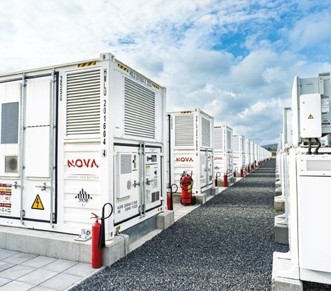
Câmpia Turzii showcases the concept at the core of the company’s strategy: the integrated energy hub. Rather than operating standalone assets, the company is developing platforms that bring generation, storage and system flexibility together in a single location, ensuring a secure, reliable energy supply around the clock.
The strategy also answers a harder question: why natural gas in the age of the energy transition? The answer is straightforward. As power systems grow more dependent on solar and wind-both inherently variable-they need reliable, dispatchable capacity that can step in when renewable output falls. Efficient gas-fired generation, paired with large- scale battery storage, is currently the most practical way to integrate renewables while maintaining grid reliability and energy security.
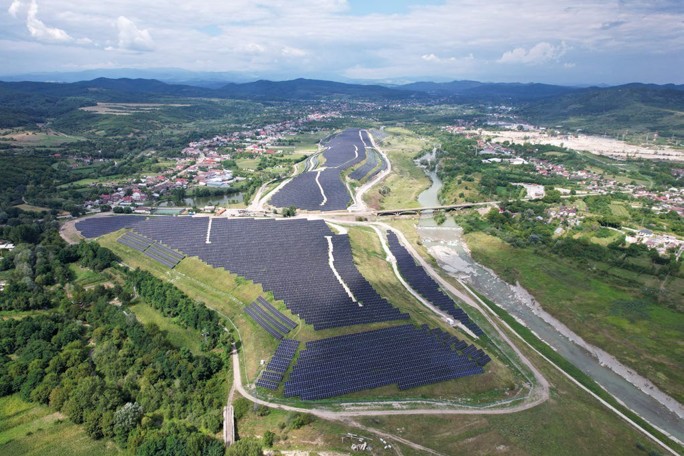
The model has already proven itself at Florești. The 200 MW / 400 MWh facility-the largest of its kind in Romania-single-handedly doubled the country’s storage capacity. What drew the industry’s attention was not only its scale but the speed of execution: the project was completed in just over six months. In many ways it captures Costea’s core conviction:
Major investments can be delivered quickly, even in Romania.
— Septimiu Costea, CEO, Nova Power & Gas
Energy Infrastructure for the Digital Economy
For Costea, energy is the foundational infrastructure that shapes the geography of future investment. Access to reliable, predictable and competitively priced energy, he argues, is among the most decisive factors when investors choose where to locate and grow.
This is where a growing trend becomes especially relevant. New industrial and digital investments-data centres above all, with their need for large volumes of reliable, around-the- clock power-increasingly seek energy security at the source. A site like Câmpia Turzii, which integrates generation, storage and flexibility within a single energy ecosystem, embodies the idea of a power-ready location, one of the key criteria technology investors weigh before deciding where to build.
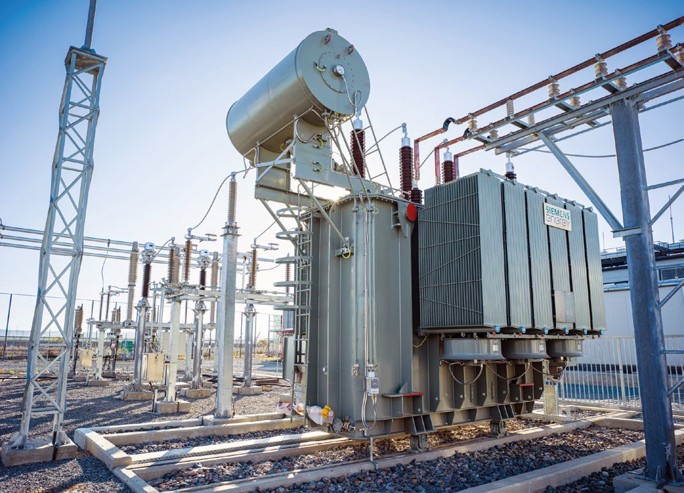
As a result, a former industrial city is being reinvented as an energy and technology hub, exactly the kind of regional renewal that Costea sees as essential.
Cluj is a magnet for investment, but we should also see it as a centre capable of creating added value and exporting know-how, technology and talent. We need to keep developing and supporting the specialists who can generate value not just regionally, but on a far larger scale.
— Septimiu Costea, CEO, Nova Power & Gas
Beyond Energy
For a company founded in Cluj and deeply rooted in the region, community engagement is a natural extension of its role as a strategic investor. Nova Power & Gas has been a partner of the Transylvania Open since its very first edition and continues to support numerous local initiatives, among them the Sports Festival, Urban Playfield and the Transilvania International Film Festival (TIFF). In June 2026, the company also sealed a strategic partnership with FC Universitatea Cluj, becoming the club’s Elite Sponsor from the 2026–2027 season onward. This close connection to the city’s cultural life follows the same logic: a city that wants to attract talent and investment needs more than reliable energy infrastructure, it needs a vibrant cultural and sporting ecosystem too.
What Lies Ahead
Almost a year into his role as CEO, Septimiu Costea is leading a company in rapid expansion at a time when energy has become one of the defining strategic resources of the era. His path-from the construction sites of Electrogrup to managing investments worth hundreds of millions of euros, has given him a credibility and practical insight that no boardroom presentation or market report can match.
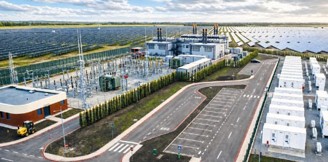
What is at stake in the next chapter is clear. The capacity Nova Power & Gas is building today goes well beyond corporate growth: it will help shape energy affordability for consumers and determine Romania’s ability to host the industrial and digital investment of the coming decade. The debate is no longer about whether these assets are needed, but how fast they can be built. And on that question, an engineer who built his career on construction sites has already shown what is possible.
