
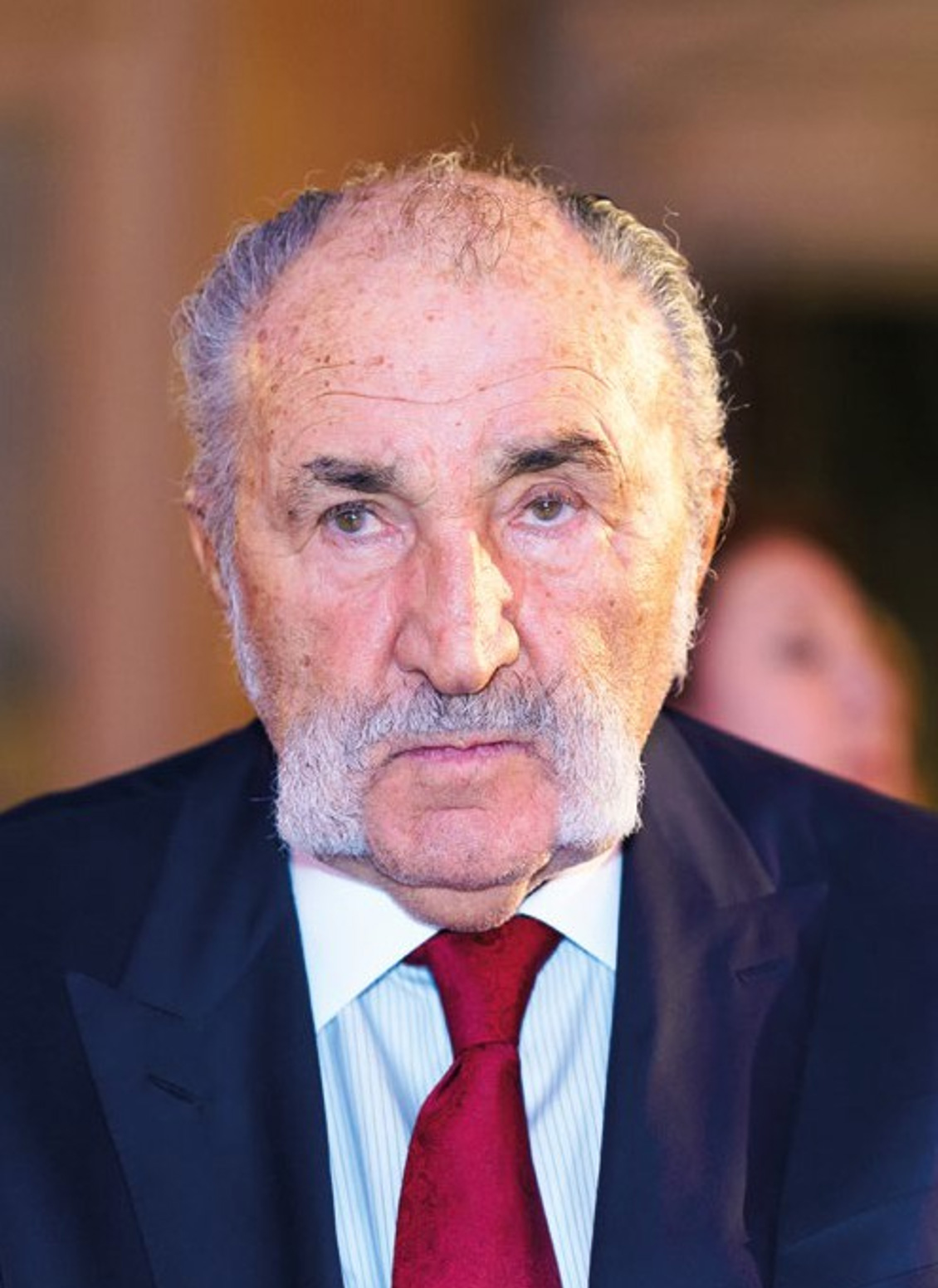
Few entrepreneurs in Eastern Europe illustrate the connection between sports and business better than Ion Țiriac.
Ion Țiriac’s story demonstrates that sport can be one of the most solid schools of entrepreneurship. Tennis provided him not only with international recognition, but also with the tools necessary to build sustainable businesses: discipline, resilience, analytical thinking, a competitive spirit, and the confidence that every challenge can be transformed into an opportunity.
Before becoming one of Romania’s most influential businessmen, the founder of Țiriac Group was a high- performance athlete, representing Romania in tennis. The experience gained on the court would later become the foundation of a remarkable entrepreneurial career. Today, Țiriac Group brings together more than 40 companies active in sectors such as automotive, real estate, financial services, air transportation, energy, security, and media.
Behind this entrepreneurial construction lies a simple philosophy acquired through sport: excellence is not an accidental result, but the consequence of a process of preparation, adaptation, and continuous self-improvement that never ends.
The Tennis Court – The First Business School
For Ion Țiriac, sport represented more than a platform for career development and visibility; it was also a school of leadership. Between 1957 and 1972, he won more than 40 tennis titles and became one of the most important players in the history of Romanian sport. He participated in more than 150 Davis Cup matches for Romania and won the Roland Garros doubles title alongside Ilie Năstase.
Tennis taught him that every point matters and that a single mistake can change the outcome of a match. This reality developed his ability to react quickly, make decisions, analyze situations in real time, and manage pressure while remaining focused on the objective regardless of obstacles.
These skills later helped him in business.
Of course, his success was also enhanced by his notoriety. High-performance sport allowed him to build an international network of relationships at a time when Romania had limited access to Western markets. Participation in major tournaments provided him with a global perspective on the economy, investments, and the way large international companies operate.
From Player to Manager of Champions
The first business lesson learned by Ion Țiriac came after the end of his sporting career. Rather than retiring, he chose to become a manager, coach, and promoter. He managed the careers of legendary names such as Boris Becker, Guillermo Vilas, Goran Ivanišević, Marat Safin, Dinara Safina, Henri Leconte, and Virginia Ruzici. Managing athletes competing at the highest international level meant much more than organizing a competition schedule.
In practice, before building companies, Ion Țiriac learned how to manage performance. He understood that success depends not only on talent, but also on organization, discipline, and the ability to transform opportunities into tangible results.
This experience became a genuine launching pad for entrepreneurship.
In 1988, in Monte Carlo, Ion Țiriac founded Elite Management, a company dedicated to sports management and talent promotion. It was the first step toward what would later become a true business empire.
After 1990, during a period when the Romanian economy was undergoing profound transformations, the former athlete identified opportunities that few others could see. He founded Banca Comercială Ion Țiriac, one of the first private banks in post-communist Romania. The bank would later become UniCredit Țiriac Bank.
At the same time, he contributed to the development of sectors that were then in their infancy: insurance, leasing, financial services, car rental, and modern retail.
He brought to Romania brands and business models that would go on to transform the local market. These include Allianz Țiriac Asigurări, which became a leader in its sector, as well as the partnership that facilitated Metro Group’s entry into Romania.
Just like in a tennis match, Ion Țiriac demonstrated that success belongs to those who anticipate the next moves and are prepared to act before the competition.
In 1997, Țiriac Group was officially established, a group that today comprises more than 40 Romanian companies. Its activities are organized around strategic sectors: automotive, real estate, financial services, air transportation, and energy. The Group holds exclusive import licenses for brands such as Mitsubishi, Hyundai,
Jaguar, and Land Rover, develops landmark real estate projects, and through Țiriac Air operates one of the most important private business aviation terminals in Romania.
Across all these sectors, one can find the values cultivated by its founder: professionalism, discipline, seriousness, a competitive spirit, and a commitment to performance.
The Group’s vision is to provide services at the highest standards and to become a model for Romanian entrepreneurs. It is the same mindset that defines high- performance sport: the constant desire to raise the bar and compete with the very best.
Another lesson that Ion Țiriac transferred from sport to business is responsibility toward the community.
In sport, individual success is impossible without a team, without coaches, and without supporters. In business, the same philosophy has materialized through investments in social and sporting projects.
The Casa Copilului Foundation, later transformed into the Dumbrava Minunată Foundation, is one example of his commitment to supporting vulnerable individuals. Likewise, the development of the Ion Țiriac Sports Complex and the Allianz-Țiriac Arena demonstrates his constant concern for sports infrastructure and for supporting new generations of athletes.
During his tenure as President of the Romanian Olympic Committee, Romania won 26 medals at the Sydney Olympic Games and 19 medals at the Athens Olympic Games, results that confirmed the importance of investing in performance.
In a world where success is often associated exclusively with financial resources, Ion Țiriac’s example demonstrates that the real difference is made by mindset and by the ability to apply in business the lessons learned on the sports field.
