
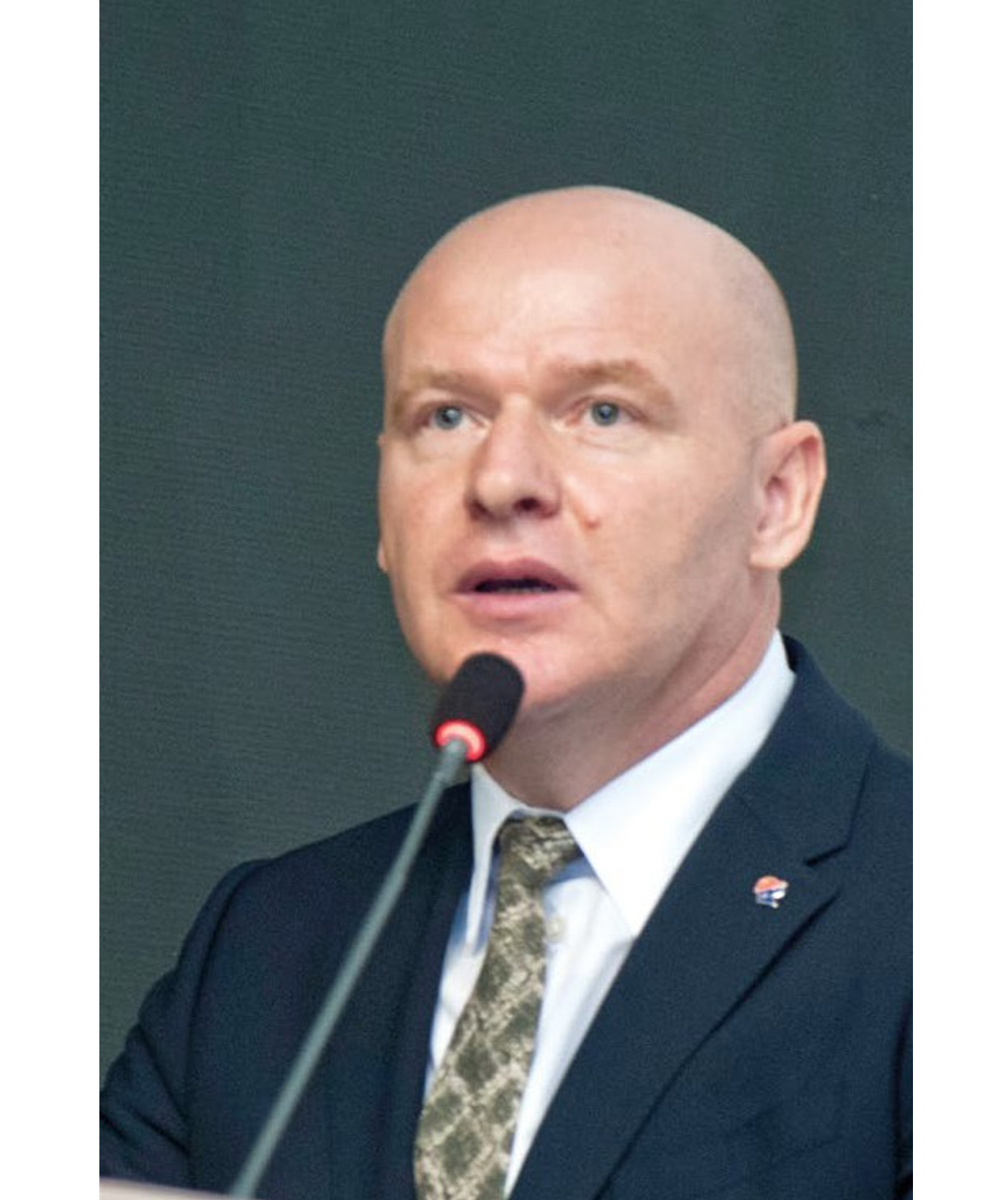
Dragoș Pavăl is one of Romania’s most important entrepreneurs, being the co- founder of Dedeman, the company he built together with his brother, Adrian Pavăl, transforming it into the leader of the DIY market and a symbol of successful Romanian-owned capital. Under the umbrella of Pavăl Holding and PIF Industrial, the two entrepreneurs have continuously expanded their investments into strategic sectors of the economy. Their portfolio includes holdings in major companies such as Alro, Cemacon, Farmacia Tei, Simtel and Conpet, demonstrating a diversification strategy focused on sectors with significant growth potential.
The Pavăl brothers have also become some of the most important real estate investors in Romania through the acquisition of landmark projects such as The Bridge, The Office, the local portfolio of CA Immo as well as the Dacia One and U Center developments. These investments have strengthened the group’s position among the largest office space owners on the local market.
Their entrepreneurial vision has also expanded into other sectors, including sports, through their investment in ACS FC Bacău. In addition, in 2026, the Pavăl brothers took an important step into food retail through the acquisition of the Romanian operations of Carrefour Romania. At the same time, they continue to develop international investments in the tourism and DIY sectors, further strengthening their profile as investors with a long-term vision and a significant impact on the Romanian economy.
Perhaps the most relevant starting point for understanding the significance and business model behind this success story dates back to 1992, when Dedeman S.A. was established through the initiative of Dragoș Pavăl, shared with his brother Adrian Pavăl. With a strong commitment to innovation and excellence, Dedeman grew rapidly from a small store in Bacău into the largest DIY retail network in Southeastern Europe. The company currently operates 65 stores in Romania and continues to expand both domestically and internationally.
From a small store opened in Bacău in the early 1990s, Dedeman has become one of the strongest entrepreneurial businesses in Romania and the undisputed leader of the DIY market. The story of the company built by Dragoș and Adrian Pavăl is one of vision, perseverance, and sustained growth, founded on a simple philosophy: the customer must always come first.
An important milestone in the company’s development came in 2003 with the opening of its first large-format store in Suceava, a move that accelerated the nationwide expansion of the network. In the same year, the company launched its official website, demonstrating an early commitment to digitalization and to connecting with customers through new communication and sales channels.
The development strategy proved successful.
In 2010, Dedeman became the leader of Romania’s DIY market, recording the highest turnover in the industry and consolidating its position as the leading domestic player in a sector that had previously been dominated by international groups. During the same period, the company expanded its online presence and entered social media platforms, adapting to emerging consumer trends. Rapid growth continued in the years that followed. In 2013, the company took a decisive step into e-commerce by processing its first online order. In 2016, Dedeman exceeded the symbolic threshold of one billion euros in annual turnover, a performance that confirmed its status as the market leader in Romania’s DIY and construction materials sector.
Expansion was accompanied by steady workforce growth. In 2017, the company surpassed 10,000 employees and today employs more than 12,800 people, making it one of Romania’s largest private employers. At the same time, the Dedeman network expanded to 65 stores nationwide, serving millions of customers each year.
Approximately 85% of the products sold by the company come from Romanian manufacturers, thus contributing to the support of the local economy.
Beyond its commercial achievements, Dedeman has also built a strong reputation through its involvement in social, cultural, and sporting projects. The company has been a consistent supporter of Romanian sport, collaborating with the Romanian Olympic and Sports Committee and supporting elite athletes, including Simona Halep. It has also supported numerous sports federations and clubs, becoming an important partner in the development of sporting excellence in Romania. Its commitment to the community is equally reflected in its support for culture.
Since 2014, Dedeman has been a partner of the Sibiu International Theatre Festival, one of the most important cultural events in Central and Eastern Europe. Through the “Plans for Good” programme, the company continually invests in education, healthcare, community projects, and initiatives with social impact.
Dedeman’s financial performance has positioned it among the most profitable companies in Southeastern Europe and among the most valuable entrepreneurial businesses in the region. Its evolution demonstrates that a brand built in Romania can successfully compete at the highest international standards, becoming a model of sustainable development, innovation, and social responsibility. Today, Dedeman represents not only the leader of the DIY market, but also one of the strongest symbols of modern Romanian entrepreneurship.
The most recent acquisition by Pavăl Holding, Carrefour Romania, is further proof of what it means to build sustainably and with vision. Carrefour Romania currently operates a network of 478 stores, including 55 hypermarkets, 191 supermarkets, 202 convenience stores, and 30 discount stores.
Carrefour, Europe’s largest food retailer, sold its Romanian operations for €823 million.
According to Dragoș Pavăl, Carrefour’s business model— bringing together an extensive range of products and services in one place, thereby increasing accessibility and convenience for customers—represents an important benchmark in the evolution of modern retail and served as a source of inspiration in the development of Dedeman.
An important factor in the decision to acquire Carrefour Romania was the company’s strategy of collaborating with local producers and, consequently, promoting Romanian products. This approach aligns closely with the entrepreneurial vision of the Pavăl Group. Supporting the local economy, developing long-term partnerships, and creating value for the communities in which they operate are principles shared by both organizations.
