
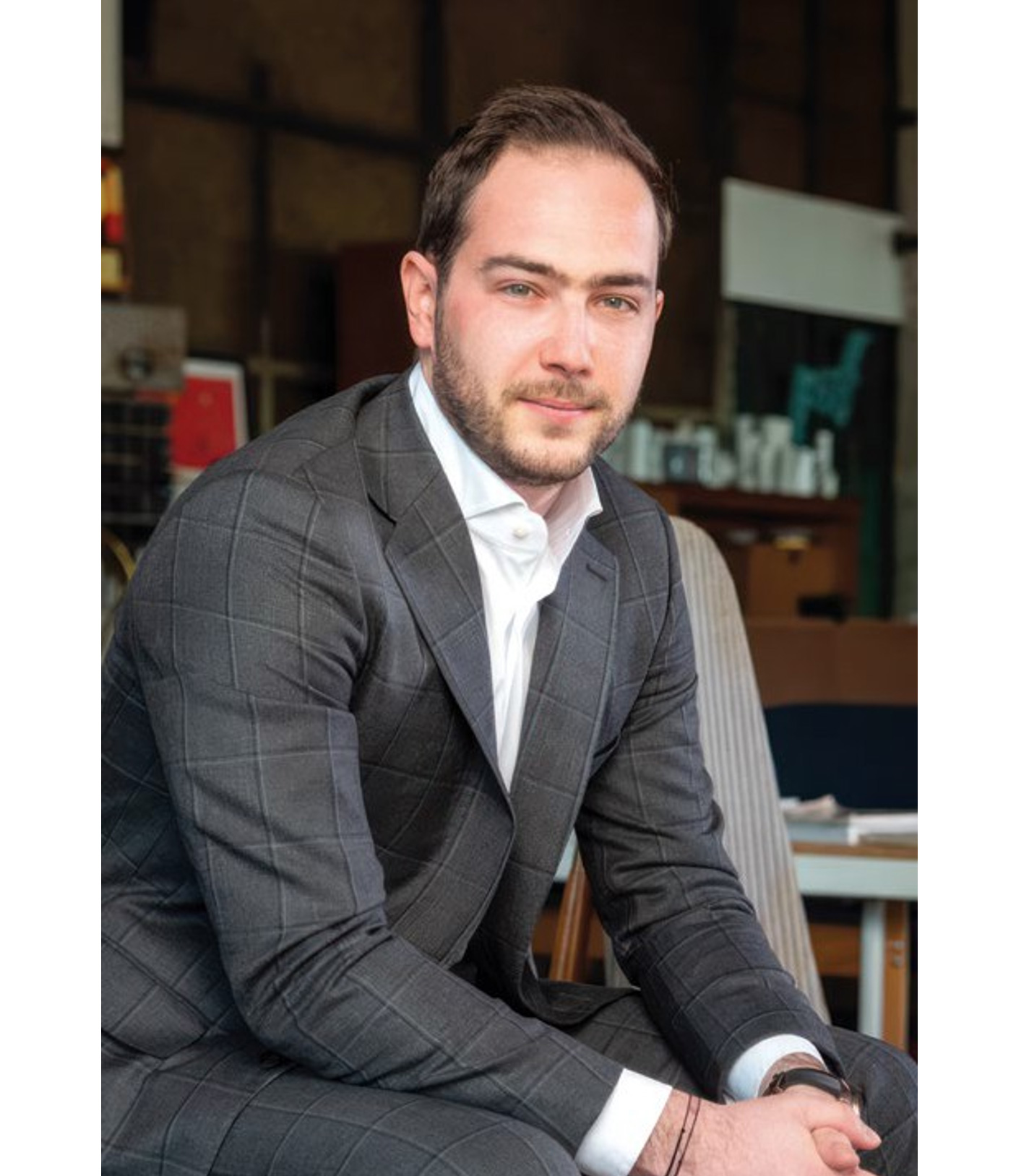
In entrepreneurship, one of the most difficult challenges facing a successful business is preserving and developing it through a generational transition. The case of Cris-Tim is one of the most interesting examples of entrepreneurial continuity in Romania.
More than three decades after the company’s founding, Radu Timiș Jr. leads one of the strongest groups in the Romanian food industry, with the mission of carrying forward the legacy built by his parents, Cristina and Radu Timiș. It is both a responsibility and a rare opportunity: to strengthen an iconic Romanian brand and establish it as a player with international relevance.
The story of Cris-Tim began in 1992 with a simple kiosk in the Militari neighborhood of Bucharest. At a time when the
Romanian economy was only beginning its transition to capitalism, Cristina and Radu Timiș built, through hard work, courage, and perseverance, a business that would go on to become the leader of Romania’s processed meat market. From a modest entrepreneurial initiative, the company evolved into a complex business with modern industrial operations, strong brands, and an impressive nationwide distribution network.
Today, Cris-Tim is the leader of the Romanian processed meat market, both in volume and value, through brands such as Cris-Tim, Obrăjori, Matache Măcelaru’, Csárdás, and Alpinia.
At the same time, the group has significantly expanded its Ready Meal division, which has become its second most important business line, responding to changing consumer behaviour and the growing demand for convenient and healthy food products.
For Radu Timiș Jr., the challenge is no longer to build a company from the ground up, but to adapt it to a world in constant transformation. Having studied business management in Madrid and later at the Bucharest University of Economic Studies, the new CEO represents a generation of leaders who understand that future success will depend on companies’ ability to innovate, invest in technology, and anticipate emerging consumer needs.
In his view, strong brands cannot rely solely on the reputation they have built in the past. They must continuously reinvent themselves. In a mature market such as processed meat products, competitive advantage is no longer determined solely by production capacity, but by product relevance, consumer trust, and brand strength.
This philosophy is reflected in the group’s investments. The Recunoștința Factory in Filipeștii de Pădure, considered one of the most modern meat-processing facilities in Romania, represents the core of the company’s industrial operations. Covering an area of 60,000 square metres, it is one of the most significant investments made in the Romanian food industry.
In Măgureni, a second modern production facility complements the company’s manufacturing capacity, supporting the development of its premium product portfolio and specialty ranges.
Today, however, performance means more than production. It means sustainability. It means responsibility towards the environment and towards the communities a company serves.
Under the leadership of the new generation, Cris-Tim has adopted clear objectives aimed at reducing its environmental impact. The company invests in renewable energy, operates photovoltaic panel systems, uses modern wastewater treatment technologies, and implements processes that reduce resource consumption and waste generation. In an industry facing increasing pressure on resources, these investments have become both a competitive advantage and a guarantee of long-term development.
Another strategic priority for Radu Timiș Jr. is international expansion. Exports already account for more than 12% of the group’s turnover, and Cris-Tim products are available in 17 countries. Entry into major retail networks such as Tesco in the United Kingdom and Bravo Supermarket in Azerbaijan demonstrates that a Romanian brand can successfully compete in highly competitive international markets.
Behind these results stands an impressive logistics infrastructure. The group operates nine logistics platforms, maintains its own fleet of more than 500 vehicles, and distributes products to over 13,000 traditional retail outlets, major international retail chains, wholesale locations, and company-owned stores. This network represents one of the company’s most significant competitive advantages.
For a young leader, however, the greatest challenge is not increasing financial results, but preserving the values upon which the organization was built. Radu Timiș Jr. consistently speaks about responsibility, innovation, quality, and respect for people. These are the principles that have guided the company’s development since 1992 and continue to define the group’s DNA today.
Perhaps this is also the most important lesson of the Cris- Tim story: a business does not become a leader through size alone, but through its ability to remain relevant from one generation to the next.
And for Radu Timiș Jr., the real challenge begins now: transforming a Romanian success story into a development model capable of inspiring others and achieving success on the international stage.
