
Editorial by
H.E. Lili Evangelia Grammatika,
Ambassador of Greece to Romania
The international security environment has undergone profound transformation in recent years. Russia’s invasion of Ukraine, the conflict in the Gulf, disruptions to global energy markets, and increasing geopolitical competition have highlighted the importance of resilient infrastructure, regional cooperation, and strategic connectivity. Against this backdrop, Greece and Romania have emerged as key actors on NATO’s southeastern flank and within the European Union’s efforts to strengthen security, resilience and energy diversification.
One of the most significant initiatives connecting these objectives is the Vertical Corridor—a strategic energy and transport connectivity concept linking Southern Europe with Central and Eastern Europe. The corridor represents not only a major infrastructure project, but also a geopolitical instrument capable of enhancing regional security, economic integration, and European strategic autonomy.
The contemporary security environment is characterized by heightened uncertainty and interdependence. Traditional military threats coexist with hybrid challenges, including cyberattacks, disinformation campaigns, energy coercion, and disruptions to critical supply chains. The ongoing war in Ukraine and the successive crises in the Gulf have underscored how energy security is increasingly inseparable from European and Allied security.
For countries along NATO’s eastern flank, including Greece and Romania, these developments have reinforced the need to strengthen regional resilience. Both states occupy strategically important geographic positions. Greece serves as a gateway between the Eastern Mediterranean, the Balkans, and Europe, while Romania occupies a central position on the Black Sea, making it a critical hub for regional logistics and security.
As NATO and the European Union adapt to the evolving security environment and the emerging challenges, investments in infrastructure that facilitate the movement of energy, goods, and military assets have become a strategic priority. The Vertical Corridor exemplifies this approach by integrating economic and security objectives into a single framework.
Greece and Romania: Strategic Partners in Southeastern Europe
Greece and Romania share longstanding bonds, as well as common interests within NATO and the European Union. Both countries support regional stability, enhanced transatlantic cooperation, and the strengthening of European energy security. Their cooperation has intensified as the geopolitical significance of Southeastern Europe has grown.
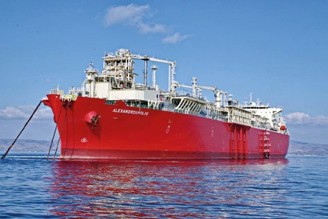
Greece has developed into a major energy gateway through its liquefied natural gas (LNG) infrastructure, ports, and interconnection projects. Facilities such as the Revithoussa LNG terminal and the Alexandroupolis energy hub with the Floating Storage Regasification Unit (FSRU) have expanded Greece’s capacity to receive and distribute energy supplies from diverse global sources.
Romania, meanwhile, possesses significant energy resources, including offshore natural gas reserves in the Black Sea, and has become increasingly important in European efforts to reduce dependence on Russian energy. Romania’s transportation networks, ports, and strategic location position it as a bridge between the Black Sea region and the Aegean and enhance its potential role regarding the future Ukraine reconstruction efforts.
Together, Greece and Romania form critical pillars of a broader north-south connectivity architecture stretching from the Mediterranean to the Baltic region.
In this context, the strategic importance of the Vertical Corridor enhancing energy connectivity between Greece, Bulgaria, Romania, Hungary, Slovakia, Moldova, and Ukraine has become evident, and successive transatlantic ministerial meetings have highlighted its significance for procuring US LNG to the wider region.
Through the growing capacity of the Interconnector Greece- Bulgaria (IGB) and the progress towards completing of the Interconnector Greece-North Macedonia, the Vertical Gas Corridor is establishing a flexible south-north energy route, reducing vulnerabilities associated with overreliance on single suppliers or transit pathways, enhancing energy security and regional resilience. The diversification of supply sources and transit routes the Vertical Corridor offers, reduces exposure to geopolitical pressure and supply disruptions.
This is also the case of the transport infrastructure projects that improve connectivity between the Black Sea and the Aegean Sea in the framework of the Baltic Sea-Black Sea- Aegean Sea corridor (BBA), a strategic European Transport Corridor that will link the EU member states from the far north to the far south of Europe, starting from Finland all the way to Cyprus with the maritime interfaces of the Baltic Sea, the Black Sea and the Aegean Sea. This major project will significantly stimulate investment, trade, and infrastructure modernization, as well as enhance European cohesion and stability, including also Chisinau and Odessa, as the Greek Prime Minister proposed last year. Moreover, the security perspective is also key, as the European Commission prioritises dual-use infrastructure in order to improve military mobility across NATO’s southeastern flank.
Complementing broader initiatives such as the Three Seas Initiative, and the IMEC (India-Middle East-Europe Coridor), the multi-modal Vertical Corridor linking Greece, Bulgaria, Romania will significantly strengthen European resilience, through ensuring reliable energy networks and dual use transport infrastructure – critical components of defense planning for reducing strategic vulnerabilities and making the region less susceptible to coercion or disruption.
Infrastructure investments require significant financial resources and long-term political commitment. Regulatory harmonization among participating countries remains essential for efficient operation. Security threats—including cyberattacks and hybrid interference targeting critical infrastructure—must also be addressed through coordinated protection measures.
The trilateral cooperation between Greece, Bulgaria and Romania has been advancing, with the support of the European Commission regarding rail and road infrastructure and with the encouragement of our strategic partner, the US regarding the Vertical Gas corridor. The long-term prospects are promising including throughout the energy transition, as future investments can support the transport of hydrogen, and other low-carbon energy carriers, while natural gas is expected to remain a significant transitional fuel in western economies.
It is therefore clear that Greece and Romania are emerging as indispensable partners in strengthening security and resilience across Southeastern Europe.
Our bilateral relations are very strong and our two countries share the same concerns and priorities to a very large extent. Greece has been a steadfast supporter of Romania’s euro-atlantic integration path, acceding to NATO, the EU, the Schengen zone and now, in its efforts to join the OECD, which we hope will come to fruition before the end of 2026. Moreover, Greek investments have consistently contributed to the economy and labor market of Romania. Our bilateral trade has been steadily growing in recent years, reaching 3,4 billion Euros in 2025. Enhancing connectivity will further advance stability and prosperity in the wider region.
