
Few Romanian companies today carry as much industrial history as ROMAERO. For the general public, its name may evoke Băneasa, aircraft, and an era when Romania’s aeronautical industry held a significance that is now often viewed through a retrospective lens. For those familiar with the sector, however, ROMAERO means something far more concrete: maintenance, repairs, overhauls, aerostructures, certifications, hangars, infrastructure, and, above all, a category of specialists who are neither easily trained nor easily replaced.
The company’s story extends well beyond the name it bears today. Its beginning reaches back to 1920, to the early days of the aeronautical industry at Băneasa, and that continuity says much about the role it has played in Romanian aviation over the decades. There were years when the Băneasa platform represented production, repairs, modernization programs, and a significant part of the technical infrastructure supporting both civil and military aviation. There were also decades in which Romanian aeronautics operated according to the logic of a centralized economy, driven more by state strategy than by market forces. After 1990, this entire ecosystem entered a difficult period of adjustment, and ROMAERO was among the companies that had to learn—sometimes the hard way—what survival meant in a globalized industry.
This is where the most interesting chapter of its story begins. ROMAERO evolved beyond the status of a traditional state- owned enterprise and became a platform forced to reinvent itself at a time when the market was undergoing profound change. If Romanian aviation had previously revolved around domestic industrial programs and an integrated structure, the post-transition environment introduced entirely new rules. Orders declined, competition became international, standards grew increasingly demanding, and survival no longer depended on the size of a factory but on its ability to adapt to the requirements of an exceptionally demanding sector.
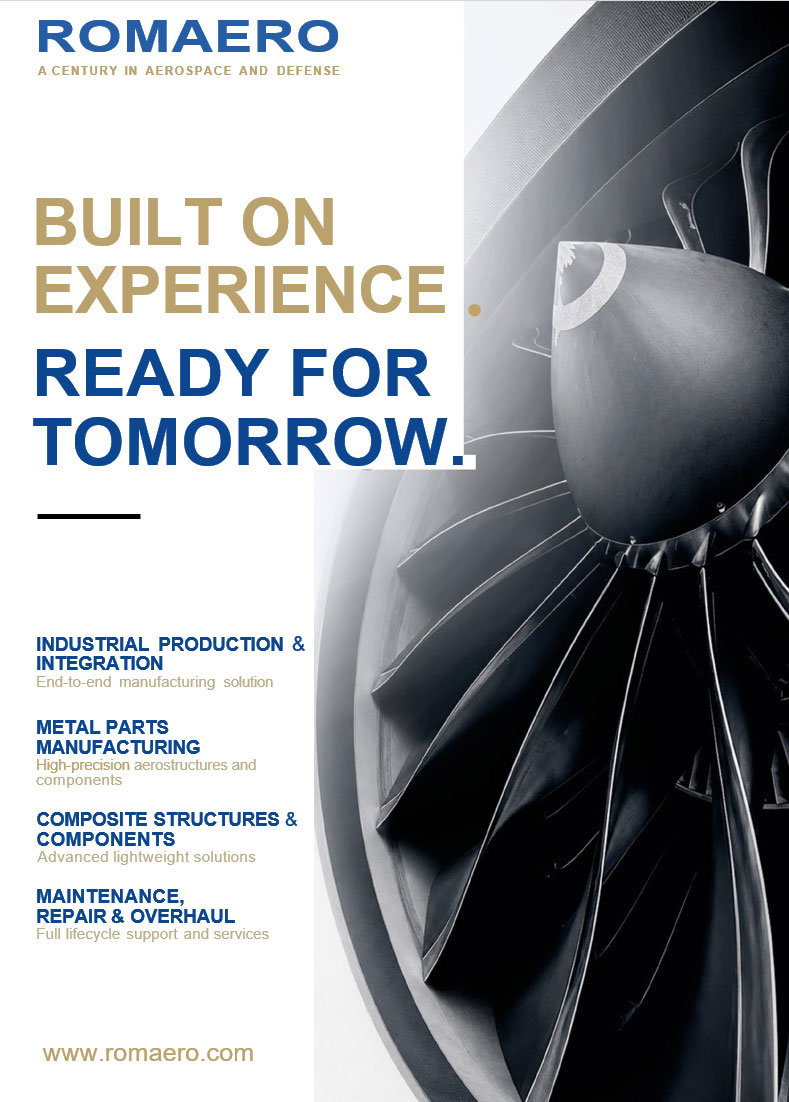
ROMAERO responded to this pressure through a gradual repositioning toward activities that could capitalize on its most valuable assets: technical expertise, infrastructure, and people. Today, its profile is primarily defined by two areas of activity. The first is maintenance, repair, and overhaul (MRO) services for civil and military aircraft—a segment in which experience, certifications, and technical discipline are decisive. The second is the production of aerostructures and components for aerospace programs, precisely the type of industrial activity that requires precision, continuity, and the ability to operate according to the highest standards.
Perhaps this is the most important thing to understand about ROMAERO: in the aerospace industry, expertise cannot be improvised. It cannot be built overnight, purchased off the shelf, or preserved automatically. Behind every overhaul, modernization program, or assembled component delivered stand years of training, rigorous procedures, a deeply ingrained safety culture, and a level of professional discipline demanded by very few industries to the same extent. For this reason, companies such as ROMAERO cannot be viewed solely through the lens of an ordinary commercial enterprise. Inevitably, they also possess the characteristics of strategic infrastructure.
In recent years, ROMAERO has sought to preserve its relevance precisely through this combination of industrial tradition and integration into new projects. The company has consistently highlighted its activities in MRO services, repairs, and support for civil and military aircraft, as well as its capabilities in aerostructures and manufacturing. At the same time, it has pursued partnerships aimed at keeping it connected to major aerospace and defense programs. Public communications have referenced projects and collaborations involving Patriot systems, helicopter- related programs, and maintenance and technical support services for various aerial platforms, alongside major international companies in the sector. For a Romanian company, simply remaining present in such discussions is significant in itself. In aviation and defense, no one enters serious industrial supply chains solely on the basis of history or reputation. What matters is what you can do, how well you can do it, and whether you can consistently deliver according to the standards required by partners who do not work with approximations.
Of course, ROMAERO’s recent history cannot be told exclusively in positive terms. The company has endured a particularly difficult period, and 2024 brought the most challenging moment in its recent history: insolvency proceedings accompanied by judicial reorganization. The decision followed several years of losses, financial pressures, and accumulated difficulties, in a context where the company was forced to operate under the strain of insufficient capital, rising costs, and a business model that could no longer continue in its previous form. The insolvency filing was undoubtedly a serious warning signal. At the same time, it represented an acknowledgment that a company with such a profile could no longer survive through inertia alone, through the prestige of its past, or through the assumption that strategic importance would automatically resolve underlying structural problems.
Yet even during this difficult period, ROMAERO remained a company discussed not only in terms of its challenges but also in terms of the potential it still possesses. The explanation is simple. Romania has very few aeronautical platforms of this kind. There are few places where hangars, infrastructure, airport access, maintenance expertise, and decades of accumulated technical knowledge coexist within the same operational environment. In a country that frequently speaks about reindustrialization and the strengthening of its defense industry, the disappearance of such an asset would mean far more than the failure of a single company. It would represent the loss of a portion of the technical capability that Romania still retains in a sector that is extraordinarily difficult to rebuild once it has been allowed to deteriorate.
Moreover, the European context has changed dramatically. The war in Ukraine, the reshaping of regional security priorities, increased defense budgets, and the pressure on European states to strengthen their industrial bases have also transformed the way aerospace and defense companies are viewed. A few years ago, such platforms were assessed primarily through the lens of financial performance and their ability to compete independently in a difficult market. Today, the discussion is much broader. What matters is whether a country has the capacity to perform maintenance, conduct repairs, manufacture equipment, train specialists, and preserve a degree of technical autonomy in a strategically sensitive field.
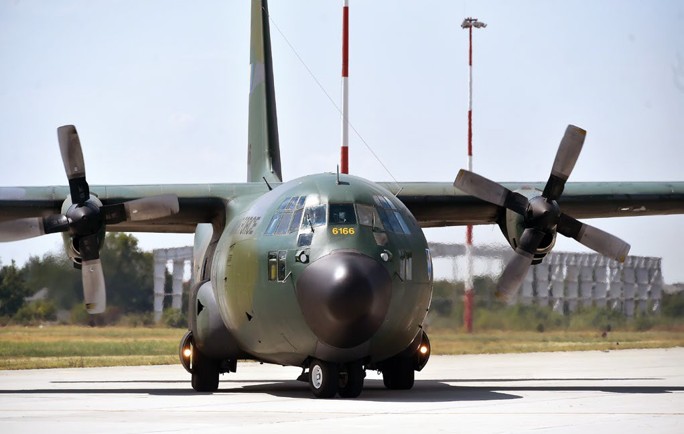
ROMAERO stands precisely at this intersection. On the one hand, it is a company that must address highly practical challenges: restructuring, financing, efficiency, contracts, partnerships, and the development of a sustainable business model. On the other hand, it remains one of the very few Romanian industrial platforms capable of playing a meaningful role within a regional ecosystem of aerospace maintenance and production. That reality inevitably changes the conversation about its future.
The fact that in 2025 the company reported a significant improvement in its financial results compared to the previous period, returning to profitability during the first half of the year, does not mean that its problems have disappeared. It does, however, demonstrate that reorganization can produce results and that ROMAERO still has ongoing operations, contracts, and the ability to generate revenue in a sector where simple survival is far from easy. This is an important detail, particularly for a company that, in recent years, has been associated almost exclusively with its difficulties.
ROMAERO is no longer merely a company located on the Băneasa platform. It is one of the clearest examples of how difficult it is to preserve an industrial tradition—and how quickly that tradition can be lost if it is not supported intelligently. And if the company succeeds in transforming its reorganization into a genuine new beginning, the gain will extend far beyond ROMAERO itself. It will be a gain for an entire industry that is still striving to remain standing.
